
Follow us on Google News

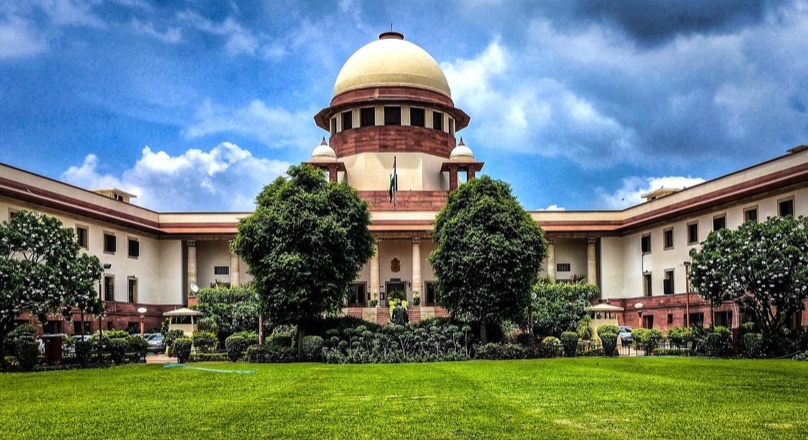
The Supreme Court has raised questions over children’s social media access and the legal duties of platforms to protect minors.
Why Is the Supreme Court Examining Children’s Social Media Access?
The Supreme Court has asked the Centre to examine statutory safeguards for minors using social media, bringing the legal validity of children’s online accounts under scrutiny. The issue arose during a September 28 hearing on a petition filed by the Just Rights for Children Alliance (JRCA).
A three-judge bench headed by Chief Justice of India Surya Kant questioned whether children below 18 could independently accept contractual terms imposed by social media companies. Justice Joymalya Bagchi observed that platforms must design their software and systems in accordance with Indian law, rather than relying solely on guidelines.
The Centre referred to the Digital Personal Data Protection Act, 2023, during the proceedings. However, the petitioner’s counsel pointed out that relevant provisions would not take effect until 2027, highlighting the question of safeguards for children already using digital platforms.
FCRF Launches Certified Chief Risk Officer (CRO) Program for India’s Risk Leaders
What Risks Do Children Face on Social Media?
The petition raised concerns about online grooming, cyberbullying, sexual extortion, manipulation and the misuse of children’s personal information. It argued that age verification alone cannot prevent exploitation after an account has been created.
Children may encounter adults who misrepresent their identities, while photographs and personal information can be collected, circulated or misused. The concerns extend beyond account registration to interactions, privacy settings, suspicious behaviour and the responsibilities of platforms throughout an account’s operation.
The proceedings have consequently broadened the discussion from determining who can open an account to examining how social media companies should protect minors once they are online.
What Has the Court Said About Child Abuse Material?
In separate proceedings involving JRCA, the Supreme Court examined measures to prevent the circulation of Child Sexual Exploitation and Abuse Material (CSEAM). On September 24, the court gave the Centre a final opportunity to submit details of steps taken to implement earlier directions.
The court also sought information about safeguards against failures by online intermediaries in detecting and reporting such material. These proceedings followed its September 2024 judgment concerning reporting obligations under the Protection of Children from Sexual Offences Act.
The judgment addressed the responsibilities of intermediaries under the POCSO framework and considered protections available under Section 79 of the Information Technology Act. The proceedings underline the importance of identifying suspected abuse material, preserving evidence and reporting offences to the appropriate authorities.
How Are International Platforms Involved?
The proceedings have also drawn attention to the responsibilities of foreign-registered technology companies operating in India. The court noted that several intermediaries are registered in other jurisdictions, raising questions about whether their systems adequately reflect Indian legal requirements.
Major US-based platforms report suspected child sexual abuse material to the National Centre for Missing and Exploited Children, which shares relevant information with law enforcement agencies, including those in India.
The challenge extends to ensuring that reports are processed promptly and investigators can take appropriate action. Removing harmful material does not necessarily eliminate copies or address the exploitation already suffered by a child.
What Safeguards Are Being Proposed?
JRCA has advocated a more uniform enforcement framework covering detection, reporting and preservation of child sexual exploitation material. Its proposals include standard operating procedures, coordination among agencies, time-bound responses and stronger accountability for intermediaries that fail to meet legal obligations.
The broader child-safety discussion also involves age assurance, privacy protections and platform design. Possible safeguards include reviewing how adults and minors interact, strengthening default protections for younger users and identifying suspicious behaviour.
Such measures would require consideration of proportionality and privacy, particularly where age verification involves identity documents, parental confirmation or the collection of additional personal information.
What Does This Mean for India’s Digital Regulation?
The two Supreme Court proceedings place related responsibilities before the government and technology companies. One concerns the legal basis on which children access online platforms, while the other addresses the obligations that arise when children face exploitation after gaining access.
Together, they highlight the need for preventive safeguards, effective reporting systems, evidence preservation and coordinated law enforcement. The proceedings also raise questions about how statutory requirements should be reflected in platform software and operational procedures.
The central issue is whether India’s digital regulatory framework can move beyond account-level age checks and establish enforceable protections throughout children’s online experiences.