
Follow us on Google News

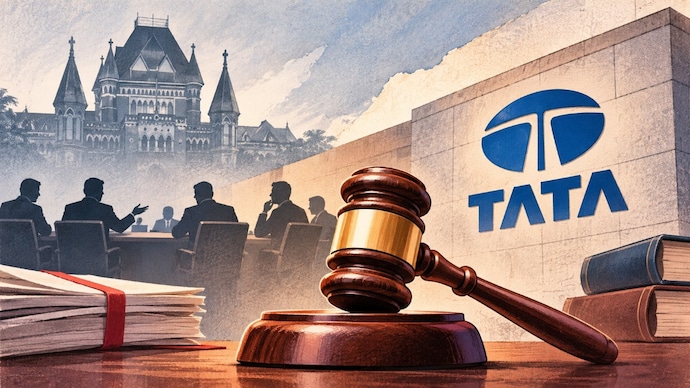
NEW DELHI: Internal disagreements at the top level of the Tata Group appear headed toward a legal battle, as two prominent trusts affiliated with Tata Trusts prepare to move the Bombay High Court against Tata Sons and six of its directors. The two trusts have passed resolutions to challenge the reappointment of N. Chandrasekaran as executive chairman of Tata Sons and seek total damages of Rs 65 crore. Alongside the financial claim, the trusts plan to seek interim judicial relief restraining the use of the chairman’s casting vote during board meetings.
The entities preparing the legal action are the Sir Dorabji Tata Trust (SDTT) and the R.D. Tata Trust (RDTT). Both have questioned the September 17 decision by the Tata Sons board to reappoint Chandrasekaran for a second five-year term. The trusts contend that the decision failed to comply with the voting procedures laid down in the Tata Sons Articles of Association and did not secure the required affirmative votes.
Under the resolutions passed, SDTT has proposed claiming Rs 50 crore in damages, while RDTT has sought Rs 15 crore. Both trusts have also demanded annual interest of 18 percent from the date of filing the suit until the payment is realized.
Dispute Over September 17 Board Vote
The dispute originated during the Tata Sons board meeting held on September 17. At that meeting, Tata Trusts chairman Noel Tata voted against the resolution to reappoint Chandrasekaran, whereas director Venu Srinivasan voted in favor. Facing a tie between the two sides, Harish Manwani, who was chairing the meeting, exercised his casting vote to pass the resolution in Chandrasekaran’s favor.
Both trusts argue that under Article 121 of the Tata Sons Articles of Association, a resolution requires the affirmative vote of a majority of the directors present who were appointed under Article 104B. According to their interpretation, the chairman’s casting vote cannot substitute for this mandatory requirement. On this ground, they intend to challenge the legal validity of the September 17 decision in court.
Tata Sons, however, maintains that the board passed the reappointment resolution in full accordance with applicable rules. The core of the dispute has consequently narrowed down to the interpretation of board voting regulations and the scope of casting vote powers.
Interim Relief Sought Ahead of November 30 Meeting
The two trusts are preparing to seek urgent interim relief from the court ahead of the next scheduled Tata Sons board meeting on November 30. They want the court to restrain the company from acting further on Chandrasekaran’s reappointment and direct that no resolution be deemed passed without the requisite affirmative votes.
The trusts apprehend that if disagreements arise in the future between their two nominated directors, the board could again rely on a casting vote to push decisions through. In its resolution, SDTT noted that such an outcome would run counter to the spirit and provisions of Article 121, necessitating judicial intervention.
Respondents Named and Governance Stakes
The proposed suit names seven respondents: Tata Sons, N. Chandrasekaran, executive director and chief financial officer Saurabh Agrawal, independent directors Harish Manwani and Anita George, and directors Venu Srinivasan and Noel Tata. However, both trusts have clarified that they are not seeking any relief against Noel Tata.
Trustee Bhaskar Bhatt is likely to be authorized to file the suit on behalf of SDTT, while RDTT has proposed authorizing Tata Trusts CEO Siddharth Sharma, secretary and CFO Rukshana F. Savaksha, or legal head Rishi Sharma to conduct the proceedings. SDTT holds 1,13,067 ordinary shares in Tata Sons, and RDTT holds 8,838 ordinary shares. The resolutions approving legal action were passed by a majority, with Noel Tata, his son Neville, and Bhaskar Bhatt supporting the move, while Venu Srinivasan and Vijay Singh opposed it.
Chandrasekaran’s current tenure as executive chairman ends on February 20, 2027. While the board approved his five-year reappointment in September, his reappointment as a director liable to retire by rotation still awaits shareholder approval after the August 18 annual general meeting was adjourned due to a lack of quorum. The upcoming November 30 board meeting is expected to take up both his reappointment and the company’s proposed IPO plans, placing broader questions of Tata Group governance and the role of Tata Trusts under judicial scrutiny.