
Follow us on Google News

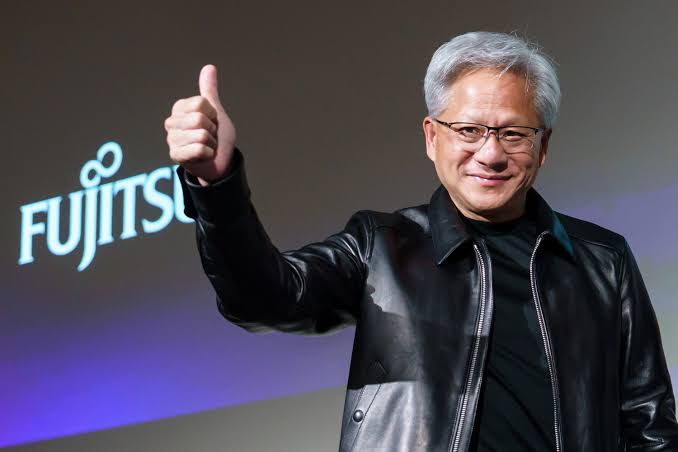
US chipmaker Nvidia has reinstated co-founder Jensen Huang as its president and chief executive officer, reversing an earlier decision to remove him from leadership following allegations concerning his personal conduct and possible national security risks.
The company announced the decision on November 23, 2026, confirming that its board of directors had unanimously approved Huang’s return after discussions with him and consultations involving senior US government officials.
The announcement came less than two weeks after Huang resigned amid revelations about personal relationships, including allegations involving a woman suspected of having connections to Chinese intelligence.
His return triggered a sharp rally in technology stocks, with Nvidia shares climbing nearly 33% as investors welcomed the restoration of leadership at the world’s leading AI chipmaker.
The decision also followed public intervention by US President Donald Trump, who had urged Nvidia to reconsider Huang’s departure.
FCRF Launches Certified Chief Risk Officer (CRO) Program for India’s Risk Leaders
Nvidia Board Reverses Earlier Decision After Government Consultations
In its official announcement, Nvidia said its board had unanimously decided to reinstate Huang as president, CEO and a member of the board, effective immediately.
The company said the decision followed several meetings during which directors assessed Huang’s explanations and his ability to continue leading the organisation.
Board chairman Harvey C. Jones said directors remained confident in Huang’s leadership and believed his reinstatement served the interests of shareholders, employees and customers.
The board also acknowledged receiving input from senior US government officials before concluding that Huang’s return did not pose a national security risk.
The reversal marks a significant change from the company’s position earlier this month.
On November 12, Nvidia announced that Huang had resigned as CEO and board member, while Chief Financial Officer Colette Kress was appointed interim chief executive.
The board subsequently indicated that it did not intend to bring Huang back, despite growing calls for his reinstatement.
That position changed following discussions involving company directors, investors and government officials.
Nvidia confirmed that Kress would continue as chief financial officer, while Jones would remain board chairman.
Trump Says He Urged Nvidia To Bring Huang Back
President Donald Trump publicly supported Huang’s return and said he had communicated with Nvidia’s board during the controversy.
Speaking to CNBC on November 23, Trump said his intervention had played an important role in the company’s decision.
He also stated that the US government had no evidence establishing unlawful conduct by Huang or a national security threat arising from his reinstatement.
However, the president urged Nvidia to continue strengthening compliance with American semiconductor export restrictions.
The controversy surrounding Huang’s departure involved reports of extramarital relationships, including an alleged relationship with a businesswoman suspected of having connections to Chinese intelligence.
These allegations prompted concerns about possible foreign intelligence efforts targeting the Nvidia co-founder.
However, no public finding has established that Huang transferred confidential technology or classified information to a foreign government.
Nvidia’s decision to reinstate him does not mean that the underlying investigations have been completed.
The company has confirmed that an independent board committee will continue examining the intelligence-related allegations.
Nvidia Shares Jump As AI Stocks Rally Across Global Markets
Financial markets reacted strongly to the leadership announcement.
Nvidia shares surged nearly 33% on November 23, reversing some of the losses recorded during the uncertainty surrounding Huang’s departure.
Reuters reported that the rally was expected to add approximately $900 billion to Nvidia’s market value.
Shares of Nvidia-backed cloud infrastructure companies, including CoreWeave and Nebius, also rose sharply.
The developments demonstrate how closely investors associate Huang with Nvidia’s position in the artificial intelligence industry.
Huang co-founded Nvidia in 1993 and helped transform it from a company focused on graphics processors into a leading supplier of computing systems used to develop and operate advanced AI models.
Its processors are widely used by technology companies building data centres and artificial intelligence infrastructure.
His sudden resignation earlier this month had therefore raised concerns about leadership continuity, customer relationships and the company’s future direction.
Following his reinstatement, Huang said he was grateful for the board’s confidence and intended to resume leadership of the company.
National Security And Export Control Investigations Continue
Despite Huang’s return, Nvidia continues to face scrutiny over corporate governance and compliance with US semiconductor export restrictions.
The company has established a board committee to examine allegations that Huang may have been targeted by a foreign intelligence operation.
The committee consists of independent directors and has retained external legal advisers.
Nvidia has also formed a separate National Security and Export Control Committee to oversee risks associated with international trade and technology transfers.
The company announced that it would begin searching for a chief compliance officer responsible for supervising compliance matters.
These measures follow concerns in Washington about the potential movement of advanced American AI chips to China through unauthorised channels.
Nvidia is facing separate government inquiries and shareholder litigation involving allegations concerning corporate disclosures and compliance.
Those proceedings remain ongoing, and the allegations have not been established as proven wrongdoing.
For Nvidia, Huang’s reinstatement resolves the immediate leadership uncertainty but leaves important questions about governance, export controls and national security oversight unanswered.
The company’s ability to maintain investor confidence will now depend partly on how it addresses those investigations while continuing to meet strong demand for AI computing technology.
Nvidia’s leadership change may influence the global AI semiconductor industry, including companies and data centres relying on its processors. The investigations and export-control developments remain important for businesses monitoring chip availability and technology supply chains.