
Follow us on Google News

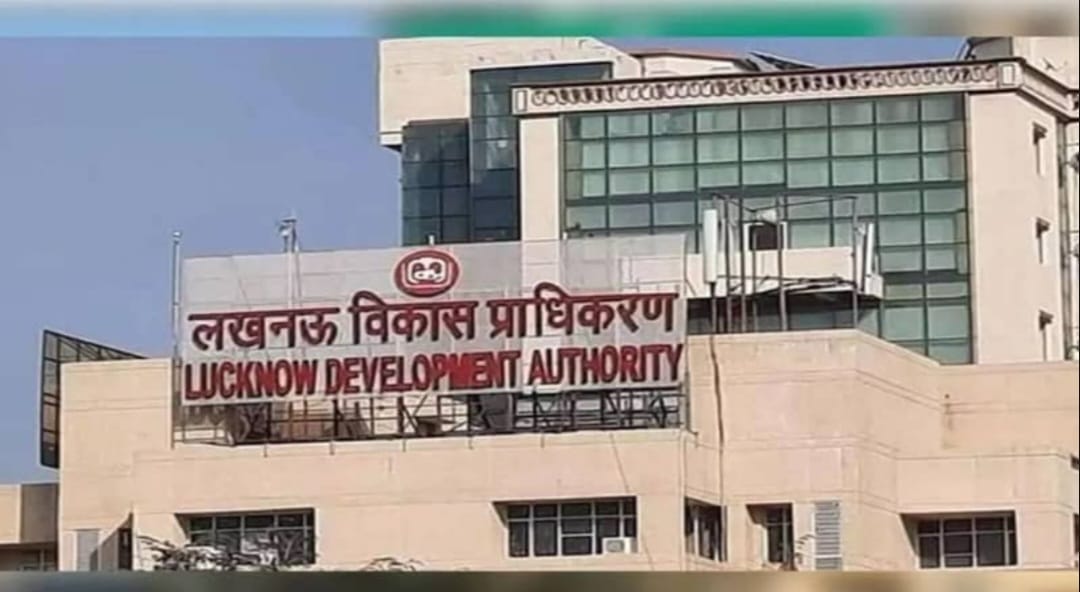
Building maps approved by the Lucknow Development Authority (LDA) over the past four years will now come under the audit scrutiny of the Principal Accountant General (PAG). The PAG team will conduct a detailed examination of maps sanctioned between 2022-23 and 2025-26, focusing on parking provisions, physical verification of construction, and the compounding process carried out for rule violations. The inspection team will also check whether commercial activities are being run in buildings approved under residential maps and if designated parking spaces are being diverted for other uses. The PAG team is scheduled to arrive in Lucknow later this month.
The primary objective of this audit is to assess compliance with building construction norms and identify the reasons behind unregulated parking on public roads. Complaints indicate that a large number of commercial activities are operating in buildings lacking adequate parking facilities. Consequently, customers and staff park their vehicles on the roads, obstructing traffic flow. The audit will seek to determine the extent to which parking regulations were enforced while approving building maps. Under the Model Building Bylaws 2016 and LDA building construction and development bylaws, providing adequate parking is mandatory for residential, commercial, institutional, and mixed-use buildings. If exemptions were granted from parking norms or deviations were regularized through compounding, the basis and procedure for such decisions will also be scrutinized.
Four-Year Records Sought
The Accountant General’s office has asked the LDA for year-wise details of the total number of sanctioned schemes and building maps. The authority has been directed to specify how many schemes fully complied with prescribed parking standards and how many were granted exemptions. Officials must also submit details regarding the total number of compounding maps approved and the legal provisions cited to justify those relaxations. The LDA has been instructed to provide updated information from 2022-23 to 2025-26 in a prescribed format, supported by certified records. This documentation will help establish the level at which map approvals and regulatory compliance were monitored over the four-year period.
Questions Over Post-Construction Verification
The audit will not remain limited to the map approval stage alone. The Accountant General’s office has also sought details of physical verifications conducted after construction was completed. The LDA will have to state in how many cases on-site inspections were carried out to verify that buildings were constructed in accordance with the sanctioned maps. A key aspect of the inquiry will be whether spaces earmarked for parking are actually being used for that purpose. The team will verify if parking areas have been converted into shops, warehouses, restaurants, kitchens, laundries, or other commercial establishments. Where such violations occurred, the audit will examine what action the LDA took and on what grounds the breaches were regularized.
Parking Crisis Across 50,000 Buildings
According to sources, around 50,000 buildings in Lucknow house commercial activities without adequate parking arrangements. Of these, roughly 30,000 structures have maps approved for residential use but are being utilized commercially, violating land-use norms and straining traffic management. On the other hand, even in buildings sanctioned for commercial use, designated parking areas are reportedly being used for other purposes. Following the Aliganj fire incident, the LDA had launched a drive against illegal constructions about four months ago and sealed nearly 150 buildings. Several of these structures had basements marked as parking on maps, yet restaurants, kitchens, laundries, and banquet halls were operating there. Although the LDA offered building owners an opportunity for compounding, allegations suggest the process remained largely on paper without effective enforcement. The PAG audit will now examine whether compounding applications were received in these cases, on what basis they were approved, and what concrete steps the authority took against violators. Any discrepancy between official records and on-ground realities could raise questions regarding the accountability of concerned officials and the validity of compounding approvals.