
Follow us on Google News

A Telangana consumer commission has ordered a bank to compensate an engineer for ₹4.06 lakh lost in an online banking fraud.
How Did the Flight Cancellation Fraud Begin?
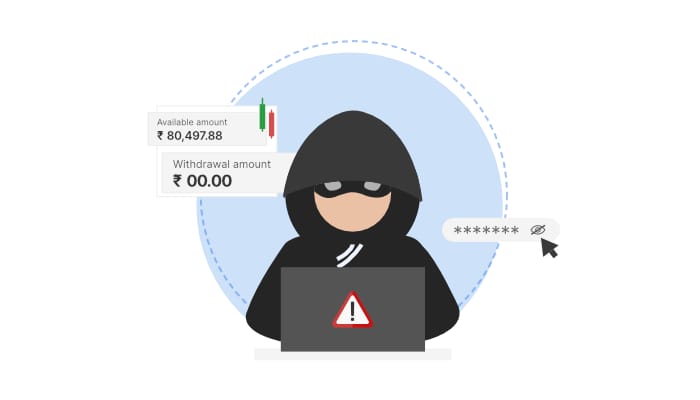
The case arose from a complaint filed by Hyderabad-based software engineer K Chandra Shekar Prasad after he and his sister allegedly lost ₹4.53 lakh while attempting to cancel a flight ticket on July 4, 2023. The siblings had searched online for customer-care contact numbers to obtain a flight cancellation refund. According to the complaint, they subsequently came into contact with fraudsters who allegedly gained access to their banking facilities.
The bank claimed that the siblings had installed a remote-access Android application while attempting to cancel their tickets, allowing outsiders to access their phones. Prasad disputed allegations that he had knowingly disclosed confidential banking credentials.
FCRF Launches Certified Chief Risk Officer (CRO) Program for India’s Risk Leaders
How Was ₹4.53 Lakh Withdrawn?
According to the commission’s order, ₹98,503 was transferred from Prasad’s savings account, while another ₹3.08 lakh was withdrawn through a salary overdraft account allegedly opened without his knowledge or informed consent. His sister separately lost ₹47,000, bringing their combined losses to approximately ₹4.53 lakh. However, the consumer proceedings concerned only Prasad’s loss of ₹4.06 lakh.
Prasad stated that the disputed transactions occurred between 3.45 pm and 4.15 pm and that he contacted the bank within half an hour. Although the bank acknowledged his complaint at 5.38 pm, he alleged that the beneficiary banks were informed only around 7.32 pm and 7.36 pm.
Why Did the Commission Reject the Bank’s Defence?
The bank maintained that the transactions had been authenticated using its mobile payment application through credentials including OTPs and PINs. It also argued that the overdraft facility required debit-card grid authentication.
However, the Ranga Reddy District Consumer Disputes Redressal Commission found insufficient evidence to establish that Prasad had knowingly shared his credentials. The commission observed that “Nothing [was] brought before this Commission” to establish that the complainant had knowingly disclosed sensitive banking information to the fraudsters.
It also noted that the bank’s investigation report described the findings as “inconclusive”. The commission held that allegations of customer negligence required reliable supporting evidence rather than assumptions about credential-sharing.
What Compensation Did the Commission Award?
The commission, comprising president Chitneni Latha Kumari and members D Madhavi Latha and Kathyayani Khandavilli, partly allowed Prasad’s complaint in its October 28 order. It directed the bank and its officials, jointly and severally, to refund ₹4.06 lakh with annual interest of six per cent from May 6, 2024, until payment. An additional ₹10,000 was awarded towards litigation costs, bringing the principal compensation and costs to approximately ₹4.16 lakh, excluding interest.
The commission relied on provisions of the Reserve Bank of India’s July 6, 2017 circular governing customer liability in unauthorised electronic banking transactions. It also rejected the bank’s argument that pending criminal proceedings prevented consideration of the consumer complaint, holding that a customer could independently seek relief for deficiency in service.
The decision reinforces the requirement for banks to establish customer negligence through credible evidence before attributing liability for disputed electronic transactions.