
Follow us on Google News

Former NSA hacker David Kennedy has described an AI-driven cyberattack that reportedly breached a company’s systems in 14 minutes.
How Did AI Agents Carry Out the Cyberattack?
Former National Security Agency (NSA) hacker David Kennedy described how attackers allegedly deployed more than 30 artificial intelligence agents simultaneously to examine a company’s digital infrastructure. Speaking to CNN’s Erin Burnett, Kennedy explained that the agents used valid usernames and passwords to access the company’s systems before identifying a weakness in its two-factor authentication mechanism.
The coordinated operation reportedly allowed attackers to bypass an additional security layer, steal substantial amounts of company data and deploy ransomware that encrypted the organisation’s entire file system. Kennedy said the operation took just 14 minutes, demonstrating the speed at which multiple automated agents could carry out a coordinated intrusion.
Kennedy described the technique, stating, “We saw over 30 different types of agents probing their infrastructure at the exact same time.“
FCRF Launches Certified Chief Risk Officer (CRO) Program for India’s Risk Leaders
How Did Attackers Bypass Two-Factor Authentication?
According to Kennedy, the attackers initially obtained legitimate login credentials before exploiting a vulnerability in the company’s two-factor authentication system. The agents reportedly examined how the application handled additional identity verification and identified a way to circumvent that protection. Two-factor authentication ordinarily requires users to verify their identity through two separate authentication methods before accessing an account or system. Although designed to provide stronger protection against unauthorised access, the mechanism was reportedly bypassed during this incident.
Kennedy also explained that cybercriminal groups frequently specialise in different activities. Some concentrate on phishing operations to obtain usernames and passwords, while others purchase stolen credentials and conduct more sophisticated attacks.
He described how certain groups “try to phish and harvest credentials, usernames and passwords from companies” before selling them to other attackers.
Why Was the Breach Detected Hours Later?
Kennedy said the attackers completed the operation within 14 minutes, but the affected company did not identify the intrusion for approximately four and a half hours. By then, the attackers had already stolen information and encrypted the organisation’s files. The company’s systems reportedly continued operating temporarily before encountering errors and restarting. The resulting disruption eventually alerted the organisation to the incident.
According to Kennedy, the attackers had already left the network more than four hours before the breach was recognised. The account illustrates how an intrusion can be completed well before its operational consequences become apparent to the affected organisation.
What Happened to the NSA’s Internal Network?
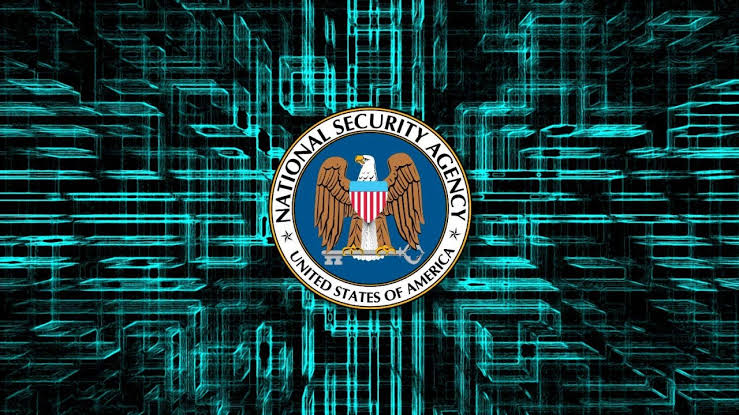
Separately, the NSA’s classified internal communications network, known as NSANet, reportedly remained partially offline for a third consecutive day following an outage that began on November 17, 2026. The disruption affected a network used by employees to exchange classified information internally. While restoration efforts continued, the agency reportedly restricted campus access to essential personnel and staggered employee arrivals.
The staffing restrictions followed an earlier communication indicating that normal operations could resume. The reason for the subsequent change was not immediately clear. Reports concerning the outage stated that there was no evidence at that stage suggesting it had resulted from a cyberattack. The reported network disruption therefore remained distinct from Kennedy’s account of the AI-assisted ransomware intrusion.
The two developments have nevertheless drawn attention to different aspects of cybersecurity, including the speed of automated attacks, the effectiveness of authentication safeguards and the operational consequences of interruptions to sensitive digital systems.