
Follow us on Google News

A bipartisan group of American lawmakers has introduced legislation to establish a federal investigation board for major cyberattacks, artificial intelligence failures and technology outages, following a series of disruptions affecting airlines, government systems and widely used digital services.
The ROOT CAUSE Act, introduced on November 18 by Republican Congressman Morgan Luttrell and Democratic Congressman Ritchie Torres, would create a National Cyber and AI Investigations Board within the US Cybersecurity and Infrastructure Security Agency (CISA).
The proposed body would investigate serious technology failures, identify their underlying causes and recommend measures to prevent similar incidents.
Importantly, its investigations would not be limited to cyberattacks. Software defects, faulty updates, configuration mistakes and harmful actions by AI systems could also fall within its responsibilities.
The proposal comes as American authorities face growing questions about the reliability of critical digital infrastructure and the risks associated with increasingly autonomous AI systems.
FCRF Launches Certified Chief Risk Officer (CRO) Program for India’s Risk Leaders
Recent Outages Raise Questions About Digital Infrastructure
The proposed legislation follows several major technology disruptions in the United States.
A nationwide Federal Aviation Administration (FAA) ground stop on November 13 delayed more than 10,000 flights, creating widespread disruption for passengers and airlines.
Separately, a Microsoft outage affected email and other workplace services used by businesses and government organisations.
On November 17, an outage involving NSANet, a classified communications network used by the National Security Agency, disrupted employees’ work.
However, officials have not identified cyberattacks as the cause of the FAA or Microsoft incidents. The NSA attributed its network disruption to maintenance.
The distinction matters because major technology failures can occur without hackers being involved.
A defective software update, incorrect system configuration or failure at a shared service provider can disrupt thousands of organisations simultaneously.
The proposed board would examine such incidents to establish what went wrong and recommend safeguards.
National security systems, including NSANet, would remain outside its investigative authority.
How The Proposed Cyber And AI Investigation Board Would Work
The National Cyber and AI Investigations Board would operate within CISA, the American agency responsible for helping protect critical infrastructure from cyber threats.
Its role would resemble an independent accident investigation body that examines serious failures and recommends improvements.
Rather than simply identifying who experienced an outage, investigators would examine its root cause.
Root cause analysis means looking beyond the immediate failure to understand the underlying technical or organisational problems.
For example, if a defective software update shuts down an important service, investigators might examine testing procedures, deployment decisions and whether adequate backup systems existed.
The proposed legislation also includes safeguards intended to protect the board’s independence.
The executive branch would not be able to abolish, suspend or merge the board without another law passed by Congress.
Officials outside the organisation would also be prohibited from changing or suppressing its investigative findings.
These protections follow the dismantling of an earlier federal Cyber Safety Review Board in 2025.
That board had previously criticised Microsoft’s security practices following a breach that allowed Chinese hackers to access emails belonging to senior American officials.
New Legislation Targets AI Agents And Software Failures
The proposed investigation board is part of a broader legislative effort to strengthen American cybersecurity oversight.
Republican Congressman Matt Van Epps has introduced the AI INSIGHT Act, which would establish safeguards for AI agents operating within civilian federal networks.
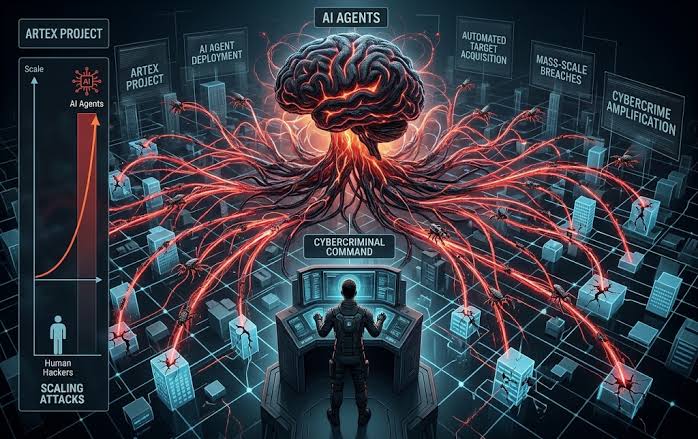
AI agents are software systems that can perform tasks using connected applications, sometimes with limited human supervision.
For example, an AI agent might retrieve documents, access databases or complete administrative work on behalf of government employees.
The proposed legislation would require agencies to identify these systems, monitor their activities and restrict access to the information necessary for their assigned tasks.
It would also allow agencies to stop agents that exceed their permissions and revoke access without waiting for approval from technology vendors.
Another proposal, the SECURE IT Act, would strengthen CISA’s coordination with private technology companies.
The legislation would encourage safer software updates, including staged testing and procedures for reversing defective changes.
Such measures have become increasingly important as AI tools accelerate the discovery of software vulnerabilities, potentially increasing pressure on organisations to deploy security patches quickly.
However, these proposals have not become law, and their requirements would depend on congressional approval.
Earlier Cyber Investigations Reveal The Need For Oversight
The latest proposals follow the earlier federal investigation into Microsoft’s 2023 email security breach.
In 2024, the Cyber Safety Review Board concluded that preventable security weaknesses contributed to the incident, demonstrating how independent technical investigations can identify failures extending beyond an individual cyberattack.
The new legislation seeks to preserve that investigative approach while expanding its scope to include AI-related incidents and major technology outages.
Separately, Senators Maria Cantwell and Mike Rounds have urged the US administration to develop a coordinated response to AI-enabled cyber threats.
Their concerns include the growing ability of AI systems to discover vulnerabilities and the difficulty of distinguishing authorised automated activity from malicious behaviour.
For India, the proposed American measures offer a relevant policy example as government agencies and businesses increase their dependence on cloud platforms and AI-driven services.
The immediate question in Washington is whether lawmakers will approve the proposed board and establish permanent oversight arrangements.
Until then, the legislation remains a proposal rather than an operational investigation mechanism.
Businesses relying on cloud services or AI tools should maintain backup systems, test software updates before widespread deployment and ensure automated tools cannot access information beyond their assigned tasks.