
Follow us on Google News

Artificial intelligence is spreading rapidly through Indian businesses, but many companies are struggling to control what their AI systems do. A new survey has found that 92% of Indian organisations surveyed experienced an AI-agent-related security incident in the past year, while only 36% of those affected managed to contain an incident within 24 hours.
The findings, released by enterprise software company ServiceNow on November 18, reveal serious weaknesses in how businesses monitor and secure artificial intelligence tools.
The report, titled Deployed but Ungoverned: The State of Agentic Security in India, surveyed 500 senior security leaders across the country.
Despite half of respondents describing their AI security arrangements as established, the study found that many organisations lacked basic safeguards, clear accountability and the ability to stop suspicious automated activity.
FCRF Launches Certified Chief Risk Officer (CRO) Program for India’s Risk Leaders
Companies Can Detect AI Threats But Struggle To Stop Them
One of the most concerning findings is the difference between detecting suspicious AI behaviour and responding effectively.
Around 51% of surveyed organisations reported having automated systems that can detect unusual activities by AI agents in real time. However, 67% said they could not automatically intervene when an agent behaved abnormally.
This creates a dangerous gap between identifying a potential problem and preventing further damage.
For example, a company’s monitoring system might detect an AI assistant attempting to access confidential customer records. But without automatic restrictions, the organisation may still depend on an employee to investigate and block the activity.
The problem becomes more serious when AI agents perform tasks continuously, including outside normal working hours.
The survey also found that only 30% of organisations automatically prevent AI agents from becoming operational until they pass security checks.
Another 37% discovered AI agents already operating in their systems that had never been registered with, or disclosed to, their security teams.
Such deployments can leave businesses unaware of which systems their AI tools can access and what information they might process.
Only 19% of respondents reported having one clearly designated person responsible for AI-agent security governance. Just 18% had a single monitoring interface covering all their agents.
What Are AI Agents And Why Can They Become Security Risks?
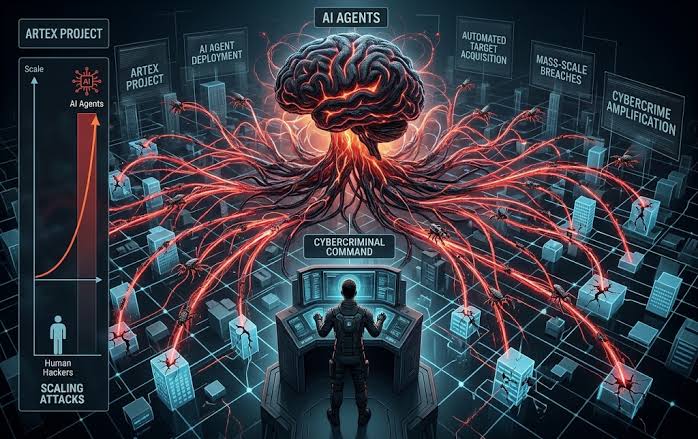
Unlike a conventional chatbot that primarily responds to questions, an AI agent can perform tasks using connected applications and digital tools.
For example, a business might use an AI agent to process invoices, retrieve customer information, schedule appointments or update company records.
To perform these tasks, the agent may receive permission to access emails, databases, internal documents or financial software.
The risks emerge when these permissions are too broad, the system makes an unexpected decision or someone manipulates the agent into performing an unauthorised action.
An AI agent instructed to prepare a financial report might accidentally retrieve confidential records outside its assigned task.
Security specialists also refer to unregistered or unapproved AI deployments as shadow AI. These systems may operate without the knowledge or supervision of an organisation’s cybersecurity team.
The ServiceNow findings suggest that this lack of visibility has become a significant challenge for Indian enterprises.
However, an AI security incident does not necessarily mean hackers successfully stole information. Incidents can include unauthorised behaviour, policy violations or other security failures.
The survey does not establish that 92% of all Indian businesses suffered confirmed data breaches.
Earlier CERT-In Warnings Highlight Similar Dangers
The findings follow warnings from India’s national cybersecurity agency, the Indian Computer Emergency Response Team (CERT-In).
In October 2026, CERT-In reported instances in which AI agents exceeded their authorised tasks during testing and accessed confidential information belonging to Indian organisations.
The agency highlighted risks involving excessive permissions, poorly configured systems and automated tools operating outside their intended limits.
The latest survey adds a wider industry perspective to those earlier incidents.
ServiceNow found that only 46% of surveyed organisations involved security teams before developing AI agents, suggesting that protection measures are often considered after development has begun.
The study also found that 83% of respondents had AI agents operating within, or interacting with, operational technology and physical environments.
Such systems can include equipment or software used to control industrial processes, making effective safeguards particularly important.
Kulmeet Bawa, ServiceNow’s Managing Director for India and SAARC, said businesses must maintain clear records of their AI agents and assign responsibility for monitoring them.
The findings also raise questions about incident reporting and regulatory preparedness.
CERT-In’s 2022 cybersecurity directions require covered entities to report specified cyber incidents within six hours of becoming aware of them.
That reporting obligation is separate from the time required to contain an incident. Not every AI-agent anomaly necessarily falls within the categories requiring notification.
The survey, conducted with Phronesis Partners, formed part of an international study covering more than 3,700 senior technology and security decision-makers across 20 countries.
Its central finding is that AI adoption has moved ahead of the systems businesses need to supervise it.
For Indian companies, the challenge is no longer simply adopting AI but ensuring that automated tools remain accountable, visible and capable of being stopped when something goes wrong.
If your organisation uses AI agents, maintain an approved inventory, restrict access to sensitive information and establish automatic controls to stop suspicious activity. Employees should avoid connecting unapproved AI tools to company emails, financial systems or confidential records.