
Follow us on Google News

India’s rapidly expanding data centre industry is facing a major infrastructure challenge as rising demand for artificial intelligence, cloud computing and digital services puts increasing pressure on electricity supply and cooling systems.
A report published on November 18 highlights how the country’s ambitious data centre expansion is shifting attention towards reliable power connections, advanced cooling technologies and the availability of essential resources.
According to real estate consultancy Cushman & Wakefield, India had nearly 1.8 gigawatts (GW) of operational data centre capacity by the end of the first half of 2026, with another 3.9 GW in the development pipeline.
However, industry experts warn that constructing large facilities is only part of the challenge. Ensuring that they receive uninterrupted electricity and remain cool enough to operate safely could become increasingly difficult as artificial intelligence workloads grow.
FCRF Launches Certified Chief Risk Officer (CRO) Program for India’s Risk Leaders
India’s Data Centre Expansion Raises Infrastructure Concerns
India’s data centre industry has attracted substantial investment as technology companies expand their cloud services and artificial intelligence operations.
These facilities support everyday digital activities, including online banking, digital payments, video streaming and business software.
The rapid growth of AI has created additional demand for powerful computing systems capable of processing enormous amounts of information.
According to Cushman & Wakefield’s first-half 2026 market assessment, India’s leading data centre markets recorded approximately 1,789 megawatts (MW) of operational capacity, with around 3,860 MW in the development pipeline.
The expansion is expected to accelerate further.
Credit rating agency Crisil Ratings recently estimated that India’s installed data centre capacity could increase fivefold to approximately 7.5 GW by March 2030.
The expansion could attract investments exceeding ₹3 lakh crore over four financial years.
However, Crisil warned that the industry’s growth would depend heavily on timely electricity connections, regulatory approvals and the ability to upgrade facilities for increasingly demanding AI applications.
The challenge is particularly important because data centres must operate continuously. Even brief power interruptions can disrupt essential digital services.
Why AI Data Centres Need More Electricity And Cooling
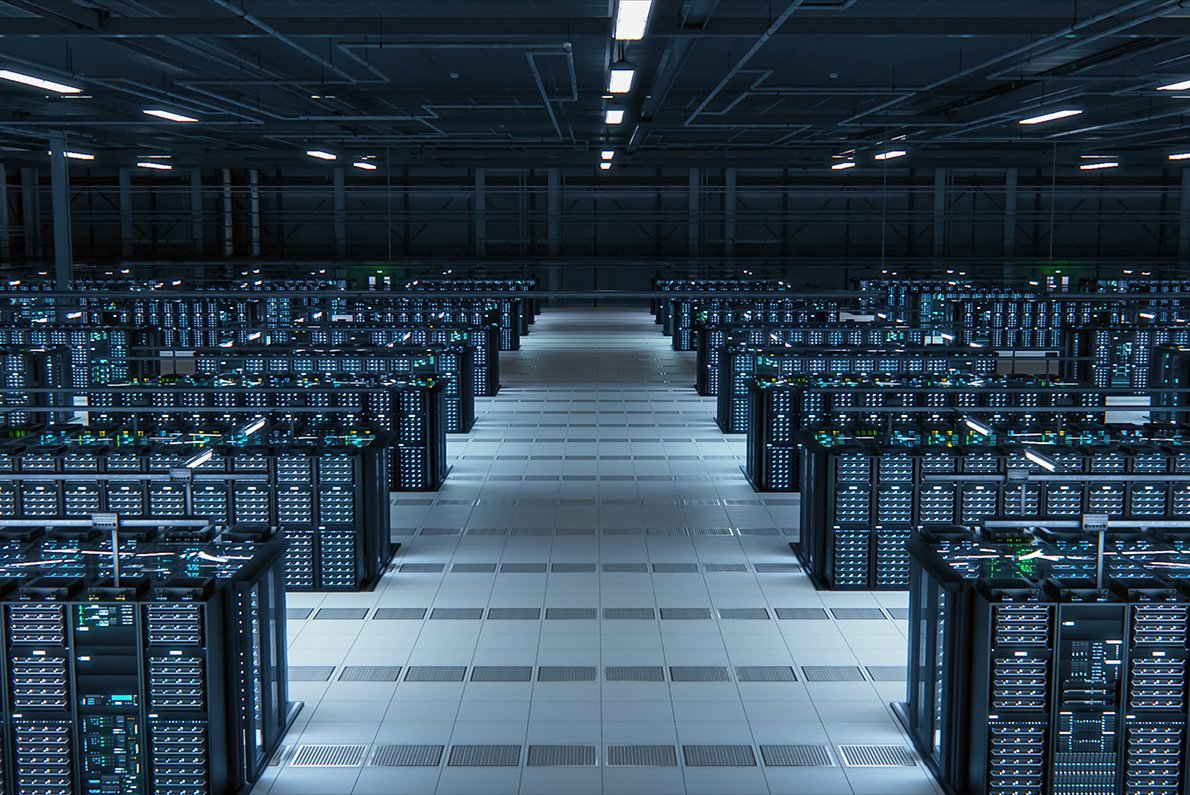
A data centre is a large building filled with computer servers that store, process and transmit digital information.
These servers generate heat while operating. If temperatures rise too high, equipment can malfunction, slow down or shut down.
Traditional facilities commonly use air-conditioning systems to maintain safe temperatures.
However, advanced artificial intelligence processors generate substantial heat because they perform enormous numbers of calculations.
As more powerful processors are installed closer together, conventional air cooling may become less effective.
This has increased interest in liquid cooling, which transfers heat away from equipment using specially designed cooling systems.
One method, called direct-to-chip liquid cooling, circulates coolant through components positioned near processors.
Another approach, immersion cooling, places specialised computing equipment in electrically non-conductive liquid to help remove heat.
These technologies can manage high temperatures more effectively in certain environments, although their costs and infrastructure requirements differ.
Cooling also raises concerns about water consumption. Some systems require substantial water, while others rely on closed-loop arrangements that recirculate coolant.
The choice of technology therefore matters for both operating costs and environmental sustainability.
Government Estimates Show Rising Electricity Requirements
The Union Government has acknowledged that expanding data centres will require significant investment in power infrastructure.
In an August 2026 statement, the Ministry of Electronics and Information Technology cited Central Electricity Authority estimates indicating that data-centre electricity demand could reach approximately 17 GW by 2031–32.
This is a projection of future power demand, not the industry’s current operational computing capacity.
The government has also identified advanced cooling technologies and cleaner electricity sources as important components of India’s digital infrastructure development.
Meanwhile, energy companies are preparing for growing demand.
In October, Tata Power announced an opportunity pipeline exceeding 2.8 GW across renewable energy, electricity transmission and distribution projects serving data centres.
The company said it was working across 29 initiatives involving 18 domestic and international data centre operators.
These developments demonstrate how data centre expansion is creating investment opportunities beyond the technology sector.
However, securing electricity generation capacity does not automatically guarantee reliable supply. Developers also require transmission networks, substations, backup systems and local distribution infrastructure.
Can India’s Infrastructure Keep Pace With AI Growth?
Concerns about resource availability are not new.
In December 2025, Reuters reported that India’s growing data centre industry could face operational challenges because of rising electricity demand and water requirements.
Industry estimates suggested that the sector’s share of national electricity consumption could more than triple between 2024 and 2030.
The latest projections show that these concerns remain central as developers pursue larger AI-ready facilities.
For India, the challenge is balancing digital infrastructure investment with dependable electricity supplies, water availability and environmental safeguards.
New data centres could strengthen cloud services and support domestic AI development, but construction schedules will depend on more than financial commitments.
The industry’s long-term success will increasingly depend on whether power networks and cooling infrastructure can expand at the same pace as computing capacity.
India’s data centre expansion could strengthen digital services, but electricity and water requirements must be carefully managed. Residents and businesses near proposed facilities can review environmental approvals, water-use plans and electricity arrangements before projects become operational.