
Follow us on Google News

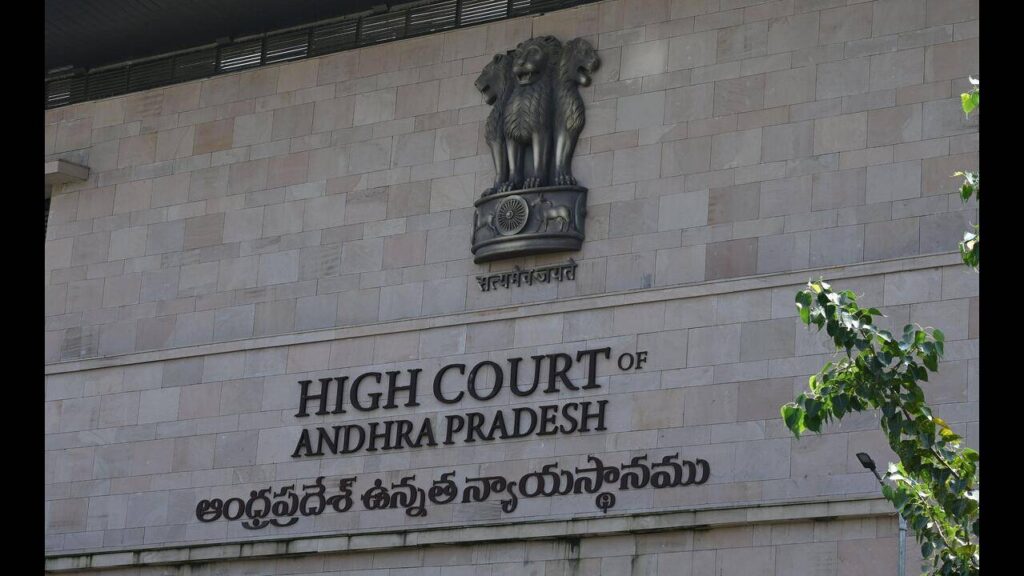
The Allahabad High Court has ruled that finance companies cannot employ recovery agents to forcibly seize financed vehicles over loan defaults, holding that contractual repossession rights must be exercised through lawful procedures rather than intimidation or violence.
The court directed HDB Financial Services Limited to immediately return a commercial vehicle allegedly seized at gunpoint from a borrower in Uttar Pradesh’s Chandauli district. It also ordered the company to restructure the outstanding loan without imposing penal interest and granted the borrower a two-month repayment moratorium.
A division bench comprising Justice J.J. Munir and Justice Indrajeet Shukla delivered the judgment on October 26 while allowing a writ petition filed by Sadab Ahmad, a self-employed commercial vehicle operator.
FCRF’s Chief AI Officer Certification Returns on November 14 to Prepare Future AI Leaders
Recovery Agents Allegedly Seized Truck At Gunpoint
According to the petition, Ahmad purchased a Tata goods carrier in December 2023 through financing provided by HDB Financial Services.
The company sanctioned a loan of approximately ₹20.33 lakh, repayable in 45 monthly instalments of ₹64,059 each.
Ahmad maintained that he had paid 31 instalments and was regularly meeting his repayment obligations.
However, on August 9, 2026, while driving through Chandauli, he was allegedly intercepted by individuals acting on behalf of the finance company.
The men reportedly threatened him at gunpoint, took possession of his vehicle and compelled him to sign a repossession inventory.
Ahmad subsequently approached the company, local police and the district administration seeking the return of his vehicle.
When those efforts failed to secure its release, he approached the Allahabad High Court.
The court noted that the finance company had not specifically denied the allegation concerning the manner in which the vehicle was seized.
The bench had earlier restrained the company from transferring the vehicle to any third party while the petition remained pending.
Finance Company Cites Linked Loans And Repayment Defaults
HDB Financial Services disputed the borrower’s assertion that his loan account was regular.
The company told the court that Ahmad’s loan was linked to another commercial vehicle loan obtained by his brother, Shoaib Ahmad. Under the arrangement, the two loan accounts provided security for each other.
The company alleged that Shoaib had repeatedly defaulted on repayments and that the vehicle financed through his loan could not be located.
It also claimed that Sadab Ahmad had defaulted on his own repayment obligations, with 30 post-dated cheques allegedly having bounced.
The company maintained that its loan agreement authorised repossession and that it had appointed Poonia Associates Private Limited to recover Ahmad’s vehicle.
However, the court’s examination of the account statement presented a different preliminary picture.
Although several cheques had bounced, the records appeared to indicate that Ahmad subsequently made the payments, including applicable cheque-bouncing charges. His last instalment was paid on August 7, just two days before the vehicle was seized.
The bench clarified that it was not making a final determination concerning the outstanding loan liability. That dispute would remain open for adjudication by a competent civil court or arbitrator.
Contractual Rights Cannot Override Lawful Recovery Procedures
The High Court distinguished a finance company’s legitimate right to recover outstanding debt from the methods it may employ to enforce that right.
It held that repossession clauses in financing agreements do not confer unrestricted authority on lenders to use force against borrowers.
Allowing private recovery agents to exercise such powers, the bench observed, would effectively grant financial institutions coercive authority ordinarily exercised through legally recognised institutions.
The court also noted that HDB Financial Services had already pursued arbitration proceedings against Ahmad’s brother.
In that case, an arbitrator had authorised the appointment of a receiver to take possession of the financed vehicle, with provisions for police assistance.
However, the company had not initiated comparable proceedings against Sadab Ahmad before seizing his vehicle.
The bench held that the company should have approached a legally recognised forum rather than attempting to enforce its contractual rights through private coercion.
The judgment also relied on the Supreme Court’s recent decision in Hari Dutta Sharma v. State of Uttar Pradesh.
In that case, a commercial vehicle financed by another company was taken away after its steering lock was broken during the night.
The Supreme Court awarded the borrower ₹10 lakh in compensation for mental distress and loss of livelihood, alongside other financial relief. It reiterated that loan recovery must comply with statutory requirements and Reserve Bank of India guidelines.
The Allahabad High Court also referred to the Supreme Court’s landmark 2007 judgment in ICICI Bank Ltd. v. Prakash Kaur, which condemned the use of muscle power for vehicle repossession.
Court Orders Vehicle Return, Loan Restructuring And Repayment Relief
Allowing Ahmad’s petition, the High Court directed HDB Financial Services to return his vehicle immediately without imposing any preconditions.
The court also imposed costs of ₹10,000 on the company.
The lender must provide an updated statement of account and restructure the remaining loan into fresh monthly instalments carrying ordinary interest, without penal or extraordinary interest.
Importantly, repayment under the restructured agreement will begin only after a two-month moratorium calculated from the date the vehicle is returned.
If Ahmad subsequently defaults under the revised repayment schedule, the company must pursue recovery through a civil court or arbitrator.
The ruling reinforces the principle that financial institutions remain entitled to recover legitimate outstanding debts, but borrowers cannot be deprived of their property or livelihood through unlawful methods.
What This Means For You:
If recovery agents threaten you or attempt to seize your financed vehicle forcibly, preserve relevant evidence, contact the police and seek legal assistance rather than physically confronting them. A loan default does not authorise violence or intimidation, but borrowers remain responsible for legitimate repayment obligations.