
Follow us on Google News

A 41-year-old Kerala man lost ₹3.89 lakh after clicking a fraudulent traffic fine link and entering his vehicle details.
How Did the Traffic Fine Scam Begin?
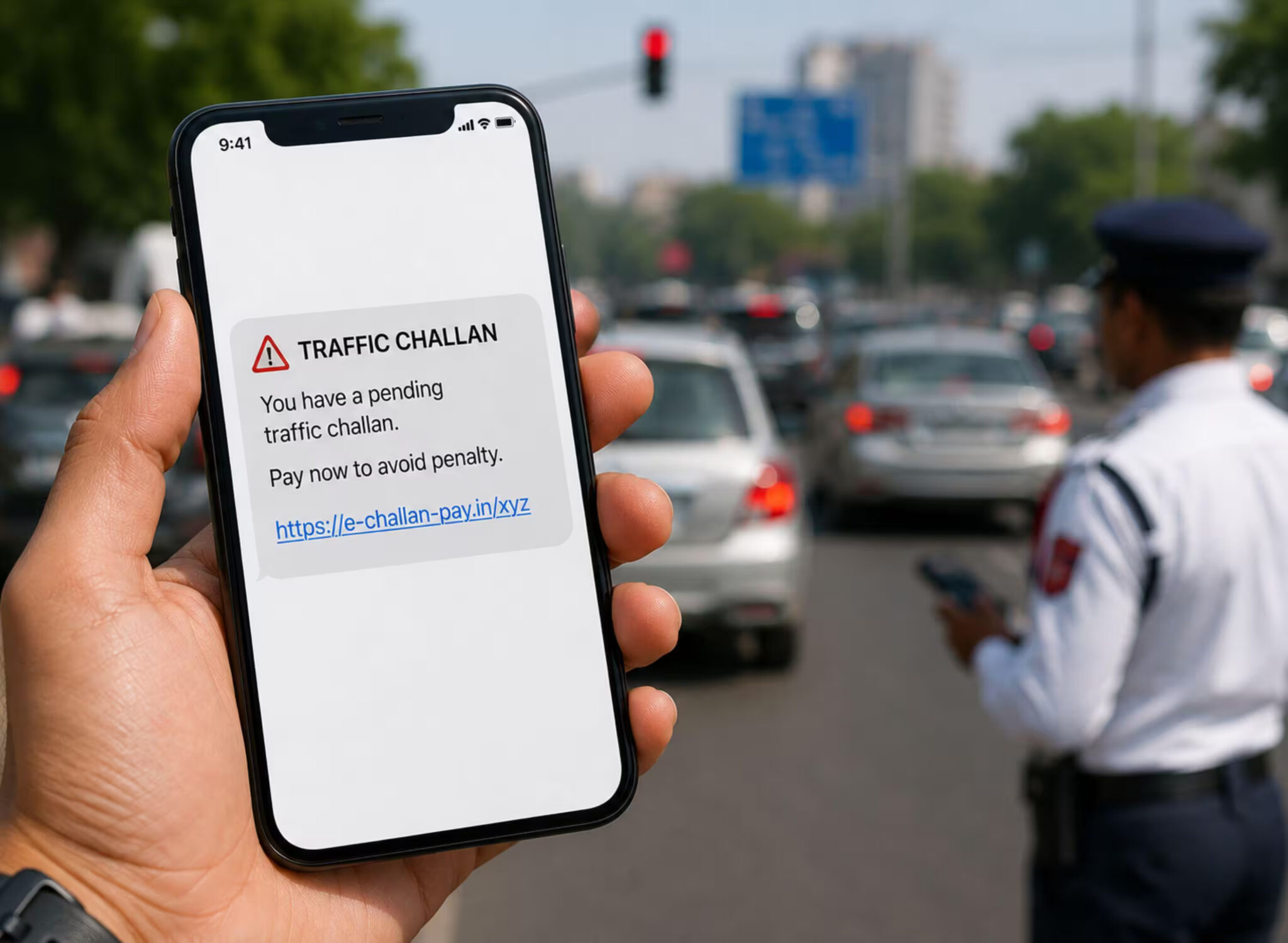
The incident occurred on November 8 in Kondotty, Malappuram district, when Jamsheed, a resident of Nambolankunnu near Calicut Airport, received a text message claiming that a traffic violation penalty had been imposed on his vehicle.
According to police, the message contained a reference number and a link directing him to a website resembling the government’s Parivahan portal. Believing the communication concerned a genuine traffic violation, Jamsheed opened the link and followed the instructions displayed on the page.
The fraudulent website prompted him to enter his vehicle registration number. Shortly afterwards, money began disappearing from his bank account without his knowledge or authorisation.
https://the420.in/fcrf-certified-chief-ai-officer-second-cohort-november-2026/
How Was ₹3.89 Lakh Withdrawn?
Police said ₹3,89,496 was fraudulently withdrawn from Jamsheed’s bank account through 10 transactions using a Unified Payments Interface (UPI) application.
The complainant discovered the unauthorised withdrawals after checking his bank balance. He subsequently approached the police and reported the incident. A case was registered on November 12, four days after he received the fraudulent message.
The incident involved a deceptive traffic penalty notification and a website designed to resemble an official government service. The victim had entered his vehicle registration details before the unauthorised transactions occurred.
What Action Have Police Taken?
Following the complaint, police traced the bank accounts into which the stolen money had been transferred. Authorities directed that the identified accounts be frozen as part of their investigation into the fraudulent transactions.
The case was registered under relevant provisions of the Bharatiya Nyaya Sanhita (BNS) and the Information Technology Act. Police have initiated an investigation to identify those responsible for the fraud and establish how the money was transferred.
Investigators are examining the financial trail connected to the transactions. The investigation remains underway, with efforts focused on identifying the individuals operating the fraudulent scheme.
Have Other People Reported Similar Fraud?
Police said several other individuals had approached them with similar complaints after receiving messages claiming that traffic fines had been imposed on their vehicles.
These complainants also reported losing money from their bank accounts after clicking links contained in the messages. However, the amounts involved in those cases were smaller than the ₹3.89 lakh reported by Jamsheed.
The complaints point to repeated use of fraudulent traffic penalty messages to direct recipients towards deceptive online interfaces. Such messages can appear connected to legitimate vehicle-related services because they refer to traffic violations and provide reference numbers.
The case highlights the financial risks associated with links that impersonate official government portals. Motorists should independently verify traffic penalties through the official Parivahan service rather than relying on links received through unsolicited messages.