
Follow us on Google News

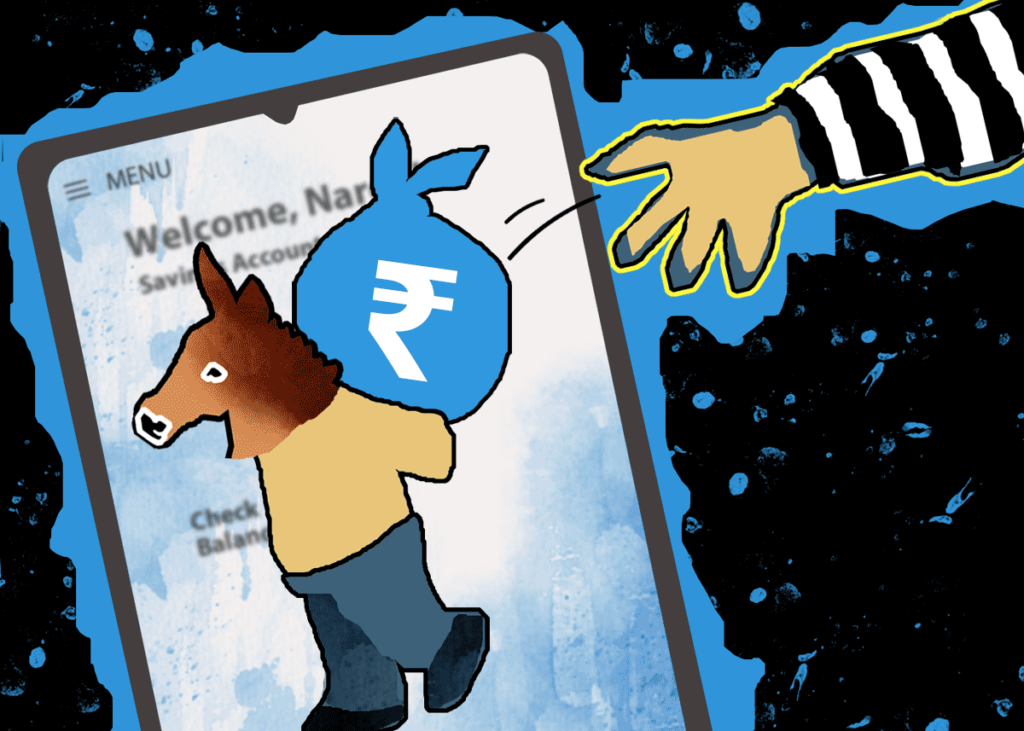
Three residents of Mangaluru have allegedly lost substantial amounts of money in separate cyber fraud cases involving fake credit card verification, traffic violation notices and pension card offers. The victims include a ship engineer, a truck driver and a retired bank employee, all of whom reported unauthorised transactions after interacting with suspected fraudsters.
The CEN Crime Police have registered cases in connection with the incidents, which involved deceptive messages, fraudulent calls and unauthorised mobile applications.
How Did a Fake Credit Card KYC Call Cost an Engineer ₹1.36 Lakh?
A 47-year-old ship engineer lost ₹1,36,896 after receiving a call from an unidentified person claiming to represent his bank. According to the complaint, the caller contacted him around 3 pm on Wednesday and requested his credit card details.
The suspect subsequently claimed that a video call was necessary to update the engineer’s Know Your Customer (KYC) information. He also sent a link to download an Android application package (APK).
When the complainant clicked the link, a video call was initiated but disconnected shortly afterwards. Subsequently, multiple unauthorised transactions amounting to ₹1,36,896 were made through his credit card.
The complainant also discovered that his credit card had been linked to another bank without his knowledge. Following his complaint, the CEN Crime Police registered a case.
How Was a Truck Driver Cheated Through a Fake Traffic Challan?
In another incident, a 41-year-old truck driver allegedly lost ₹4,26,434 after receiving a fraudulent traffic violation notification.
According to his complaint, he received a message on October 31 at approximately 9:34 am stating that footage of a traffic violation was available online. The message included his vehicle registration number and a link.
After clicking the link, an application named eChallan (mParivahan) was allegedly downloaded onto his mobile phone without his knowledge.
On November 10, the complainant discovered that ₹4,26,434 had been transferred from his savings account to an unknown account through multiple transactions. The CEN Crime Police subsequently registered a case following his complaint.
How Did a Fake Pension Card Offer Lead to Another Fraud?
A 77-year-old retired bank employee was allegedly cheated of ₹2,09,000 after responding to a Facebook advertisement offering a pension card.
The complainant clicked the advertisement and entered his name, address and PAN card details. At approximately 4:46 pm, he received a call from an unidentified individual who claimed that his bank account information was required to complete the pension card application.
After sharing the requested details, an APK file named Pension card was downloaded onto his mobile phone without his knowledge.
The complainant later discovered that ₹2,09,000 had been transferred from his bank account through multiple unauthorised transactions.
The three complaints illustrate how cybercriminals allegedly used familiar banking procedures, official-looking traffic notices and pension-related offers to obtain information and facilitate fraudulent transactions.