
Follow us on Google News

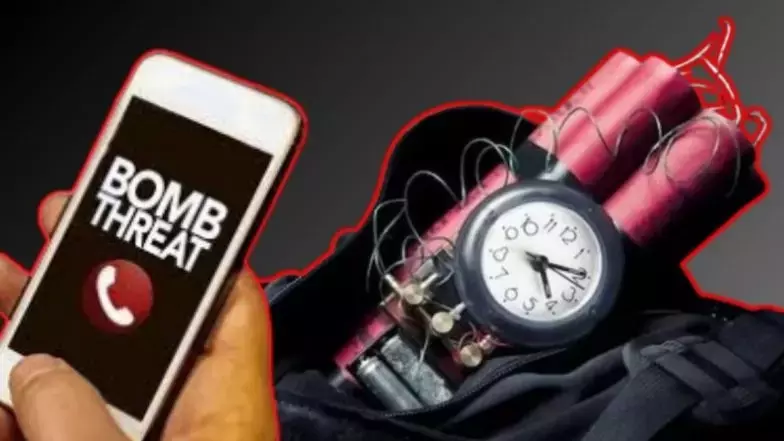
Rome — A second consecutive day of bomb threats targeting schools across Italy has sparked widespread concern among parents, educators, and security authorities, even as investigators found no explosive devices at any of the targeted campuses. On Thursday, 3,778 schools stretching from Milan in the north to Sicily in the south received threatening emails, following a similar wave of messages sent to roughly 6,300 of Italy’s 7,476 state schools on Wednesday. Authorities increasingly suspect the alerts are part of a coordinated hoax designed to disrupt education and strain emergency resources.
Controlled Response and Government Guidelines
Unlike Wednesday, when widespread evacuations and bomb squad searches were carried out across multiple cities, authorities adopted a far more restrained approach on Thursday. Officials confirmed that only 77 schools were evacuated, while thousands of others remained open despite receiving identical warnings. The government advised school administrators that mass emails alone do not constitute credible proof of danger and urged them not to empty campuses unless concrete evidence or specific risk indicators emerge.
Prime Minister Giorgia Meloni announced that her administration will draft tailored guidelines for different regions and institutions to manage such incidents more effectively. The government aims to prevent recurring disruptions to classroom learning while keeping security forces focused on genuine threats. At the same time, mounting anxiety among families has placed growing pressure on officials to establish clear and consistent national protocols.
Cross-Border Digital Trail Under Investigation
Security agencies are tracing the origin of the threatening emails, which appear to involve compromised accounts across multiple countries. Wednesday’s messages reportedly carried the signature “Mikhail Andropov, leader of Wilayat di Misogynistan,” with some officials indicating the emails were routed from Taiwan. A second message bearing the same name surfaced on Thursday and was traced to the email account of a teacher based in the Philippines, which investigators believe was hacked and used without the owner’s knowledge.
Suspicion initially fell on an extremist anti-women group, though the organization subsequently denied any involvement in the false alarms. Identifying the actual perpetrators and dismantling the digital network behind the campaign remains a primary challenge for investigators. Meanwhile, similar incidents have surfaced elsewhere in Europe, including school threats in Scotland and Northern Ireland on Wednesday, a bomb alert at Calais railway station in northern France on Thursday morning that disrupted rail services, and false threats directed at European airports and airlines last week.
Parent Protests and Calls for Uniform Rules
The sustained wave of alerts has begun to trigger public frustration inside Italy, where many parents are demanding clearer communication and stronger safeguards. At a secondary school in Rome, protests broke out after the principal decided against evacuating the building upon receiving a threat, reportedly concluding the message was fake due to spelling and grammatical errors. Demonstrators called on the government to issue uniform national safety directives so that individual administrators are not left to make ad hoc decisions during potential emergencies.
The episodes have underscored the growing difficulty of responding to mass digital threats that can reach thousands of institutions within seconds while requiring hours of verification. Italian authorities now face the delicate task of protecting students and staff without allowing unverified emails to repeatedly paralyze the school system.