
Follow us on Google News

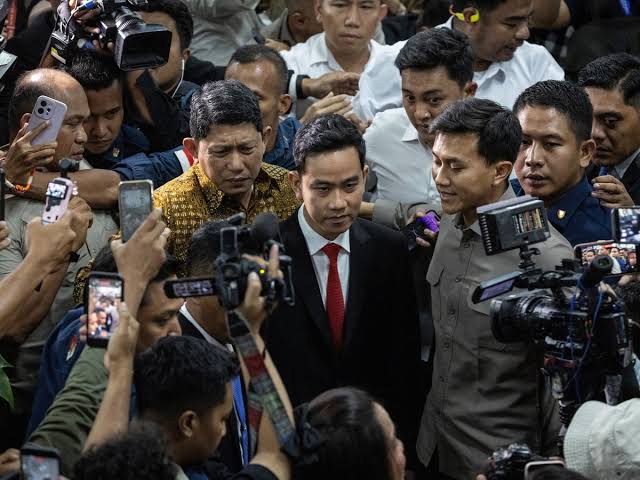
Indonesian Vice President Gibran Rakabuming Raka resigned on Thursday amid mounting scrutiny over his academic qualifications and constitutional eligibility to hold office. The 39-year-old son of former President Joko Widodo submitted his resignation to the leadership of the People’s Consultative Assembly, Indonesia’s highest legislative body, at the parliament building in Jakarta. He declined to comment to reporters as he exited the meeting. His departure follows major rulings last month by Indonesia’s Constitutional Court and Supreme Court, which determined that the foreign educational documents he submitted during the vice-presidential election did not meet statutory electoral requirements, deepening a political dispute over the legitimacy of his mandate.
Court Rulings and Initial Resignation Offer
Speculation over Gibran’s future intensified earlier in the week after he met with President Prabowo Subianto on Tuesday and offered to step down. Gibran reportedly stated that he wished to avoid a prolonged political controversy. At the time, it remained unclear whether the president had accepted the offer. According to a cabinet minister, President Prabowo advised Gibran during the meeting to defend himself and present his case rather than resign, leaving the situation unresolved until Thursday’s formal submission at parliament. The dispute centers on records from Gibran’s studies abroad, which both the Constitutional Court and Supreme Court reviewed last month in the context of electoral eligibility. Their findings that the paperwork fell short of legal standards raised fundamental questions about whether he had satisfied the necessary qualifications to run for vice president. While the court decisions did not automatically trigger impeachment proceedings, they shifted the focus toward parliamentary intervention.
Lawmakers’ Petition Opens Path to Impeachment
Pressure escalated on Wednesday when 120 lawmakers from eight political parties submitted a formal petition to parliamentary leaders questioning the constitutional validity of Gibran remaining in office. The complaint initiated a legislative process that could ultimately have led to his impeachment. Under Indonesian law, parliamentary leadership is required to form a special committee to investigate the complaint and determine whether Gibran violated the constitution by assuming office without meeting prescribed electoral criteria. If lawmakers find sufficient evidence to support the allegations, parliament must refer the matter to the Constitutional Court for a formal ruling on whether a constitutional violation occurred before any further impeachment steps could proceed.
Constitutional Succession and Separate Investigations
Indonesia’s constitution does not provide for an immediate snap election when the vice presidency becomes vacant. Consequently, the position will remain empty until the People’s Consultative Assembly elects a successor. Under constitutional rules, President Prabowo must propose two candidates for the role within 60 days, after which the assembly will vote to select one of them. Meanwhile, officials noted that the inquiry into Gibran’s educational credentials is entirely separate from an ongoing investigation into allegations of surveillance and phone tapping by senior police officers targeting the president. Based on available information, there is no direct link between the wiretapping probe and the dispute over the vice president’s academic records. Gibran’s resignation marks a significant turning point for the administration, placing immediate focus on the upcoming succession process and potential parliamentary proceedings.