


Tech Mahindra has partnered with SpaceXSI to use artificial intelligence across software development and help enterprises modernise ageing applications.
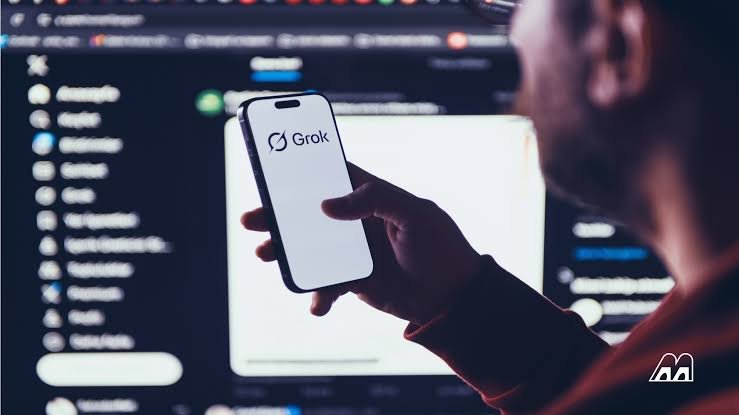
The Indian IT services company will integrate SpaceXSI’s Grok Build coding agent into its engineering and application-modernisation services.
The companies say the partnership will help businesses shorten software-development cycles, improve developer productivity and update legacy technology systems.
The collaboration will initially target industries including technology, telecommunications, banking and financial services, manufacturing, healthcare and retail.
FCRF’s Chief AI Officer Certification Returns on November 14 to Prepare Future AI Leaders
Grok Build Will Be Used Across Software Development
The centrepiece of the partnership is Grok Build, an AI coding agent developed by SpaceXSI.
Unlike a basic coding assistant that suggests individual lines of software, an agent can work across several stages of development.
That can include understanding technical requirements, generating code, helping with testing and assisting engineers as applications are updated.
Tech Mahindra plans to combine those capabilities with its existing engineering, consulting and digital-transformation services.
The goal is to embed AI into the full software-development lifecycle rather than use it only for isolated coding tasks.
For large enterprises, this could be particularly useful when modernising older systems that have been running for years.
Many banks, telecom companies and manufacturers still depend on legacy software that is expensive to maintain and difficult to replace.
AI tools can potentially analyse those systems, understand dependencies and help engineers rewrite or migrate parts of the software faster.
Legacy Modernisation Is Becoming a Major AI Market
Updating old enterprise software has traditionally been a slow and expensive process.
Large applications may contain millions of lines of code written over decades.
They can also be connected to databases, payment systems and business processes that cannot simply be switched off.
Engineers therefore need to understand how the existing software works before rebuilding or replacing it.
AI coding tools are increasingly being used to automate part of that work.
They can analyse existing code, generate documentation, identify dependencies and help create newer versions of applications.
Tech Mahindra believes this could reduce development time while improving code quality.
The company said enterprises are increasingly moving beyond small AI experiments and looking for ways to integrate AI directly into software engineering.
Security and Governance Remain Central
Using AI to write or modify enterprise software creates new risks.
AI-generated code can contain security vulnerabilities, incorrect logic or software dependencies that developers did not intend to introduce.
These risks are particularly important in banking, healthcare and telecommunications, where software failures can affect sensitive data or critical services.
Tech Mahindra says the joint offering will be designed around governance, security and compliance requirements.
Human oversight will therefore remain an important part of the process.
AI may accelerate development, but companies will still need engineers to review code, test applications and make sure systems meet security and regulatory standards.
That becomes even more important when AI agents are allowed to carry out longer chains of software-development tasks.
Tech Mahindra Expands Its AI Partner Network
The SpaceXSI agreement is part of a wider AI partnership strategy at Tech Mahindra.
The company already works with major technology providers including Google Cloud and Microsoft.
Earlier this month, Tech Mahindra expanded its collaboration with Google Cloud around Gemini Enterprise and agentic AI.
The company has also developed its own AI-powered software-development platforms.
These include AppGinieZ, which uses generative AI and software agents across development, testing and maintenance, and Swifter.io, which is designed to automate software engineering from specifications through deployment.
The SpaceXSI deal adds another model and coding platform to that ecosystem.
Reuters said this is the first time an Indian IT major has partnered with SpaceX’s AI division.
That is notable because Indian IT companies increasingly compete not only on the number of software engineers they employ but also on how effectively they can combine those engineers with AI.
AI Is Changing the IT Services Business Model
Generative AI has created both an opportunity and a challenge for traditional IT services companies.
Tasks that once required large teams of developers may increasingly be completed by smaller teams using AI coding agents.
That could pressure older business models based heavily on billing clients according to the number of employees assigned to a project.
At the same time, enterprises need help integrating AI into complex existing systems.
That creates demand for consulting, application modernisation, data engineering and governance work.
Tech Mahindra and other Indian IT firms are trying to position themselves on that side of the transition.
The SpaceXSI collaboration will also include joint customer programmes, industry-specific solutions and employee enablement and certification initiatives.
Neither company has announced the financial terms of the partnership or disclosed major customer contracts tied specifically to the agreement.
That means the commercial impact will depend on how many enterprises eventually adopt the joint services.
What this means for you:
AI coding agents are moving from developer experiments into large enterprise IT projects. The biggest change may come in legacy-system modernisation, where AI can speed up work but still requires strong human review, security testing and governance.
Follow for daily updates on cybercrime, corporate fraud, DFIR, hacking, investigations, and digital forensics
