

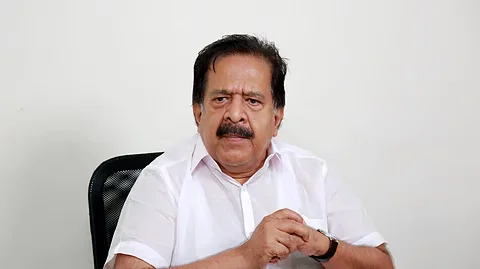
A major political controversy has erupted in Kerala over the procurement of software for the cooperative sector, with senior Congress leader Ramesh Chennithala alleging a ₹700 crore scam in the tendering process. Targeting the ruling Left Democratic Front (LDF), he claimed that large-scale irregularities in awarding contracts for thousands of primary cooperative societies have caused significant financial loss to the state.
Addressing a press conference, Chennithala said that the initial tender for providing software to around 4,415 primary cooperative societies was awarded to Tata Consultancy Services (TCS). A contract worth ₹206 crore had been signed for the project. However, he alleged that the agreement was later cancelled under questionable circumstances, and a fresh tender was floated, triggering serious concerns.
According to Chennithala, the revised tender conditions were designed in a manner that effectively excluded experienced players like TCS from participating. He claimed that only two Kannur-based entities were made eligible under the new criteria, both allegedly linked to the ruling establishment. One of them—Dinesh Beedi Cooperative Society—has reportedly submitted a bid of ₹58 crore despite lacking prior experience in the software domain.
FCRF Launches Premier CISO Certification Amid Rising Demand for Cybersecurity Leadership
He further stated that the overall project cost has now escalated to nearly ₹915 crore, compared to the earlier ₹206 crore estimate. Calling the difference a “potential loss of around ₹700 crore,” Chennithala described the development as a “systematic financial irregularity” that raises serious questions about transparency in public procurement.
Project rooted in RBI guidelines; Centre’s software reportedly rejected
Providing background, Chennithala said the project originated from guidelines issued by the Reserve Bank of India (RBI) in 2014, which called for the implementation of a centralised banking software system across cooperative institutions nationwide. The initiative was to be executed by states using central funding to improve digitisation, efficiency, and regulatory oversight.
However, the Kerala government reportedly chose not to adopt the centrally developed software, opting instead to build a customised system tailored to the state’s requirements. Following this decision, a tender process was initiated in which TCS emerged as the sole bidder and was selected in 2021. A formal agreement was signed in 2024.
The contract was subsequently cancelled in 2025, and a fresh tender was issued. It is this shift in the procurement process that has now become the focal point of the controversy. Chennithala alleged that the decision lacked transparency and violated principles of fair competition.
Awaiting Election Commission clearance; pressure mounts on government
Chennithala also claimed that all preparations to award the contract under the new tender have been completed, and the state government is now awaiting approval from the Election Commission to proceed further. He alleged that the process is being pushed through hastily and without adequate competitive bidding.
So far, there has been no detailed response from the state government on the allegations. However, the issue has quickly gained traction in political circles, especially at a time when the state is heading into an election cycle.
Political ramifications likely; questions over transparency deepen
Political observers believe the controversy could emerge as a major electoral issue in Kerala. While the opposition is projecting it as a large-scale scam, the ruling dispensation is likely to face increasing scrutiny over procedural integrity and transparency in public contracting.
Overall, the dispute underscores broader concerns around governance and accountability in high-value digital infrastructure projects. Beyond the financial implications, the episode raises questions about institutional processes and oversight in the cooperative sector. With allegations intensifying, further disclosures in the coming days could deepen the political confrontation in the state.
