

Ballari, a politically charged district in Karnataka with a history of factional rivalry, slipped into violence late Thursday evening after tensions flared between supporters of two rival legislators. What began as a dispute over the installation of a flex banner quickly escalated into stone-pelting, gunfire, and chaos on the streets.
The immediate spark was an attempt by a supporter of Congress MLA Nara Bharath Reddy to install a banner outside the residence of BJP MLA G Janardhana Reddy in Havambhavi. The banner related to an upcoming idol installation event of Valmiki Maharishi, scheduled at SP Circle the following day. BJP workers opposed the move, and within hours, the confrontation spiraled beyond control.
Amid the turmoil, a Congress worker, Rajashekar, was killed by a gunshot. Police later said preliminary findings suggested the bullet was fired from a private weapon, not a police firearm, though forensic examination is ongoing. Multiple videos circulating on social media appear to show armed individuals firing shots into the air and toward private property, while groups from both sides wielded stones and sticks.
A New SP, an Old Test
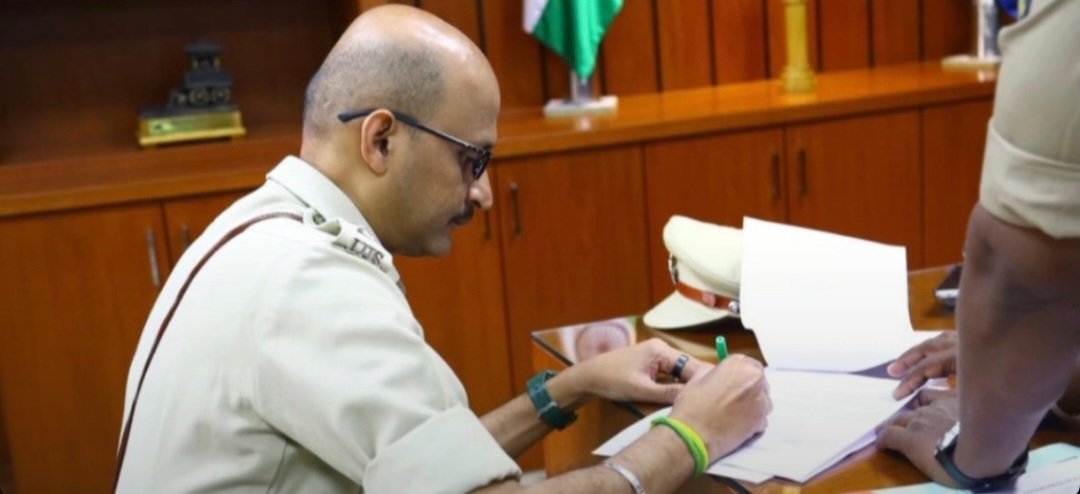
Less than 24 hours after the violence, the Karnataka government placed Ballari’s Superintendent of Police, Pavan Nejjur, under suspension with immediate effect. The decision was striking not only for its speed but also for its timing: Mr. Nejjur had assumed charge just a day earlier, on January 1, after being transferred from the Karnataka Lokayukta.
The suspension order, issued on January 2 by the Department of Personnel and Administrative Reforms, cited prima facie failure to effectively manage the law-and-order situation and inadequate briefing of senior officers on the evolving ground realities. The government said it was satisfied that his conduct amounted to a violation of Rule 3 of the All India Services (Conduct) Rules, 1968, warranting suspension pending inquiry.
Senior officials noted that the recommendation for disciplinary action came from the Deputy Inspector General of Police of the Ballari Range and was endorsed by the Director General and Inspector General of Police. During the suspension period, Mr. Nejjur will receive subsistence allowance and has been directed not to leave headquarters without written permission from the state government.
Politics, Policing, and Accountability
The violence has placed an unflattering spotlight on the intersection of political rivalry and policing in the district. In the cases registered so far, Janardhana Reddy has been named as the prime accused in multiple complaints filed by Congress leaders and aides of Bharath Reddy. In total, at least ten people, including former minister B Sriramulu and other BJP leaders, have been booked under a wide array of provisions, ranging from rioting and unlawful assembly to attempt to murder and criminal intimidation under the Bharatiya Nyaya Sanhita.
Four FIRs have been registered, including one suo motu case, and police say five firearms have been seized. As of now, no arrests have been made. Officials have stressed that the investigation remains open-ended, with video evidence being verified and ballistic reports awaited.
Chief Minister Siddaramaiah has ordered a detailed inquiry to determine the source of the fatal bullet and has asked senior officers to establish whether the weapon belonged to BJP or Congress-linked individuals. The Home Minister, G Parameshwara, said the Additional Director General of Police (Law and Order) had been dispatched to Ballari to conduct an on-ground assessment and submit a report.
Restoring Order, Seeking Answers
In response to the unrest, the state has deployed additional forces to Ballari, including units of the Karnataka State Reserve Police and District Armed Reserve from neighboring districts. The aim, officials said, is to prevent further escalation in a city still bristling with political tension.
For many in Karnataka’s administrative circles, the episode underscores a recurring dilemma: how swiftly accountability should be fixed when violence erupts, and how much latitude newly appointed officers should be granted in volatile districts. The suspension of Mr. Nejjur may signal the government’s intent to project decisiveness, but it also raises deeper questions about systemic preparedness, intelligence assessment, and the enduring challenge of policing politically polarized spaces.
As investigations continue and inquiries unfold, Ballari remains a reminder that in India’s fiercely contested political terrain, the line between symbolic provocation and deadly consequence can be perilously thin.
