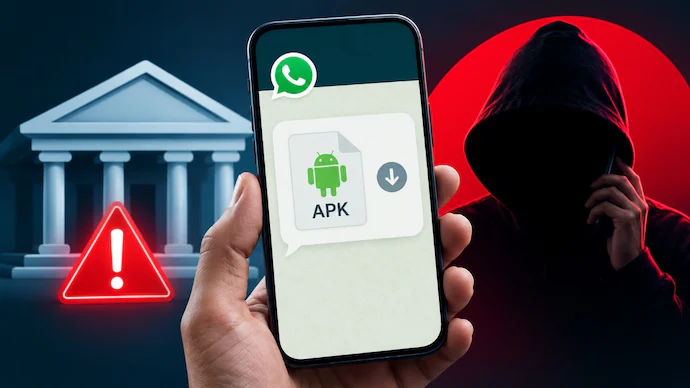

COIMBATORE: Three residents of Coimbatore district lost a combined ₹7.79 lakh in separate cyber frauds involving a fake traffic-challan application, an insurance refund call and a fraudulent bank KYC update, prompting district cybercrime police to register three cases and begin investigations.
Although the scams used different pretexts, all three relied on a familiar cybercrime tactic: convincing victims to hand over information or device access that allowed fraudsters to reach their money.
The largest loss involved a malicious Android application sent through WhatsApp, while the other two cases allegedly involved victims sharing sensitive banking details and one-time passwords after trusting callers posing as legitimate representatives.
Fake Traffic Challan APK Leads To ₹4.79 Lakh Loss
In the first case, K Karthikeyan, 27, a private company employee from Karumathampatty, received an Android Package Kit, or APK, file through WhatsApp.
The application was allegedly disguised as an “RTO traffic challan”. Believing it to be genuine, Karthikeyan downloaded and installed it before entering personal information including his Aadhaar and mobile numbers.
Soon afterwards, suspicious activity was detected in his Karur Vysya Bank account. Police said ₹4.79 lakh was transferred to multiple suspected accounts without his authorisation.
APK files are installation packages used for Android applications. While legitimate apps also use the format, cybercriminals increasingly circulate malicious APK files outside official app stores to trick users into installing software capable of stealing information or abusing permissions on their phones.
CERT-In has separately warned about an RTO and e-challan-themed malware campaign in which fraudulent messages direct Android users to applications carrying names resembling official transport services.
Once installed, such malicious software can potentially collect sensitive information and facilitate unauthorised financial transactions.
Insurance Refund And KYC Calls Target Trust
The second complaint came from S Sreedevi, 43, a private school teacher from Siruvani near Nallur Vayal.
Police said she received a phone call on September 24 from a person claiming to represent HDFC ERGO General Insurance. The caller allegedly told her she was eligible for a refund connected to an insurance policy.
Believing the claim, Sreedevi allegedly shared her credit-card details, an OTP and a cancelled cheque.
Police said ₹1.75 lakh was subsequently transferred to three different accounts.
The third case involved C Murugalakshmi, 49, from Valparai. She allegedly received a WhatsApp call from a person posing as an Indian Bank representative.
The caller told her that she needed to complete a KYC update and asked her to share an OTP.
After she provided the requested information, Murugalakshmi allegedly lost ₹1.24 lakh through transactions carried out between October 21 and October 23.
Cybercrime police have registered separate cases and begun tracing the transactions and accounts that received the money.
Different Stories, Same Authentication Weakness
The three cases illustrate how fraudsters frequently change the story presented to a victim while pursuing essentially the same objective.
A traffic fine creates urgency because recipients may fear penalties. An insurance refund creates the expectation of receiving money, while a KYC warning can make victims fear that their banking services will be restricted.
Once that trust or urgency is established, fraudsters try to obtain information that can help them complete transactions or compromise the victim’s device.
In the APK case, the dangerous step was installing software received through an unsolicited WhatsApp message. In the other cases, investigators are examining information allegedly shared directly with people impersonating representatives of trusted financial institutions.
OTP requests are particularly significant because banks and other financial institutions repeatedly advise customers not to disclose such codes to callers. OTPs are designed to authorise sensitive actions and should not be treated as routine verification information to be verbally shared.
Coimbatore Has Seen Repeated APK And KYC Complaints
The latest cases come amid a wider rise in cyber-fraud complaints in Coimbatore.
District police data reported in September showed that authorities had received thousands of cybercrime complaints during 2026, including cases involving APK files, fake KYC updates, online trading schemes, job scams and matrimonial frauds.
Fake traffic-challan applications have also surfaced in earlier investigations in the region.
In one previous Coimbatore case, a senior citizen allegedly lost ₹16.49 lakh after downloading a fake RTO challan application received through WhatsApp. Police later arrested several people while tracing the network connected to the fraud.
The recurring cases show why the initial point of contact remains critical. Fraudsters do not necessarily need sophisticated technical access if they can persuade users to install an application, reveal an OTP or provide banking credentials themselves.
Police investigations into the three latest complaints are now focused on tracing the beneficiary accounts and digital trails behind the transactions.