

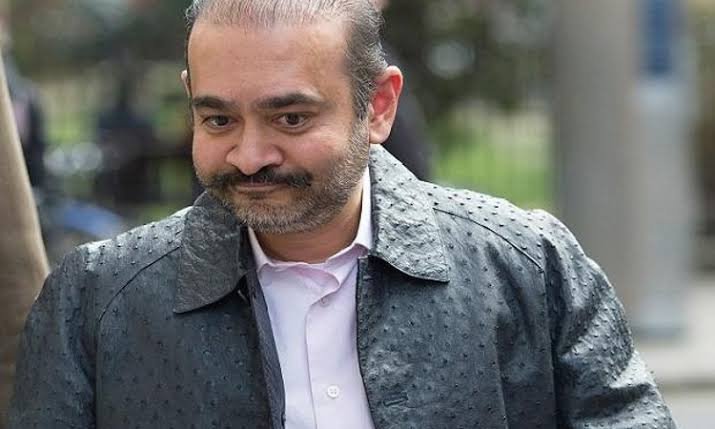
Fugitive diamantaire Nirav Modi has suffered a major legal setback after a London court ordered him to pay more than USD 10.7 million, equivalent to over ₹100 crore, to Bank of India. The ruling, delivered on Tuesday by the London Circuit Commercial Court, relates to a loan facility extended by the bank to a Dubai-based company promoted by Modi. The court held that Modi is personally liable for the debt under a personal guarantee he executed on August 3, 2012, making him legally responsible for repaying the outstanding dues following a default by the borrowing entity.
Dispute Tied to Pre-PNB Fraud Corporate Loan
The loan facility at the center of the dispute was originally extended to Firestar Diamond FZE in 2012, several years before the multi-billion-dollar Punjab National Bank (PNB) fraud case came to light. Under the terms of the August 2012 agreement, Modi undertook personal responsibility to repay the loan if the company defaulted. Following a default by Firestar Diamond FZE, Bank of India initiated independent recovery proceedings under the guarantee.
Court records indicate that the financial position of the Firestar Group deteriorated significantly after investigations into the PNB banking fraud emerged in early 2018. In February 2018, the Central Bureau of Investigation (CBI) registered its first FIR in connection with the PNB fraud case, which investigating agencies later alleged involved transactions worth nearly USD 2 billion.
Registration Begins for FutureCrime Summit 2026, India’s Largest Cybercrime Conference
London Court Rejects Technical Objections Over Notices
Modi’s legal team challenged the recovery proceedings in London, arguing that the personal guarantee was unenforceable. They contended that Bank of India had failed to issue a valid demand for payment and that there were insufficient grounds to accelerate the loan facility and seek immediate repayment. Furthermore, Modi claimed he did not receive demand notices issued by the bank in April 2018 and October 2025 because he was not present in India at the relevant time.
The court completely rejected these technical arguments, holding that the notices had been properly served. It noted that the October 2025 demand notice was sent directly to the prison in the United Kingdom where Modi is currently lodged. Additionally, evidence showed that Modi’s legal representatives had received a copy of the April 2018 notice in 2019, demonstrating his clear awareness of the bank’s demand. The judgment also cited an email sent by Modi to the bank acknowledging that adverse media reports had severely impacted business operations, rendering the companies unable to meet their liabilities. Consequently, the court concluded that Bank of India was fully entitled to accelerate the facility and enforce the personal guarantee executed by Modi.
Extradition Battle Continues Across European Courts
The ruling marks another significant setback for Modi in the United Kingdom, where he continues to contest extradition proceedings initiated by India. In March of this year, the UK High Court rejected his attempt to reopen his challenge against extradition, relying on assurances provided by the Government of India.
Modi is currently pursuing separate legal remedies before the European Court of Human Rights in an effort to halt his transfer to India, where he remains wanted by both the CBI and the Enforcement Directorate in connection with the primary PNB fraud case. According to the court’s final calculation, Modi’s total liability includes approximately USD 4.1 million, or around ₹38.9 crore, towards the principal outstanding amount, with accrued interest bringing the final ordered payment to more than USD 10.7 million.
