
Follow us on Google News

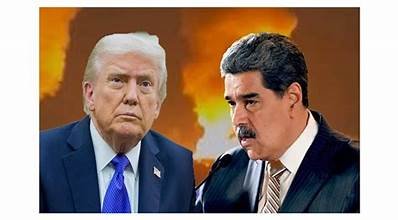
US President Donald Trump on Sunday sparked fresh international controversy after posting an image on his social media platform Truth Social in which he described himself as the “Acting President of Venezuela.” The post, featuring Trump’s official presidential portrait, carried the caption: “Acting President of Venezuela, Incumbent January 2026,” while also identifying him as the 45th and 47th President of the United States.
The declaration immediately drew global attention, adding to mounting tensions over Washington’s recent actions in Venezuela and raising questions about sovereignty, international law and the future of the oil-rich South American nation.
Trump’s post comes weeks after the US announced a large-scale military operation targeting Venezuela’s leadership. According to American officials, the operation resulted in the capture of Venezuelan President Nicolas Maduro, who was flown to New York along with his wife, Cilia Flores. Both now face charges related to alleged narco-terrorism conspiracy, a move Caracas and its allies have described as illegal and politically motivated.
Final Call: FCRF Opens Last Registration Window for GRC and DPO Certifications
In subsequent statements, Trump said the United States would “run Venezuela” until what he described as a “safe, proper and judicious political transition” is completed. He argued that Washington could not risk allowing control of the country to pass to actors who, in his words, “do not have the interests of Venezuelans in mind.” The temporary arrangement, Trump claimed, was aimed at restoring stability and rebuilding Venezuela’s battered economy.
Meanwhile, developments in Caracas point to a parallel power structure. Venezuela’s Vice President and oil minister Delcy Rodriguez was formally sworn in last week as the country’s interim president. However, Trump’s assertion of being “Acting President” has cast doubt over the legitimacy and international recognition of that interim government, setting the stage for a potential diplomatic standoff.
Oil has emerged as the central flashpoint in the unfolding crisis. Trump said Venezuela’s interim authorities had agreed to hand over between 30 and 50 million barrels of what he called “high-quality, sanctioned oil” to the United States. The oil, he said, would be sold at market prices, with the proceeds placed under the control of the US President.
“That money will be controlled by me, as President of the United States of America, to ensure it is used to benefit the people of Venezuela and the United States,” Trump said in his post. He added that he had instructed US Energy Secretary Chris Wright to execute the plan immediately. Under the proposal, the oil would be loaded onto storage vessels and shipped directly to US ports.
The remarks have reignited debate over international law and the legality of controlling another country’s natural resources during a political transition. Legal experts and diplomats have warned that such actions could undermine existing sanctions frameworks and set a contentious precedent in global geopolitics.
Within the US administration itself, officials appear divided over the implications of Trump’s post. Some have downplayed it as political messaging aimed at pressuring rivals, while others see it as a signal of a more assertive policy direction. Latin America specialists caution that the rhetoric could heighten regional instability and complicate Washington’s relations with allies and multilateral institutions.
On the other side, countries sympathetic to Caracas and several human rights organisations have condemned the move, arguing that claims over leadership and resource control violate international norms of sovereignty. Pro-US analysts, however, suggest the statement may be part of a broader negotiating strategy designed to force concessions during a transitional phase.
Ultimately, Trump’s self-description as Venezuela’s “Acting President” has moved well beyond a social media post, becoming a test case for global diplomacy. In the days ahead, the response of Venezuela’s interim authorities, regional blocs and United States allies will be closely watched to determine whether this episode signals a substantive policy shift—or remains a high-stakes exercise in political pressure.
About the author – Rehan Khan is a law student and legal journalist with a keen interest in cybercrime, digital fraud, and emerging technology laws. He writes on the intersection of law, cybersecurity, and online safety, focusing on developments that impact individuals and institutions in India.