

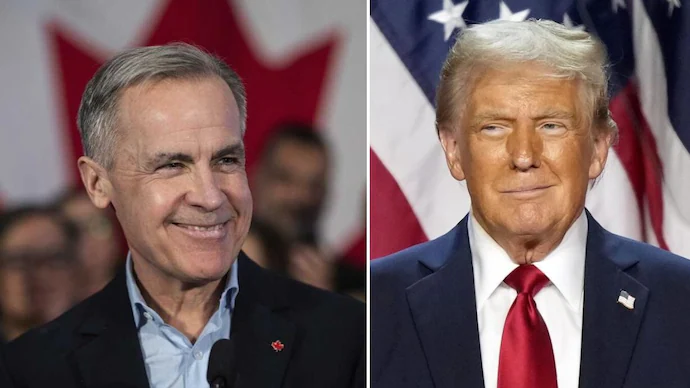
Trade tensions between the United States and Canada have resurfaced sharply amid concerns over a potential trade arrangement between Canada and China. Washington has issued a stern warning that if Canada is seen facilitating the entry of Chinese goods into the American market through transit routes, import duties of up to 100 per cent could be imposed on Canadian products. The threat has sent ripples through North American trade circles, reviving fears of a broader economic confrontation.
In a strongly worded message shared on social media, it was made clear that the United States would not tolerate Canada acting as a “backdoor” for Chinese exports. The statement underlined that any such move would be viewed as a direct threat to economic security and would invite immediate retaliatory action. The warning has unsettled businesses on both sides of the border, with markets closely watching the next steps.
Certified Cyber Crime Investigator Course Launched by Centre for Police Technology
Transit routes and tariffs at the heart of the dispute
At the core of the dispute lies the concern that Chinese goods could be routed through Canada to bypass existing tariff barriers and enter the US market. Washington argues that such mechanisms undermine established trade rules, weaken tariff enforcement and put domestic industries at a disadvantage. Against this backdrop, the possibility of blanket tariffs on all Canadian goods is being viewed as one of the toughest trade signals issued in recent years.
Economic analysts caution that if the tariff threat translates into policy, the consequences could be severe. Canada’s export-driven sectors would face immediate pressure, while manufacturing output and employment levels could also be hit. As the United States remains Canada’s largest trading partner, any escalation would inevitably have spillover effects across both economies. Key sectors such as automobiles, energy, agriculture and consumer goods are expected to be among the most exposed.
Pressure tactic over China ties?
Observers believe the sharp rhetoric may be part of a broader pressure strategy aimed at discouraging Canada from deepening economic engagement with China. The messaging has suggested that closer trade ties with Beijing could carry long-term risks for Canada’s economy and social framework. Analysts interpret this as an attempt to reshape trade alignments in North America at a time of intensifying global economic competition.
So far, Canada’s public response has remained measured. Policymakers are understood to be assessing the implications of the warning while exploring options to safeguard economic interests. Diplomatic channels are expected to remain active as Ottawa weighs how to balance its global trade ambitions with its critical economic relationship with Washington.
Not the first flashpoint
This is not the first time trade and strategic disagreements have strained US–Canada relations. In the past, differences have surfaced over defence initiatives, global strategic alignments and interpretations of trade rules. Recent international forums have also witnessed growing criticism of powerful nations exerting pressure on smaller economies — a backdrop that adds context to the current exchange.
The latest episode highlights the fragile equilibrium that governs North American trade relations, particularly as global supply chains undergo rapid realignment. With China continuing to play a central role in global manufacturing and exports, concerns over indirect market access have become increasingly sensitive.
Global implications and the road ahead
Experts warn that if the tariff threat escalates into concrete action, the impact would extend well beyond bilateral trade. Global supply chains could face renewed disruption, investor confidence may weaken, and multilateral trade frameworks could come under strain. Rising production costs in North America could translate into higher consumer prices, while companies may accelerate efforts to diversify markets and logistics routes.
For now, the dispute remains in a phase of strong messaging, diplomatic signalling and strategic calculation. Both sides face the challenge of protecting national economic interests without destabilising long-standing trade partnerships. The unfolding situation places the China–Canada–US triangle firmly in focus, with the outcome likely to influence broader global trade dynamics.
As tensions simmer, the episode serves as a reminder that in an interconnected world, trade decisions rarely remain confined to economics alone. What is at stake is not merely tariff rates, but the future balance between cooperation, competition and trust in international commerce.
About the author – Ayesha Aayat is a law student and contributor covering cybercrime, online frauds, and digital safety concerns. Her writing aims to raise awareness about evolving cyber threats and legal responses.
