

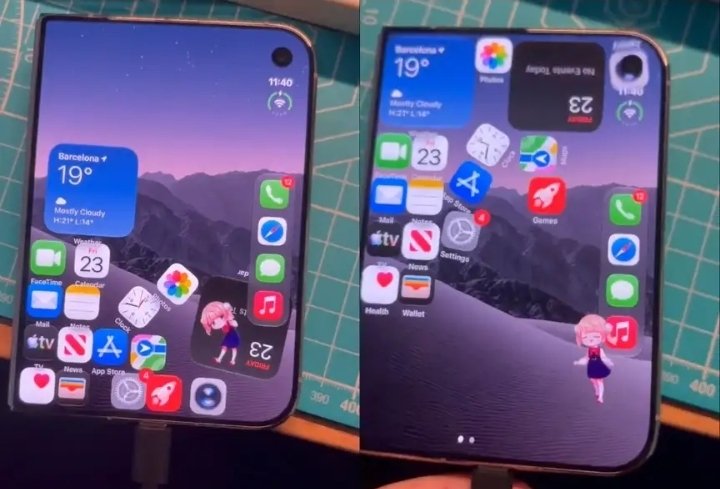

Apple’s first foldable smartphone, the iPhone Duo, was reportedly jailbroken within hours of becoming available to the public on October 23. The hacking group known as Calif claimed responsibility for the breach and released video footage demonstrating unauthorized interface modifications on the device. The footage shows application icons and widgets bouncing across the screen, accompanied by an added custom anime character. The affected smartphone was reportedly running iOS 27.1, drawing immediate attention across the cybersecurity community.
Device Running iOS 27.1 Breached on Launch Day
The rapid compromise occurred shortly after the retail debut of the iPhone Duo, marking a swift challenge to Apple’s security protocols. Operating on iOS 27.1, the handset was subjected to privilege escalation that bypassed standard operating system boundaries. Jailbreaking represents an effort to lift restrictions imposed by device manufacturers, granting users root-level control to alter system parameters and execute unverified software. Apple has long implemented stringent hardware and software protections to prevent third-party modifications, making launch-day exploits particularly notable.
While the announcement has stirred discussion regarding mobile platform security, technical specifics regarding the vulnerability remain undisclosed. Calif has not clarified whether the method relies on a flaw in the operating system kernel, a weakness in hardware components, or a vulnerability within the setup process. In the absence of comprehensive diagnostic documentation, independent researchers cannot confirm the depth of access attained or evaluate whether identical techniques could compromise other hardware configurations operating on the same firmware version.
Demonstration Footage Details Interface Modifications
The primary evidence presented by Calif consists of video documentation showing dynamic alterations to the graphical environment of the iPhone Duo. Standard interface components, including widgets and system icons, were made to bounce freely across the primary display panel. In addition, the group embedded an interactive anime figure directly into the home screen environment, reflecting direct manipulation of system graphics and display behaviors.
Such modifications demonstrate that third-party code achieved sufficient permissions to override native display and arrangement parameters. For enthusiasts, interface personalization and unrestricted software installation remain primary motivations for modifying mobile operating systems. However, security analysts observe that visual adjustments alone do not prove a total compromise of internal encryption, sandboxing mechanisms, or secure enclave features. Verifying the legitimacy and severity of the exploit requires deeper scrutiny of the code execution pathways used in the presentation.
Public Release of Exploit Tool Withheld
Despite sharing evidence of the process, Calif has not released an executable utility or source code that would allow the public to reproduce the jailbreak. Consequently, general users cannot apply the method to their own hardware. The withholding of tools and technical briefs restricts third-party testing, leaving unresolved questions concerning device stability, user privacy, and defensive countermeasures.
Jailbreaking carries well-documented operational risks, frequently leaving devices susceptible to stability issues, unauthorized data extraction, and malware exposure. Modifying core system files can also invalidate hardware warranties and permanently impair native firmware update routines. Smartphone security researchers are waiting to see whether Calif will disclose vulnerability details responsibly to Apple or publish a public toolkit. Until verified documentation emerges, the broader implications of the iPhone Duo exploit remain open to debate.
Follow for daily updates on cybercrime, corporate fraud, DFIR, hacking, investigations, and digital forensics
