
Stay ahead with our breaking stories and exclusive coverage prioritized on Google.
Add The420 on Google →An artificial intelligence model in Russia has generated a continuation of Nikolai Gogol’s unfinished 19th-century novel Dead Souls, triggering a literary debate over originality and authorship. Published under the title Dead Souls: Revival, the book attempts to reconstruct the lost second volume of Gogol’s classic work, parts of which the author burned shortly before his death in 1852, roughly 174 years ago.
The project was developed using GigaChat, an AI model created by Russian banking and technology company Sber, in collaboration with linguists, engineers, and historians. According to project participant Vladislav Otroshenko, the machine took around four months to produce a narrative aligned with Gogol’s literary style, successfully developing the plot and creative direction of the unfinished work.
The Unfinished Classic and AI Reconstruction
Born in a region that is now part of Ukraine and was then under the Russian Empire, Nikolai Gogol wrote his major works in Russian and remains celebrated for his sharp satire and dark humour, claimed as part of the literary heritage of both Russia and Ukraine. Gogol originally planned Dead Souls as a three-volume novel, though only the first volume survives in full. In it, a schemer named Chichikov exploits official serf registries by pretending to buy deceased peasants who are still listed as alive on paper to secure financial gain.
Gogol intended to chart Chichikov’s moral transformation and redemption in subsequent volumes, but spiritual and creative turmoil led him to burn much of the second volume’s manuscript days before his death in 1852. To create Dead Souls: Revival, the development team trained the AI model on Gogol’s language, satirical tone, and narrative structure. Otroshenko stated that the machine performed particularly well in advancing the storyline, describing the effort as a rare attempt to recreate one of Russian literature’s most demanding styles.
Mixed Reactions From Readers and Scholars
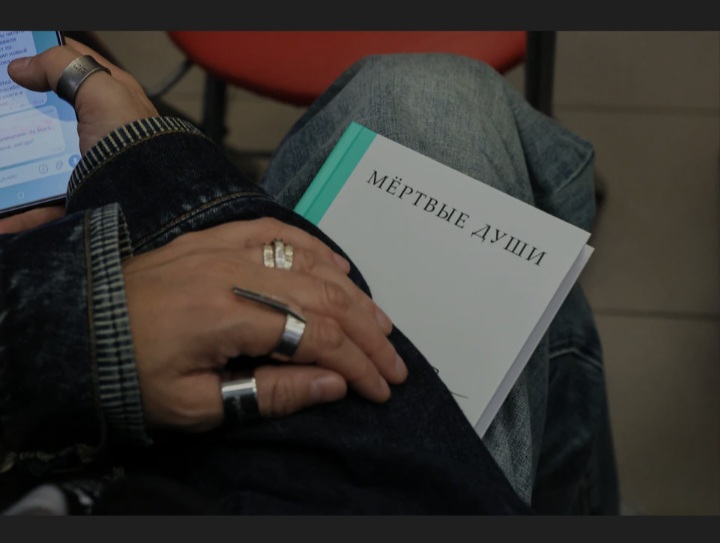
At the book’s launch event in Moscow, several attendees welcomed the initiative. A reader named Igor remarked that the AI-generated text felt remarkably close to the spirit of the original work, offering Gogol’s admirers a glimpse into how Chichikov’s journey might have unfolded.
However, the release has drawn strong scepticism from traditional readers and literary scholars. Larisa, a visitor at the Gogol Museum in Moscow, stated that artificial intelligence cannot replicate the genuine creativity of the original author and expressed little interest in reading the new edition.
Debate Over Literary Originality and Future of AI
Gogol scholar Artyom Nikitin also questioned the limits of the experiment. He argued that if AI can extrapolate future chapters simply by analysing an author’s past language and style, similar continuations could be generated for countless unfinished or popular works worldwide. Yet an author’s earlier writings cannot predict the creative choices they would have made next.
According to Nikitin, literature is more than a combination of vocabulary and stylistic patterns; it is shaped by a writer’s lived experience, imagination, and deliberate artistic decisions. Imitating a master’s style, he noted, is not the same as reproducing original creative genius. While supporters view the project as an innovative way to reimagine unfinished classics for modern audiences, critics maintain that algorithmic imitation cannot substitute human authorship, keeping public and scholarly opinion sharply divided.