
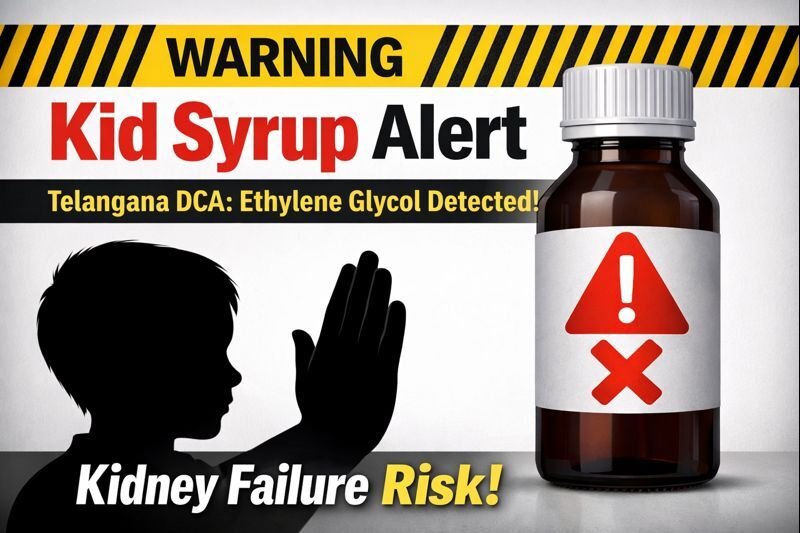
The Telangana government has issued a ‘stop use’ notice for a specific batch of a children’s allergy medicine after laboratory tests confirmed the presence of toxic Ethylene Glycol (EG). The development has raised serious concerns over quality control and safety standards in paediatric medicines.
The alert was issued by the Telangana Drug Control Administration (DCA) on Saturday after it was found that a sample of Almont Kid Syrup, commonly prescribed to children for allergy-related symptoms, failed quality tests. The sample was tested at the Central Drugs Standard Control Organization (CDSCO) East Zone laboratory in Kolkata.
According to officials, the affected medicine belongs to batch number AL-24002, manufactured in January 2025, and produced by Tridus Remedies, a drug manufacturer based in Vaishali district of Bihar. The syrup is widely used in children to treat allergy symptoms such as runny nose, sneezing, itching, swelling and nasal congestion.
Certified Cyber Crime Investigator Course Launched by Centre for Police Technology
Dangers of Ethylene Glycol in Paediatric Drugs
Ethylene Glycol is a highly toxic industrial chemical and poses serious health risks if ingested, especially by children. Medical experts warn that exposure can lead to kidney failure, neurological damage, and in severe cases, death. The detection of the substance in a paediatric formulation has therefore been described by health authorities as extremely serious and alarming.
Following receipt of the laboratory report, the Telangana DCA directed all drug inspectors across the State to immediately stop the sale, distribution and use of the identified batch. Pharmacies, hospitals and medical stores have been instructed to remove the affected stock from shelves and keep it quarantined until further notice.
Directives for Parents, Pharmacies, and Supply Chain
Officials have urged parents and caregivers who may already have the medicine at home to discontinue its use immediately and consult a qualified doctor for an alternative prescription. “Even a small quantity of Ethylene Glycol can be dangerous for children. There should be no attempt to continue or restart the medicine,” a senior official said.
The regulator has also initiated supply chain tracing to determine how widely the affected batch was distributed within Telangana and whether consignments may have reached other States. Drug inspectors have been asked to examine purchase bills, distribution records and stock registers to assess the potential scale of exposure.
Sources said the findings have been shared with central drug regulatory authorities. Depending on the outcome of a detailed investigation, further regulatory action may be taken against the manufacturer, including suspension or cancellation of manufacturing licences if violations of drug safety norms are established.
Public health experts said the episode once again underscores the need for stringent quality checks, particularly for medicines meant for children. “Paediatric formulations require the highest safety standards. Even a minor lapse can prove life-threatening,” a pharmacology expert noted.
Broader Implications and Past Recalls
The incident has also revived memories of earlier cases in India where cough syrups contaminated with industrial solvents resulted in fatalities, drawing international scrutiny to the country’s pharmaceutical supply chain. Although regulatory surveillance was strengthened after those incidents, recurring cases continue to point to enforcement gaps.
Meanwhile, doctors have been advised to review their prescriptions and avoid recommending the affected batch. Hospitals and clinics have also been asked to alert parents if the syrup was prescribed or dispensed recently.
The Telangana DCA clarified that the ‘stop use’ notice applies only to the identified batch and not to the product as a whole. However, officials indicated that stricter action could follow if additional irregularities are detected during ongoing inspections and testing.
As investigations continue, health authorities reiterated that patient safety remains the top priority and assured swift action against any entity found compromising drug quality standards.
About the author – Ayesha Aayat is a law student and contributor covering cybercrime, online frauds, and digital safety concerns. Her writing aims to raise awareness about evolving cyber threats and legal responses.
