
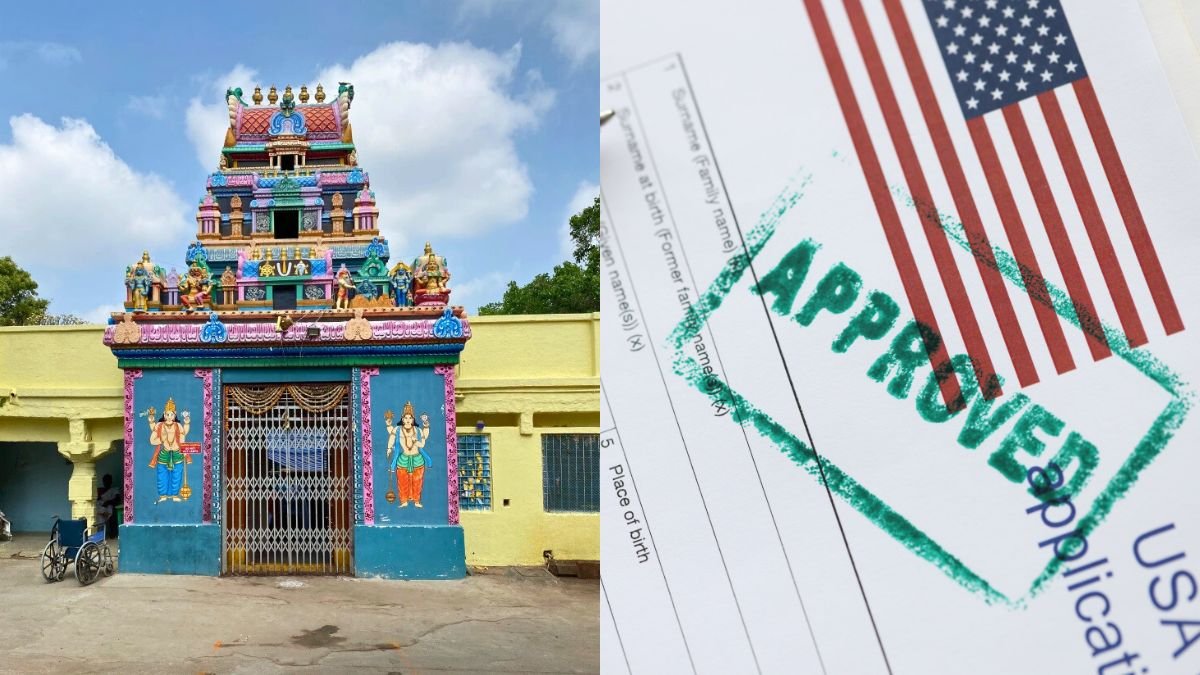
Hyderabad’s Chilkur Balaji Temple, widely known as the “Visa Temple,” has been drawn into a heated political debate in the United States after Republican Senator Eric Schmitt renewed criticism of the H-1B visa system and other employment-based visa programmes. His remarks have triggered fresh concern among Indian students, IT professionals and job seekers who depend on visa pathways such as H-1B, OPT, L1 and F1 to pursue careers in the US.
Temple Becomes Symbol In Visa Debate
The nearly 500-year-old Chilkur Balaji Temple, located on the outskirts of Hyderabad, has long been associated with devotees praying for success in securing US visas. Over the years, engineering students, software professionals and job seekers have visited the shrine before visa interviews, giving it the popular name “Visa Balaji.”
Registration Begins for FutureCrime Summit 2026, India’s Largest Cybercrime Conference
The temple is now being discussed in a political context after it was indirectly referenced in criticism of America’s foreign worker visa system. Senator Schmitt, in a series of posts on X, alleged that large American corporations were replacing domestic workers with lower-paid foreign professionals through visa programmes.
He referred to what he described as a “global visa cartel” and claimed that the wider ecosystem around work visas had grown into a powerful international network. In that argument, Hyderabad’s “Visa Temple” was presented as a symbolic marker of the global interest surrounding US work visas.
H-1B Row Sparks Fresh Concerns
Schmitt also criticised H-1B, L1, F1 and OPT visa programmes, alleging that several large technology companies had laid off American employees while filing thousands of H-1B petitions for similar roles. Citing labour-related data, he argued that many foreign workers were being hired at salaries lower than those paid to American employees in comparable positions.
The remarks have reopened political divisions in the US over employment-based immigration. Conservative groups argue that foreign worker programmes reduce opportunities for American workers and push wages downward. Technology companies and immigration advocates, however, maintain that highly skilled foreign professionals remain essential for innovation and competitiveness.
For India’s IT sector, the debate carries significant consequences. Indian professionals have historically formed the largest share of H-1B visa recipients, particularly in software development, engineering, artificial intelligence, cloud computing and cybersecurity. Thousands of Indian graduates and professionals rely on H-1B and OPT routes each year to access employment opportunities in the United States.
Indian Students And IT Workers Watch Closely
Industry analysts believe the issue could become more politically sensitive as the US election climate intensifies. Immigration, outsourcing and job protection have long been major themes in American politics, especially during periods of economic uncertainty and layoffs in the technology sector.
According to an immigration policy analyst, H-1B and OPT programmes remain important to the American technology industry’s talent pipeline. The analyst said several Silicon Valley firms continue to rely on international talent for specialised technical roles and research-driven projects. Any sudden tightening of visa rules could disrupt recruitment channels and affect innovation-led industries.
The controversy has also triggered strong reactions on social media. Many Indian users defended the temple as a symbol of aspiration for students and professionals seeking global careers. Others argued that the debate unfairly targeted immigrants despite the contribution of skilled foreign workers to the US economy and technology sector.
The renewed scrutiny comes as US authorities have already increased monitoring of student visas, OPT work permits and employment-based immigration systems. Experts believe the H-1B debate is likely to remain politically charged, with any policy shift potentially affecting Indian IT companies, outsourcing firms, students and professionals planning careers in the United States.
