

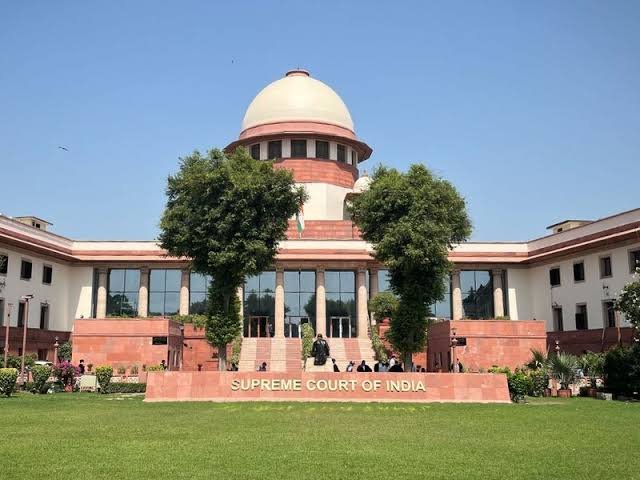

Written grounds of arrest must be provided at the time of arrest in a language understood by the accused, and this constitutional safeguard applies equally to cases registered under stringent special laws such as the Unlawful Activities (Prevention) Act and the Prevention of Money Laundering Act, the Supreme Court has ruled. Holding that personal liberty cannot be taken away without strictly adhering to the procedure established by the Constitution, the apex court clarified that the protections guaranteed under Article 22 cannot be diluted on the ground of the seriousness of an alleged offence.
Safeguards Apply Equally to Stringent Laws
A bench comprising Justice Ujjal Bhuyan and Justice Atul S. Chandurkar observed that fundamental rights under Article 22 cannot be interpreted narrowly or within a restricted scope. Emphasising that the constitutional procedure for restricting personal liberty does not vary according to the gravity or nature of the allegations, the bench held that written grounds must be furnished across all criminal cases. The court made it clear that mere severity of allegations under special statutes, including the UAPA and PMLA, cannot justify denying an accused the protections guaranteed under the Constitution.
The court reiterated that constitutional provisions cannot be altered by creating arbitrary exceptions based on circumstances. Observing that the Constitution rests on fundamental principles that supersede ordinary statutory limitations, the bench stated that any violation of constitutional mandates must be viewed seriously. It affirmed that where a specific procedure is laid down for depriving an individual of personal liberty, mandatory compliance is required across all categories of offences, rather than being restricted to comparatively minor matters.
Fresh Arrest Requires Prior Approvals
Laying down vital safeguards regarding the consequences of an unlawful detention, the Supreme Court ruled that if an arrest is declared illegal due to non-compliance with the mandatory requirements under Article 22, the investigating agency cannot simply arrest the person again in the same case. In such an event, executing a fresh arrest will strictly require prior approval from a senior police officer as well as formal permission from the concerned court.
The bench stressed that personal liberty remains a paramount constitutional guarantee, placing an obligation on the judiciary to enforce strict adherence to prescribed procedures. While observing that insistence on such procedural discipline might appear unusual to some, the judges affirmed that constitutional safeguards protecting individual liberty can never be compromised.
Procedural Compliance Remains Paramount
In its ruling, the bench drew upon the legal principle articulated in the Prabhu Dayal Deorah case concerning preventive detention. Citing that precedent, the court remarked that the seriousness of harm allegedly caused to society through anti-social activities cannot, by itself, provide sufficient legal justification for depriving a citizen of personal liberty without following the procedure established by law and the Constitution.
Follow for daily updates on cybercrime, corporate fraud, DFIR, hacking, investigations, and digital forensics
