

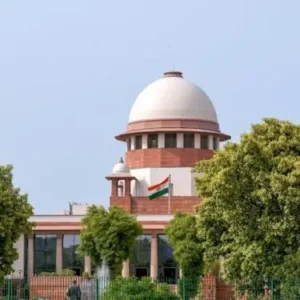
The Supreme Court has refused to reconsider its decision requiring prior legal practice for entry into the judicial service, but introduced a transitional arrangement that substantially eases the requirement for candidates affected by the change. Under the modified framework, eligible candidates during the transition period can enter as trainee judicial officers and complete intensive judicial academy training followed by a structured law clerkship.
A Bench comprising Chief Justice of India Surya Kant, Justice August George Masih and Justice K Vinod Chandran, who dissented, delivered the verdict on a batch of review petitions challenging the Court’s earlier judgment making three years of legal practice mandatory for candidates seeking direct recruitment as Civil Judges in the Junior Division.
The Chief Justice said the Bench saw no reason to interfere with the fundamental reasoning that prospective judges should have exposure to the legal profession before joining the judiciary. However, the Court acknowledged that abruptly restoring the three-year requirement without transitional arrangements had caused hardship to young lawyers and law graduates.
Transition Window Extended Until March 31, 2027
The Court directed that the exemption during the transition period would operate from the date of the original judgment until March 31, 2027. Candidates covered by judicial examination notifications during this period will remain eligible irrespective of prior experience.
For application purposes, such candidates will be deemed to have completed one year of active practice and will not be required to produce a certificate of practice for that period. Those appointed will initially be designated as Trainee Judicial Officers and undergo one year of intensive training at the concerned State Judicial Academy.
After successfully completing that training, they must undertake another year of structured law clerkship. The first six months will be spent under the supervision of the Principal District Judge or members of the Higher Judicial Service, followed by six months under a sitting judge of the concerned High Court.
During the clerkship, trainee officers will receive the same emoluments admissible during their judicial academy training. A sitting High Court judge under whom the trainee has served will subsequently submit a reasoned evaluation of the candidate’s progress and suitability.
One-Year Practice Requirement for Future Recruitment
For recruitment notifications or advertisements issued on or after April 1, 2027, candidates seeking appointment as Civil Judges in the Junior Division will be required to possess at least one year of active legal practice.
The practice will have to be verified through a certificate of practice, which will depend on the candidate’s presence and participation in effective judicial proceedings being properly recorded under the mechanism prescribed by the Court.
Candidates will nevertheless undergo one year of intensive training at the State Judicial Academy, followed by six months of law clerkship under a District and Sessions Judge or member of the Higher Judicial Service and another six months under a sitting judge of the concerned High Court.
During the training period, a Trainee Judicial Officer will receive an emolument equivalent to half the gross remuneration payable to a Judicial Magistrate First Class.
Court Cites Hardship to Young Law Graduates
The review petitions had sought reconsideration of the Supreme Court’s May 2025 decision restoring the three-year practice requirement for entry-level judicial officers. Opponents argued that the waiting period could discourage talented young law graduates from choosing judicial service.
Senior Advocate Pinky Anand argued for stronger judicial training after recruitment and called for a uniform training framework rather than differing standards across State Judicial Academies. Senior Advocate Colin Gonsalves similarly opposed mandatory three-year practice, arguing in favour of comprehensive institutional training immediately after law school.
Amicus Curiae Senior Advocate Siddharth Bhatnagar suggested limited relaxations for certain categories instead of completely removing the eligibility requirement. The screenshots also record submissions seeking concessions for women and persons with disabilities and recognition of judicial clerkships as valuable legal experience.
The Court ultimately retained the principle that prior professional exposure is necessary while modifying its operation to address transitional hardship. The case was identified as Bhumika Trust v. Union of India and connected cases.
