
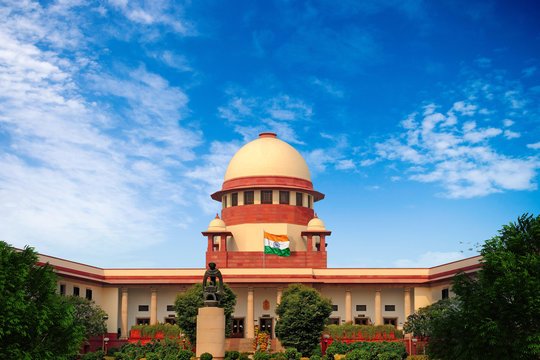
New Delhi: In a significant development concerning India’s electoral process, the Supreme Court on Monday agreed to hear a petition seeking the introduction of a biometric voting verification system using fingerprint and iris scans at polling stations across the country. The plea aims to enhance transparency in voting and prevent irregularities such as fake voting, duplicate entries, and identity misuse.
A bench comprising Chief Justice Surya Kant and Justice Joymalya Bagchi issued notices to the Union government and the Election Commission of India, seeking their detailed responses on the matter. The petition has been filed by advocate Ashwini Kumar Upadhyay.
FCRF Returns With CDPO, Its Premier Data Protection Certification for Privacy Professionals
No Implementation in Upcoming Elections
However, the court made it clear that implementing such a biometric system in the upcoming or ongoing Assembly elections is not practically feasible. The bench observed that while the issue requires serious consideration, it cannot be introduced within a short timeframe.
The petition argues that biometric identification using fingerprints and iris scans could significantly strengthen the electoral system by ensuring that each voter casts only one vote. It claims that such a mechanism would help eliminate problems like impersonation, duplicate voting, and so-called “ghost voting,” thereby improving the integrity of elections.
Aadhaar Technology Extended to Voting
The petitioner further contended that biometric technology is already widely used in several government welfare schemes and identification systems, including Aadhaar-based services. Therefore, extending its use to the electoral process is both technically possible and operationally viable, according to the plea. It also states that such a system would enhance voter confidence and reinforce trust in democratic processes.
In its preliminary observations, the Supreme Court emphasized the need for a comprehensive examination of the proposal. The court stated that before taking any final decision, detailed responses from the Centre, the Election Commission, and other relevant stakeholders are necessary. It also clarified that there is no immediate possibility of implementing such a system ahead of upcoming elections in various states.
Privacy + Technical Challenges Raised
The plea highlights that inconsistencies in voter lists and identity verification errors in certain regions can affect the fairness of elections. It argues that biometric verification could significantly reduce such discrepancies and strengthen the reliability of the electoral process.
However, legal experts have pointed out several challenges associated with the proposal. These include concerns over voter privacy, data security, potential technical failures, and the feasibility of deploying such a system on a nationwide scale. Issues related to infrastructure limitations in rural and remote areas also remain a major concern.
Next Step: ECI + Govt Responses
India has previously implemented major electoral reforms such as Electronic Voting Machines (EVMs) and the Voter Verified Paper Audit Trail (VVPAT) system to improve transparency and reliability in voting. The proposed biometric system is seen as an advanced extension of these reforms, potentially adding a stronger layer of voter authentication.
For now, the Supreme Court has kept the matter open for detailed consideration and has sought comprehensive responses from the Centre and the Election Commission. The next course of action will be decided after their submissions are reviewed.
Future Game-Changer for Elections
If implemented in the future, the proposed biometric voting system could represent a major technological shift in India’s electoral framework, potentially transforming the voting process into a more secure, modern, and transparent system.
Massive challenge lies nationwide deployment: 10 lakh+ polling stations many remote tribal areas lack electricity, internet connectivity essential biometric scanners. Massive infrastructure upgrade required before practical nationwide rollout possible.
Privacy vs Security Dilemma
Aadhaar biometric data breaches expose dangers centralized voter biometrics database. Supreme Court must balance fraud prevention against unprecedented voter surveillance risk single national voting database.
Combined EVM+VVPAT+biometric authentication creates unhackable trifecta: verified identity → paper trail vote → machine count. Represents gold standard global electoral integrity other democracies watching closely.
About the author – Ayesha Aayat is a law student and contributor covering cybercrime, online frauds, and digital safety concerns. Her writing aims to raise awareness about evolving cyber threats and legal responses.
