

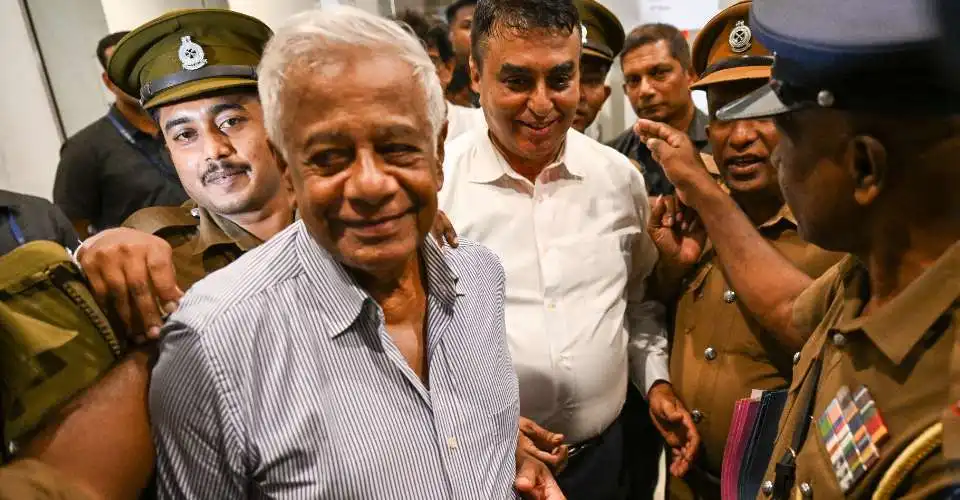

In a landmark judicial decision, a special three-judge bench of the Colombo High Court sentenced Sri Lanka’s former police chief Pujith Jayasundara and former Defence Ministry secretary Hemasiri Fernando to death for failing to prevent the devastating 2019 Easter Sunday suicide bombings. The verdict, delivered in a 2-1 majority decision by the Permanent Trial-at-Bar, marks the first time in Sri Lanka’s history that top security officials have been held criminally liable for catastrophic intelligence and operational failures. Justices Priyantha Liyanage and Thilakaratne Bandara ruled that both men committed severe dereliction of duty by failing to act on specific and repeated intelligence warnings prior to the synchronized attacks, which resulted in the deaths of 279 people, including 45 foreign nationals, and injured more than 500 others.
The legal proceedings centered on crucial intelligence shared by an Indian intelligence agency on April 4, 2019—more than two weeks before the attacks—warning that local Islamic State-inspired extremists were planning imminent suicide strikes on major Christian churches and prominent tourist hotels. Prosecutors established that despite receiving precise actionable details, Jayasundara, 66, and Fernando, 76, failed to institute emergency security measures, alert religious leaders, or deploy police forces to vulnerable sites. Highlighting the gravity of the omission, the court noted that Jayasundara became the highest-ranking officer in the 150-year history of the Sri Lanka Police to be convicted and sentenced for criminal negligence causing mass casualties.
Retrial Reverses Prior Acquittal Amid Years of Legal Delays
Friday’s verdict follows a complex and protracted legal battle stemming from the coordinated April 21, 2019 attacks that struck three churches and three luxury hotels in Colombo, Negombo, and Batticaloa. Both Jayasundara and Fernando were initially arrested in 2019 and spent four months in custody before being granted bail. In February 2022, a High Court bench acquitted the duo of all charges, ruling that there was insufficient evidence demonstrating direct intent or complicity. However, Sri Lanka’s Supreme Court overturned the acquittal following an appeal by the Attorney General, ordering a fresh trial after noting that no defense witnesses had been called during the initial proceedings.
While the majority opinion held both officials responsible for monumental state negligence, Justice Viraj Weerasuriya authored a dissenting opinion advocating for complete acquittal. The dissenting judge reasoned that neither official possessed a personal motive to cause harm or held direct links to the suicide bombers who executed the attacks. Despite the dissent, the majority order led to the immediate remanded custody of both men. Defense attorney Chaminda Athukorale announced that his clients will file a formal appeal before the Supreme Court within two weeks, pointing to the dissenting judgment as a foundational basis to contest the majority ruling.
Practical Impact of Death Sentence and Broader Conspiracy Concerns
Although the High Court imposed capital punishment, Sri Lanka maintains an unofficial moratorium on judicial executions that has been continuously observed since 1976. As a result, death sentences in the island nation are routinely commuted to life imprisonment. Current President Anura Kumara Dissanayake, who assumed office in 2024 and pledged comprehensive accountability for past state abuses, supports maintaining the moratorium on executions. More than 800 individuals currently remain on death row across Sri Lanka’s maximum-security prison system, where both Jayasundara and Fernando are now being held pending their Supreme Court appeal.
The judgment has drawn mixed reactions from civil society and victims’ groups, particularly within Sri Lanka’s Catholic community. Representatives of the Catholic Church in Sri Lanka maintain that while holding former senior administrators accountable for negligence represents a step toward justice, the actual masterminds and broader political conspirators behind the 2019 attacks have yet to be fully identified or brought to trial. Parallel judicial proceedings continue against dozens of individuals accused of aiding and abetting the extremist groups responsible for the coordinated blasts, while investigative authorities face ongoing pressure to unearth the deeper systemic roots of the tragedy.
Follow for daily updates on cybercrime, corporate fraud, DFIR, hacking, investigations, and digital forensics
