

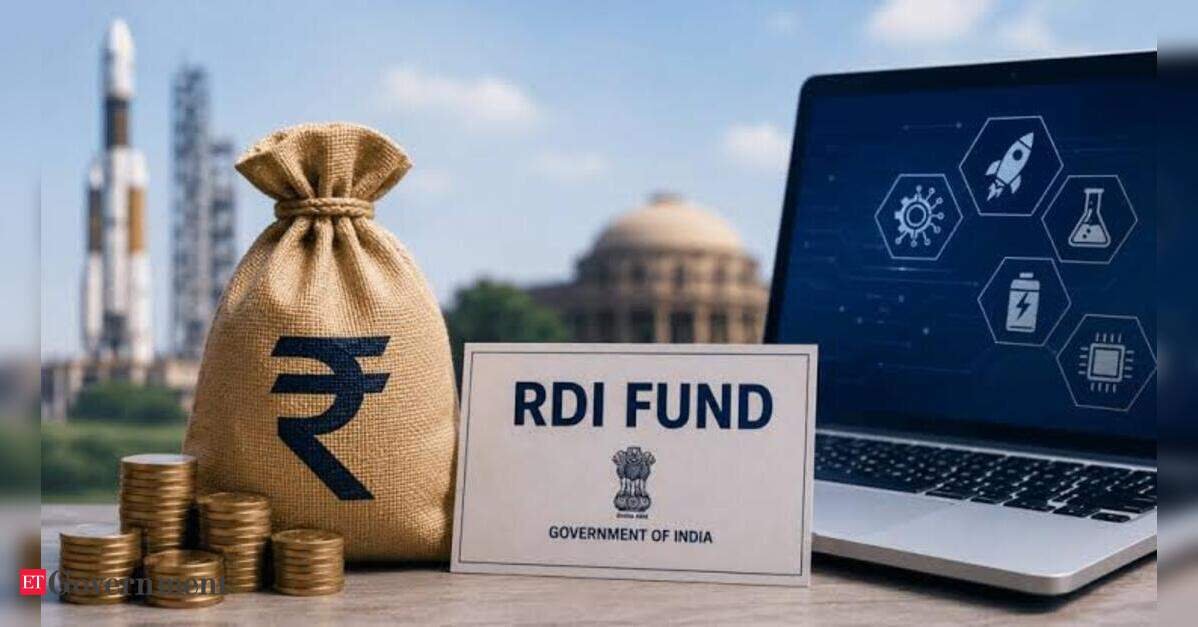

The allocation of financial support under the central government’s ₹1 lakh crore Research, Development and Innovation Fund has run into controversy following revelations of potential conflicts of interest within its selection panel. An investigation has revealed that 15 of the 22 private deep-tech firms chosen for funding during the opening round shared investment, equity, or leadership ties with seven members of the 12-member investment committee. These 15 entities secured approvals for soft loans amounting to ₹1,377 crore, representing nearly 62 percent of the ₹2,192 crore sanctioned in the initial phase.
Scrutiny Over Loan Approvals and Disclosures
Housed under the Anusandhan National Research Foundation, the RDI Fund was instituted to offer long-term, low-cost capital to commercial enterprises operating in advanced domains such as artificial intelligence, quantum technology, biotechnology, and space. In this first phase, the Technology Development Board received 124 applications, evaluated 51, and ultimately cleared 22 companies for credit. Under the scheme, firms with projects validated at Technology Readiness Level 4 can obtain collateral-free loans covering up to half of project expenses at interest rates between 2 percent and 4 percent for up to 15 years.
Questions surrounding the neutrality of the selection surfaced after the business connections of committee members became public. The findings showed that committee chairman Saurabh Srivastava was linked to nine of the recipient firms. The presence of these associations does not inherently prove procedural impropriety. Both the government and the seven panel members defended the decisions, noting that established conflict-of-interest safeguards were honored, industry associations were disclosed to the government beforehand, and members recused themselves from discussions regarding entities with which they had connections.
Parliamentary Focus and Procedural Defense
The matter also drew formal attention in Parliament through a query submitted in the Rajya Sabha by MP Praveen Chakravarty. In response to concerns over how proposals were cleared, the committee members maintained that their conduct conformed strictly to official protocols. They reiterated that they did not participate in the evaluation or approval of any applications where direct or indirect personal interests existed.
The controversy has nevertheless intensified the debate over governance practices in high-value public funding programs. Because proposals are assessed across scientific, commercial, and financial criteria, governance specialists have advocated for structural reforms. These suggestions include raising the share of independent academics and scientists on assessment panels, enforcing mandatory public disclosures of members’ financial holdings, and publishing detailed official documentation whenever a panelist recuses themselves from an evaluation.
Application Process Halted Amid Wider Concerns
Against the backdrop of these disclosures, the Technology Development Board has paused the receipt of subsequent applications under the RDI Fund. Alongside the questions over governance, administrative complications and procedural bottlenecks concerning the release of funds were identified as reasons for the temporary suspension. The pause places the future roadmap of the flagship initiative under closer public and regulatory focus.
The ₹1 lakh crore program remains a central pillar in official efforts to raise domestic research expenditure and deepen links between private industry and academic bodies. However, the initial round of disbursals has demonstrated the operational challenges of distributing state capital within specialized sectors, emphasizing the need for robust conflict-management frameworks when private market specialists are tasked with allocating public resources.
Follow for daily updates on cybercrime, corporate fraud, DFIR, hacking, investigations, and digital forensics
