

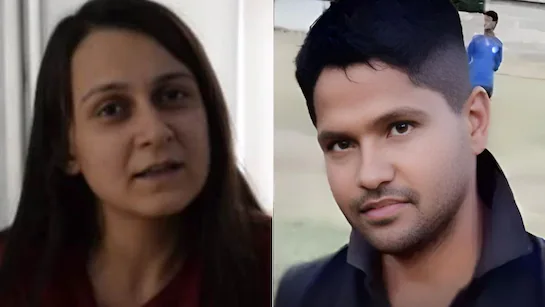
An extraordinary case emerging from Rajasthan has triggered nationwide debate, raising complex questions about prison reforms, human rights and the limits of compassion within the criminal justice system. Two individuals serving life imprisonment in separate high-profile murder cases have been granted 15 days of parole to marry each other, a decision taken after directions from the Rajasthan High Court and subsequent approval by the district parole advisory committee.
The two convicts, Priya Seth and Hanuman Prasad, were lodged at Jaipur’s open jail facility, a correctional arrangement designed to allow selected prisoners limited freedom and opportunities for work and social interaction. It was within this comparatively open environment that the two became acquainted around six months ago. Over time, their interaction evolved into a personal relationship, eventually leading them to decide to get married.
Priya Seth is serving a life sentence in a case where she was convicted of luring a man through a dating application and subsequently murdering him. Hanuman Prasad, on the other hand, was sentenced to life imprisonment for the murder of five members of a single family, including four children. Both crimes had drawn significant public attention at the time they were committed, making the present development all the more controversial.
Certified Cyber Crime Investigator Course Launched by Centre for Police Technology
Parole process initiated after court intervention
The parole process gathered momentum after the High Court directed the district parole advisory committee to consider the convicts’ applications and arrive at a decision within a stipulated time frame. Acting on these directions, the committee examined multiple factors, including the legal provisions governing parole, the conduct of the convicts during incarceration and the stated purpose of the temporary release.
After deliberation, the committee approved 15-day parole solely for the purpose of marriage, making it clear that the convicts would be required to surrender back to jail immediately after the parole period ends. The wedding ceremonies were held in Barodamev area of Alwar district, following local customs, with only close family members in attendance. The matter gained further traction after images of the wedding invitation card surfaced on social media, drawing sharp public reactions.
Society divided over the decision
The decision has sharply divided public opinion. Supporters argue that the move reflects a reform-oriented and humane approach to incarceration. They contend that marriage and family bonds can contribute positively to a prisoner’s mental health and rehabilitation, and that punishment should not entirely strip individuals of their basic human dignity.
Advocates of prison reform have pointed out that parole, when granted within the framework of law, does not dilute the sentence itself. According to them, temporary release for a personal milestone like marriage aligns with the broader goal of reintegrating prisoners into society over the long term.
However, critics have voiced strong objections. Many argue that granting parole for marriage to convicts guilty of brutal murders sends a troubling message and undermines the seriousness of life imprisonment. Detractors claim that such decisions risk causing emotional distress to the victims’ families and may weaken the deterrent effect of criminal punishment.
Open jail model under renewed scrutiny
The episode has once again placed Rajasthan’s open jail model under scrutiny. Operated under rules framed in 1972, the system allows well-behaved prisoners to live in relatively open conditions, work during the day and return to the camp by evening. The model has long been praised for aiding rehabilitation and reducing recidivism, but critics say cases like this highlight the challenges of maintaining public confidence.
Legal experts note that parole is not a right but a discretionary relief, granted after assessing individual circumstances. They stress that courts and parole authorities must strike a delicate balance between reformative justice and societal expectations, particularly in cases involving grave offences.
A debate beyond one marriage
What began as a personal decision between two inmates has now evolved into a broader national discussion. The case has reopened conversations around parole policy, prison reform and the extent to which compassion should be extended to those convicted of heinous crimes.
As the debate continues, the Rajasthan case stands as a rare and provocative example—one that forces society to confront uncomfortable questions about justice, punishment and the possibility of reform, where the issue at hand is no longer just a wedding, but the principles that govern the criminal justice system itself.
About the author – Ayesha Aayat is a law student and contributor covering cybercrime, online frauds, and digital safety concerns. Her writing aims to raise awareness about evolving cyber threats and legal responses.
