
Follow us on Google News

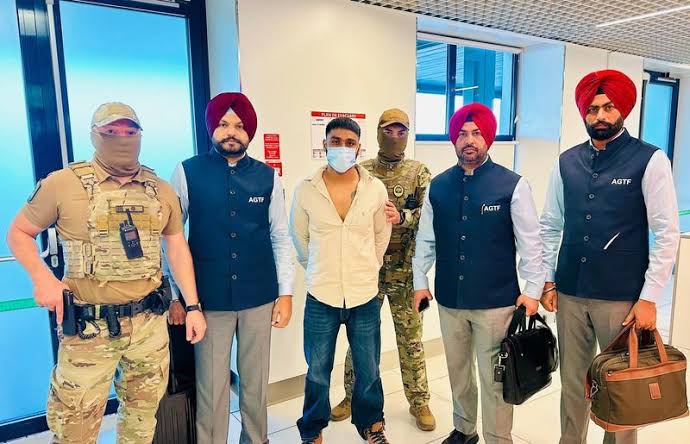
Intensifying its drive against organised crime and international gangster networks, the Punjab Police brought back 17 fugitives from abroad over the past six months under the state’s specialised ‘Gangsteran Te Waar’ campaign. The Bhagwant Mann-led government stated that this level of cross-border enforcement had not been achieved under previous administrations for decades. Addressing a press conference in Chandigarh on Monday, Punjab Finance Minister Harpal Singh Cheema shared details of the operation, emphasising that criminals attempting to evade Indian law by seeking shelter on foreign soil would face strict enforcement. He highlighted that between January 20 and November 7, 2026, the state police conducted 1,61,266 raids across various locations, leading to the apprehension of approximately 2,162 proclaimed offenders.
Coordinated Extraditions Across Multiple Continents
The 17 extradited suspects, who face allegations of involvement in multiple criminal operations across Punjab, were traced and secured through international police cooperation. Among those returned to India are Ramanjit Singh Romi from Hong Kong, Amrit Singh from the Maldives, Prabhpreet Singh from Germany, and Parminder Singh Pindi from the United Arab Emirates. Law enforcement authorities also secured the return of Sajjan Mahesh and Sukhdev Kumar alias Manish Baidi from Indonesia. In addition, Ajay Singh, Pawandeep Singh, and Jaspreet Singh were extradited from Malaysia, while Karambir Singh Deol was brought back from Canada. Cheema observed that these coordinated operations reflect the capability of the Punjab Police to pursue suspects well beyond state and national borders in coordination with foreign jurisdictions.
Political Accusations Over Gangster Networks
During the media briefing, Cheema directed political criticism at previous governing alliances regarding the emergence and consolidation of organised gangs in the state. He claimed that gangster networks took shape during the Shiromani Akali Dal-Bharatiya Janata Party tenure and were allowed to expand under subsequent Congress governance. The minister also criticised the BJP, alleging that special considerations were provided to incarcerated gangster Lawrence Bishnoi in a Gujarat prison facility. Noting that these points reflect the administration’s political position, Cheema maintained that the current government remains fully dedicated to dismantling organised criminal structures, severing cross-border channels, and bringing all absconding offenders before domestic courts.
Judicial Follow-up and Systematic Prosecutions
The state administration affirmed that legal proceedings against the returned suspects will be managed on priority to translate field operations into judicial outcomes. Cheema explained that returning suspects to India represents only the initial phase of the strategy, with police teams now focused on compiling solid evidence to ensure proper trials and convictions under the law. Operating across national boundaries has historically remained a significant challenge for enforcement agencies, especially as networks abroad maintain domestic contacts to facilitate extortion, threats, and illegal weapons supply. Officials reaffirmed that diplomatic, legal, and operational efforts will persist to neutralise such syndicates and pursue all individuals seeking haven outside the country.