

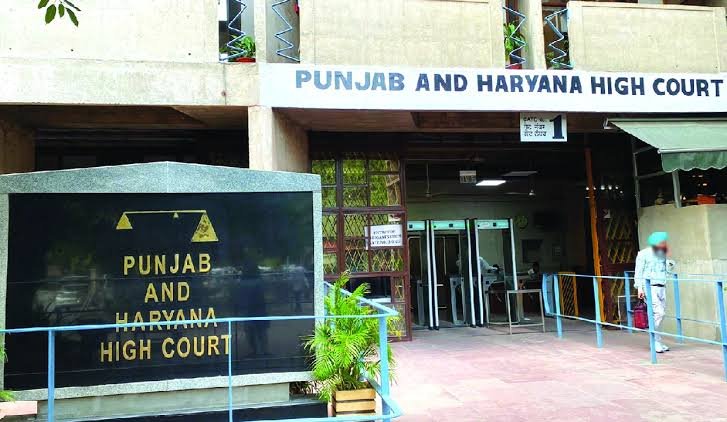

The Punjab and Haryana High Court has issued a criminal contempt notice to Punjab Chief Secretary KAP Sinha, asking him to explain why criminal proceedings should not be initiated against him for allegedly tendering incorrect information and misleading the bench regarding the status of a Special Leave Petition in the Supreme Court. A division bench comprising Chief Justice Ashwani Kumar Mishra and Justice Rohit Kapoor directed the senior bureaucrat to appear in person on October 9 and file an explanatory affidavit concerning the payment of pending dearness allowance to state employees and pensioners.
Discrepancies in Supreme Court Filings
The contempt notice was issued after the bench detected significant discrepancies between official claims made on behalf of the state government and the ground reality reflected in the Supreme Court Registry records. During the proceedings, advocate Sunny Singla, appearing for the petitioners, informed the bench that while the Chief Secretary had earlier represented that all registry objections in the apex court had been rectified, the formal status report revealed that objections remained unresolved.
The court was further apprised that the vakalatnama submitted on behalf of the state government had not even been signed. In light of these findings, the division bench declined to accept the assurances put forward by Punjab Advocate General Maninderjit Singh Bedi, who maintained that no defects remained in the petition. Observing that the material on record prima facie established that facts were misrepresented, the judges pointed out that the defective appeal had not been properly refiled even after nearly a month. The bench stated that these deliberate lapses raised serious concerns about attempts to mislead the judiciary.
Tense Arguments Over Jurisdiction
The court witnessed sharp exchanges when senior advocate Vikas Singh, representing the Punjab government, challenged the maintainability of the applications before the division bench. He argued that the main appeal had already been disposed of and that a separate contempt petition regarding non-compliance was already under consideration before a single bench. Describing the present proceedings as an exercise in bench hunting, the senior counsel further alleged that the litigation was politically motivated.
Chief Justice Mishra took strong exception to the submissions, warning the senior counsel to exercise caution in his courtroom statements. The bench reiterated that it had no interest in the political dimensions of the dispute and remained strictly committed to ensuring adherence to lawful procedure and judicial mandates. Senior counsel Sanjay Kaushal, appearing for the applicants, submitted that the High Court had specifically instructed the state government to furnish a compliance report while disposing of the main matter, meaning the court had not become functus officio and retained full authority to oversee implementation.
Accountability on Pending Arrears
The division bench reiterated the concerns it had expressed earlier regarding the conduct of the Punjab administration. While acknowledging that the state government was fully entitled to challenge High Court decisions before the Supreme Court, the judges stressed that the administration could neither sit on judicial orders nor neglect its own appeals. The court also observed that legal verdicts could not be contested through social media platforms or public posts in lieu of recognized procedural routes.
Emphasizing that the proceedings were directed at securing the legitimate dues of retired personnel and pensioners rather than acting against the government itself, the court observed that prolonged delays in curing defects could not be tolerated indefinitely. The Chief Secretary must now present himself before the division bench on October 9 with an explanatory affidavit outlining the exact position of the Special Leave Petition and the steps undertaken to honor earlier judicial orders.
Follow for daily updates on cybercrime, corporate fraud, DFIR, hacking, investigations, and digital forensics
