

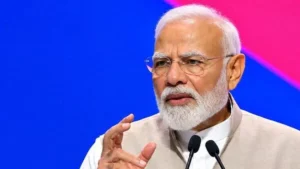
Prime Minister Narendra Modi has called for the development of technological tools capable of identifying AI-generated content and deepfakes, highlighting the need to protect public trust as artificial intelligence becomes increasingly widespread.
Speaking about the challenges posed by emerging technologies, Modi stressed the importance of identifying the origin of digital content so that people can distinguish authentic information from material created or manipulated using AI.
Why Is PM Modi Calling for Deepfake Detection Tools?
The Prime Minister’s remarks come amid growing concerns about the misuse of artificial intelligence to create misleading photographs, videos and other forms of digital content.
AI-generated material is becoming increasingly difficult to distinguish from authentic content, raising questions about how individuals and institutions can verify what they encounter online.
Modi emphasised the need for technological solutions that can establish the origin of digital material and help users determine whether content has been artificially generated.
The focus is on strengthening transparency and ensuring that advances in artificial intelligence do not undermine confidence in digital information.
FCRF Launches CP-FRM to Build India’s Next Generation of Fraud Risk Professionals
How Can Technology Identify AI-Generated Content?
Tools designed to identify AI-generated material can help determine whether digital content has been created or altered using artificial intelligence.
Such systems may examine technical information associated with images, videos and other digital files to help establish their origin.
The broader objective is to make it easier for users to recognise synthetic content and distinguish it from genuine recordings or photographs.
Identifying the source of digital material is particularly important when AI-generated content closely resembles real people, events or statements.
However, the development of detection tools remains a technological challenge because AI systems are becoming increasingly capable of producing realistic content.
What Concerns Has Modi Raised About Artificial Intelligence?
The Prime Minister’s remarks reflect concerns about the effect of AI-generated content on public trust and the reliability of information shared through digital platforms.
Deepfakes can make it appear that individuals have said or done things that never occurred.
Such content can mislead viewers, particularly when it is circulated without clear information about its origin.
The growing availability of generative AI tools has also increased the importance of mechanisms that can help establish whether digital content is authentic.
Modi’s emphasis on identifying the origin of AI-generated material places transparency and verification at the centre of the discussion.
Why Is Identifying the Origin of Digital Content Important?
Determining where digital content originated can help users assess its authenticity and understand whether artificial intelligence was involved in its creation.
Without reliable identification mechanisms, manipulated material may circulate alongside genuine photographs, videos and other information.
This creates difficulties for individuals attempting to verify online claims.
Technological tools that provide information about content origin could help reduce uncertainty and support more informed decisions about the material people encounter.
The Prime Minister’s call highlights the importance of developing verification capabilities alongside the rapid expansion of artificial intelligence.
What Does This Mean for AI Development?
The remarks underline the need to consider safeguards as artificial intelligence becomes more deeply integrated into digital communication.
Developing tools that identify synthetic content could become an important part of efforts to improve transparency in AI systems.
The challenge is not limited to detecting manipulated images or videos. It also involves establishing reliable ways to determine the origin of digital information.
For technology developers, this places greater emphasis on building systems that support authenticity and verification.
For users, such tools could provide additional information when assessing whether online content is genuine.
The effectiveness of these measures will depend on how reliably they can identify AI-generated material and how widely they are adopted.
Prime Minister Modi’s call for tools to identify AI-generated content highlights a growing challenge in digital safety. As deepfakes become harder to distinguish from genuine photographs and videos, establishing the origin of online material will become increasingly important. Reliable verification tools could help users assess digital content more carefully and reduce the risk of manipulated information being mistaken for authentic material.
Follow for daily updates on cybercrime, corporate fraud, DFIR, hacking, investigations, and digital forensics
