

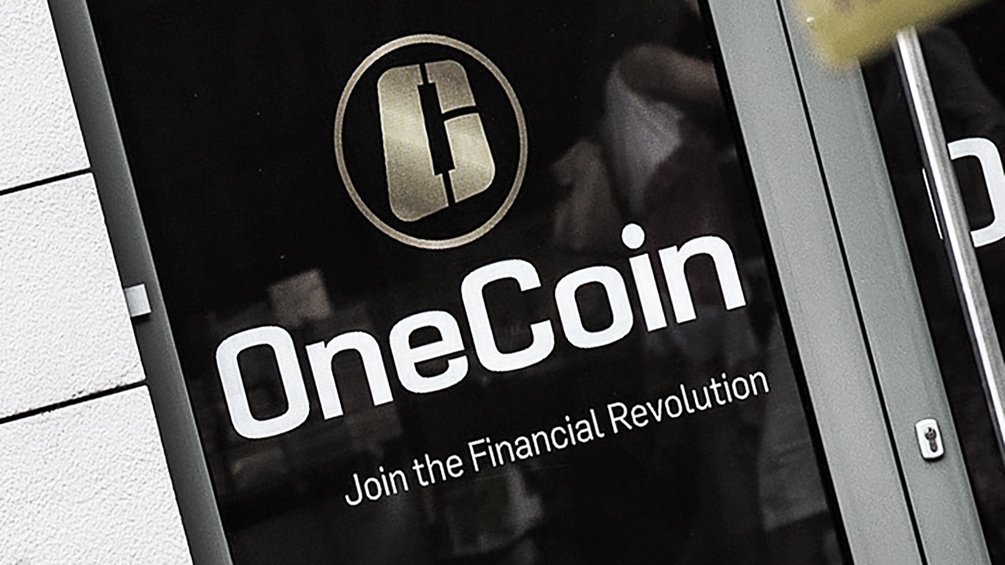

Washington: A decade after one of the most infamous cryptocurrency frauds in history shook global financial markets, victims are finally beginning to see a measure of relief. The U.S. Department of Justice (DOJ) has announced the launch of a formal compensation process for investors affected by the massive OneCoin scam, enabling claims to be filed from a $40 million (₹330 Crore) fund created through seized criminal assets.
The move is being seen as a significant milestone in a long-running legal battle that left millions of investors across the world devastated. Authorities said the compensation fund represents only a fraction of the total losses, but it marks an important step toward partial restitution and continued asset recovery efforts.
FCRF Returns With CDPO, Its Premier Data Protection Certification for Privacy Professionals
According to investigators, the OneCoin scheme operated between 2014 and 2019 and targeted an estimated 3.4 million investors globally. The fraud was allegedly orchestrated by Ruja Ignatova, widely known as the “Cryptoqueen,” along with co-founder Karl Sebastian Greenwood. During its operation, the scheme is believed to have defrauded investors of more than $4 billion (₹33,000 crore).
The operation was based in Bulgaria and expanded rapidly through an aggressive multi-level marketing (MLM) structure. Investors were sold packages under the promise of a revolutionary digital currency that would deliver extraordinary returns. However, authorities later confirmed that OneCoin had no real blockchain infrastructure and functioned entirely as a fraudulent centralized system.
Unlike legitimate cryptocurrencies such as Bitcoin, OneCoin did not operate on any decentralized ledger. Instead, investigators found that the system relied on internal databases and manipulated valuations, creating the illusion of a rising digital asset while continuously attracting new investor funds to sustain payouts and marketing claims.
Promoters played a key role in expanding the fraud network. They reportedly used fabricated success stories, misleading presentations, and referral incentives to recruit new participants. In many cases, investors were encouraged to bring in additional members, effectively turning the scheme into a pyramid-like structure that accelerated its global spread.
The collapse of the scheme began in 2017 when regulatory scrutiny intensified across multiple jurisdictions. Around the same time, Ruja Ignatova disappeared and has remained a fugitive ever since, becoming one of the most wanted figures in global financial crime investigations. Her co-founder, Karl Sebastian Greenwood, was arrested and later pleaded guilty to charges of wire fraud and money laundering.
Officials have described OneCoin as “one of the largest global fraud schemes in history,” emphasizing that the perpetrators deliberately exploited widespread public interest in cryptocurrency during its early boom years. Prosecutors said the operation was built on deception from the outset, presenting a “lie disguised as innovation.”
Under the newly launched compensation program, victims are required to submit claims through an official DOJ portal, where losses will be reviewed and validated. While the $40 million recovery fund represents only a small portion of the total damages, authorities have stated that additional asset seizures and recovery efforts remain ongoing.
The announcement comes amid broader efforts in the cryptocurrency sector to address the fallout from major financial collapses in recent years, including other high-profile exchange failures that resulted in multi-billion-dollar losses and ongoing repayment processes for creditors.
Legal experts say the OneCoin case highlights the urgent need for stronger global regulation of digital assets. Weak oversight during the scheme’s expansion allowed it to operate across borders with minimal resistance, exposing millions of investors to coordinated fraud on an unprecedented scale.
For victims, the compensation process offers limited but meaningful relief after years of uncertainty and legal proceedings. Many had invested life savings based on promises of financial independence and technological innovation, only to face devastating losses.
Authorities continue to pursue remaining assets and individuals linked to the scheme, while also examining whether additional recovery mechanisms can increase payouts to victims in the future.
The case stands as a stark reminder of the risks associated with unregulated investment schemes, underscoring the importance of due diligence in an increasingly complex digital financial landscape.
