

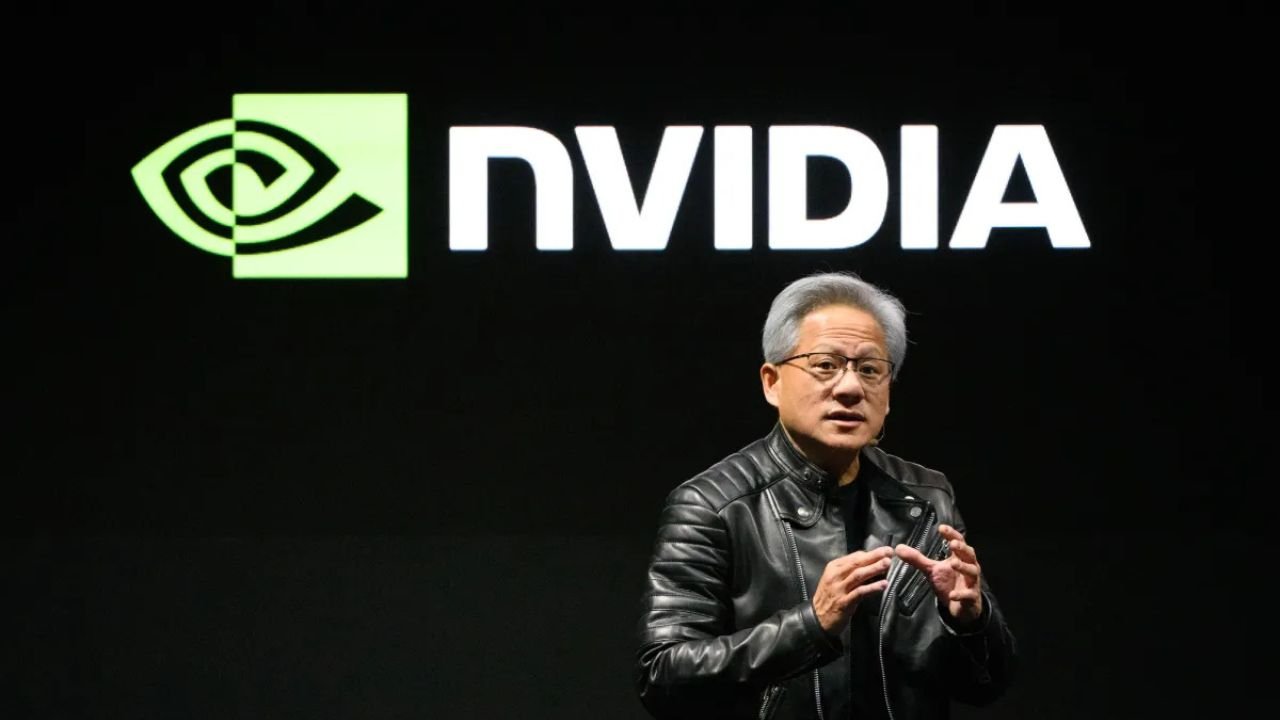

Nvidia is investing $3 billion (₹28,529 crore) in Meta as the two technology companies deepen their partnership around Meta’s Muse artificial intelligence assistant and related AI models, expanding cooperation across computing infrastructure, agent security and AI deployment.
The investment will form part of Meta’s equity offering as the Facebook parent accelerates spending on artificial intelligence infrastructure. Meta has increased its overall equity fundraising plan to as much as $97.5 billion (₹9.27 lakh crore) as it seeks additional capital for an increasingly expensive AI expansion.
Muse, known internally as Hatch, runs on Nvidia infrastructure and is central to Meta Chief Executive Mark Zuckerberg’s effort to develop what he has described as “personal superintelligence” for users across the company’s services.
FCRF’s Chief AI Officer Certification Returns on November 14 to Prepare Future AI Leaders
Nvidia and Meta Deepen Muse AI Partnership
Meta’s Muse models and agents will work more closely with Nvidia as the companies seek to improve performance and reduce the cost of running increasingly capable AI systems.
Muse is designed as a personal AI agent capable of working across connected applications and carrying out tasks on a user’s behalf. It can interact with services including email, calendars and documents, subject to permissions granted by users.
Meta says the agent operates inside a dedicated environment known as Muse Secure VM. Users can control which services Muse is allowed to access and revoke those permissions.
The company has also built safeguards around sensitive actions. Meta says Muse does not directly see passwords or payment methods, while actions such as making purchases or sending emails can require user confirmation.
Meta has separately introduced Muse Wonder and Muse Wonder Full, models aimed at more advanced agentic tasks.
Meta Expands AI Fundraising as Spending Accelerates
Nvidia’s $3 billion investment comes as Meta sharply increases the amount of capital available for its AI expansion.
Meta has raised its planned equity offering to as much as $97.5 billion, the largest fundraising exercise in the company’s history.
The company has forecast capital expenditure of between $135 billion (₹12.84 lakh crore) and $145 billion (₹13.79 lakh crore) for 2026 as it spends heavily on data centres, chips and other infrastructure required to train and operate AI models.
The scale of that spending is also putting pressure on cash generation. Meta reported negative free cash flow of $2.12 billion (₹20,160 crore) in the third quarter, compared with positive free cash flow of $10.63 billion (₹1.01 lakh crore) a year earlier.
The fundraising and Nvidia investment underline the financial demands of developing large-scale AI systems as technology companies compete to expand computing capacity and deploy more capable AI agents.
OpenShell and Sentry Could Extend Partnership Beyond Chips
Nvidia and Meta may also deepen cooperation around Nvidia’s OpenShell framework and Sentry technology.
OpenShell is designed to support safer deployment of AI software, while Sentry monitors how autonomous agents interact with models, tools and data and can enforce security policies during operation.
The companies are considering using these technologies as Meta expands Muse and other agent-based systems.
The partnership therefore extends beyond Nvidia supplying computing infrastructure. It could increasingly cover the security, deployment and monitoring layers required to operate AI agents at scale.
As Meta pushes Muse towards more personalised and autonomous tasks, the collaboration with Nvidia is expected to focus on improving performance, lowering operating costs and strengthening controls around how AI agents behave when connected to users’ applications and data.
Follow for daily updates on cybercrime, corporate fraud, DFIR, hacking, investigations, and digital forensics
