
Follow us on Google News

The National Payments Corporation of India (NPCI) has defended the revised Merchant Discount Rate (MDR) framework before the Supreme Court, maintaining that merchants cannot pass UPI transaction charges on to customers. The clarification comes amid a legal challenge to the introduction of MDR on certain person-to-merchant (P2M) payments exceeding ₹2,000.
https://the420.in/fcrf-certified-chief-ai-officer-second-cohort-november-2026/
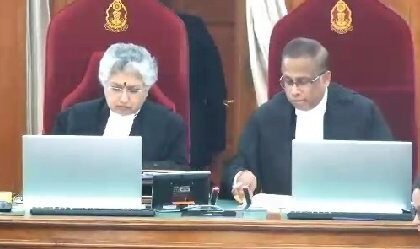
In an affidavit filed on November 3, NPCI told a bench headed by Chief Justice of India Surya Kant that UPI application providers cannot impose platform fees or additional charges on customers making payments through UPI.
What Is the Case Before the Supreme Court?
The Supreme Court is examining a public interest litigation challenging the revised UPI pricing framework.
The petition questions amendments to Section 10A of the Payment and Settlement Systems Act, 2007, introduced through the Taxation and Other Laws (Amendment) Act, 2026, along with subsequent government and NPCI measures.
On September 28, the court sought responses from the Centre and other parties, including NPCI. However, it declined to grant an interim stay on the revised framework.
What Charges Apply to UPI Payments?
Under the revised structure, MDR of up to 0.4% applies to eligible merchant transactions exceeding ₹2,000. The charge is capped at ₹300 for transactions of ₹75,000 and above.
Certain essential and low-margin sectors, including railways, telecommunications, insurance, fuel and agricultural inputs, attract a flat MDR of ₹5 on eligible transactions above ₹2,000.
Payments involving mutual funds, securities, stockbrokers and dealers attract a lower MDR of 0.02%, subject to a ₹300 ceiling.
Will Customers Have to Pay These Charges?
NPCI has maintained that the MDR must be borne by merchants and cannot be transferred directly to customers. The corporation said the restriction is mandatory and supported by contractual enforcement mechanisms.
Violations could invite action against banks, payment service providers and third-party application providers, including possible termination of their UPI membership or facilities.
NPCI also rejected concerns that merchants would widely increase prices to recover the additional costs.
Which UPI Transactions Remain Free?
Person-to-person transfers will continue to attract no charges, irrespective of transaction value. Merchant transactions worth ₹2,000 or less also remain outside the revised MDR charges.
Small merchants receiving monthly UPI credits of up to ₹1 lakh are covered under the zero-MDR framework.
NPCI stated that the revised charge affects approximately 4% of merchant transactions, while the remaining 96% would continue without MDR.
Why Does NPCI Support the New Framework?
NPCI argued that the earlier zero-MDR system created a gap between the operational costs of maintaining UPI infrastructure and the revenue needed to support it.
The organisation said the payment ecosystem requires continuous investment in technology, cybersecurity, fraud prevention and customer services.
It also proposed a dedicated fund to encourage UPI adoption among merchants with annual turnover of up to ₹20 lakh.
The revised framework, according to NPCI, seeks to support the financial sustainability of UPI while keeping everyday digital payments largely free.
The Supreme Court has not delivered a final ruling on the challenge, and the revised pricing arrangement remains under judicial consideration.