

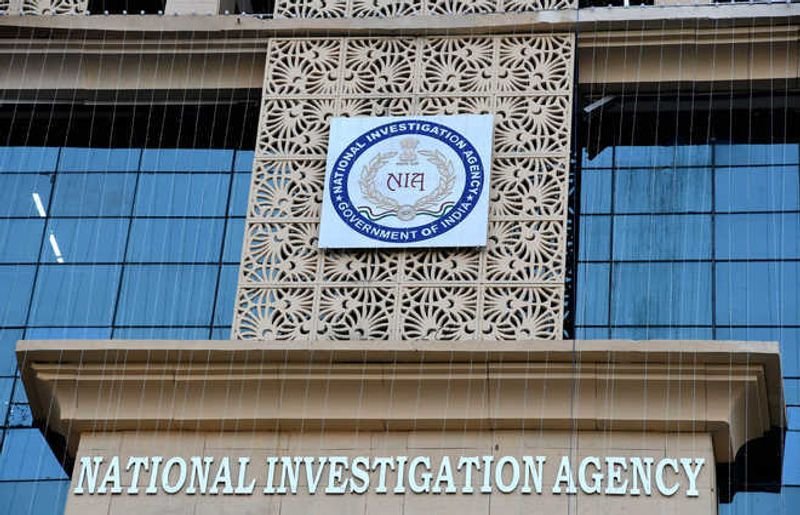

The National Investigation Agency has arrested two more accused in its probe into counterfeit Indian currency notes worth ₹17.29 crore allegedly circulated through a Punjab National Bank currency chest in Saharanpur, widening an investigation that has already drawn scrutiny towards bank employees and cash-handling personnel.
The latest accused have been identified as Mukesh Kumar, a resident of Hasanpur Kadeem village, and Rajendra Kumar, a resident of Kalyanpur village in Saharanpur. NIA says both were close associates of previously arrested accused Adesh Choudhary and allegedly played roles in the wider conspiracy.
The arrests take the number of key accused held in the NIA investigation to four.
Proposal for Conducting Cyber Crisis Drill, Tabletop Exercise (TTEx) & CCMP Readiness Exercise
₹17.29 crore in fake notes found inside bank chest
The case surfaced on August 29 after Saharanpur Police received information about counterfeit notes inside PNB’s currency chest in the city.
The total face value of the suspected fake currency was eventually assessed at ₹17.29 crore. Initial reports had placed the amount much lower before further audit and verification expanded the scale of the discovery.
A currency chest is not an ordinary bank cash counter.
Banks maintain these highly secured facilities on behalf of the Reserve Bank of India to store and distribute large quantities of currency. Cash moves between bank branches and currency chests as part of the formal banking system.
That is what makes the case particularly serious.
Investigators are not simply examining counterfeit notes found with an individual. They are trying to determine how such a large amount allegedly entered a regulated bank cash-storage facility and whether any part of it moved further through the banking network.
Bank manager and driver were arrested earlier
The NIA took over the investigation and re-registered the case at its Lucknow branch on September 3.
Its first major arrest came on September 7, when it arrested Amit Kumar, who had been named in the original FIR and was associated with PNB’s currency-chest operations. He had allegedly been absconding after the case surfaced.
A second arrest followed on September 15.
NIA arrested Adesh Choudhary, a contractual driver working with the PNB currency chest. Investigators said they were examining his suspected role in handling and movement of the counterfeit notes and whether he was linked to others involved in placing the currency inside the chest.
Mukesh Kumar and Rajendra Kumar are now alleged to have been closely associated with Choudhary.
NIA has not yet publicly disclosed the complete sequence through which the counterfeit currency allegedly entered the bank facility.
Three bank employees had come under scrutiny
The original police investigation had also pointed towards the alleged involvement of three PNB employees.
The bank subsequently suspended the employees as the investigation widened.
Earlier reporting indicated that the investigation began after discrepancies emerged during scrutiny of cash linked to the Saharanpur currency chest.
One report said genuine currency worth around ₹7.4 crore may allegedly have been removed and replaced with fake notes. Investigators have since focused on the much larger ₹17.29 crore quantity eventually detected during verification.
These allegations remain under investigation and have not been established by a court.
NIA is now examining the source of the counterfeit currency, how it moved, who handled it and whether the operation extended beyond the people already arrested.
Why Section 178 BNS matters in counterfeit cases
The original FIR was registered under Section 178 of the Bharatiya Nyaya Sanhita, 2023.
The provision deals with counterfeiting or knowingly participating in activities involving counterfeit currency notes or bank notes.
Counterfeit currency cases are treated seriously because large-scale fake-note circulation can damage trust in the financial system and may involve organised networks operating across states or borders.
The NIA’s involvement signals that investigators are examining the case as a larger conspiracy rather than merely an isolated discovery of fake cash.
Investigators have previously looked at whether the counterfeit notes had links beyond Saharanpur and how cash consignments moved between different banking facilities. One line of inquiry reportedly involved tracing a ₹111 crore currency consignment handled through the broader network.
The agency has not publicly confirmed a foreign source for the fake notes.
NIA says further investigation is underway to identify other participants, trace the source and circulation route of the currency and determine the precise role of bank personnel and outside associates.
The crucial unanswered question remains how counterfeit notes worth more than ₹17 crore allegedly reached one of the most controlled parts of India’s banking infrastructure.
What this means for you: Counterfeit notes found inside a bank currency chest do not mean ordinary PNB customer deposits are automatically affected. If you receive a suspicious note, do not attempt to pass it on; take it to a bank branch or police authority for verification.
Follow for daily updates on cybercrime, corporate fraud, DFIR, hacking, investigations, and digital forensics
