
Follow us on Google News

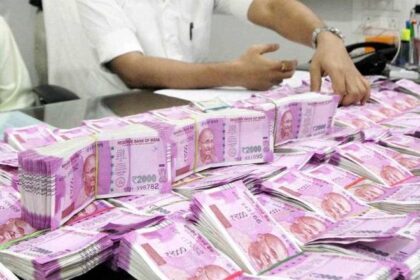
A reputed surgeon from Mohali has lost nearly ₹91 lakh to an elaborate online trading scam that exploited fake dashboards, deceptive WhatsApp communications, and falsified investment credentials. As cyber police race to trace the digital trail, the case highlights the growing menace of online financial fraud in India’s urban areas.
A Carefully Orchestrated Deception
Mohali-based surgeon, Dr. Pankaj Bhalla, has been defrauded of ₹90.93 lakh in an online trading scam orchestrated through a series of digital deceptions, including fake dashboards, impersonated investment firms, and WhatsApp-based manipulation.
Dr. Bhalla, who resides in Sector-79 and works in the medical department, lodged a formal complaint with the Cyber Crime Police at Phase-4 after discovering that the online trading platform he had invested in was a sham.
The ordeal began on February 19, 2025, when Dr. Bhalla received a seemingly legitimate email from “Team Aubrey.fun,” purportedly representing S&W Aubrey Capital Management Investment Funds, allegedly based in Hi-Tech City, Hyderabad. Soon after, a man identifying himself as Anoop Mehra reached out via WhatsApp, introducing Bhalla to a trading platform with the promise of attractive returns.
Mehra added Dr. Bhalla to a group named MK-S&W Group, where screenshots and trading dashboards were regularly shared, showcasing steady, upward-trending profits. The group interactions and updates were carefully crafted to build confidence among potential investors.
ALSO READ: FCRF Launches Campus Ambassador Program to Empower India’s Next-Gen Cyber Defenders
Encouraged by what appeared to be real-time gains, Dr. Bhalla began transferring money into the platform through a series of transactions over a six-week period. From ₹20,000 in the early stages to a substantial ₹29 lakh, he made nine transactions totaling ₹90.93 lakh by April 2, 2025.
However, when he attempted to withdraw his so-called profits, his account was suddenly blocked. The trading platform was rendered inaccessible, and all communication channels — including phone numbers and WhatsApp accounts — went dark.
Realizing he had been deceived, Dr. Bhalla approached the Phase-4 Cyber Crime Police, who promptly registered a case under:
- Sections 318(4), 61(2) of the Bharatiya Nyaya Sanhita,
- Sections 66(C) and 66(D) of the Information Technology Act.
Cyber officials have begun forensic analysis of the bank accounts, UPI IDs, and mobile numbers linked to the transactions. Authorities confirmed that digital trails are being examined to identify the recipients of the funds and their points of origin.
This incident is part of a growing trend of financial frauds where individuals are being targeted by sophisticated online scammers. Authorities have repeatedly cautioned the public to verify investment platforms, avoid acting on unsolicited messages, and confirm the regulatory status of financial entities before engaging in monetary transactions.
About the author – Prakriti Jha is a student at National Forensic Sciences University, Gandhinagar, currently pursuing B.Sc. LL.B (Hons.) with a keen interest in the intersection of law and data science. She is passionate about exploring how legal frameworks adapt to the evolving challenges of technology and justice.