

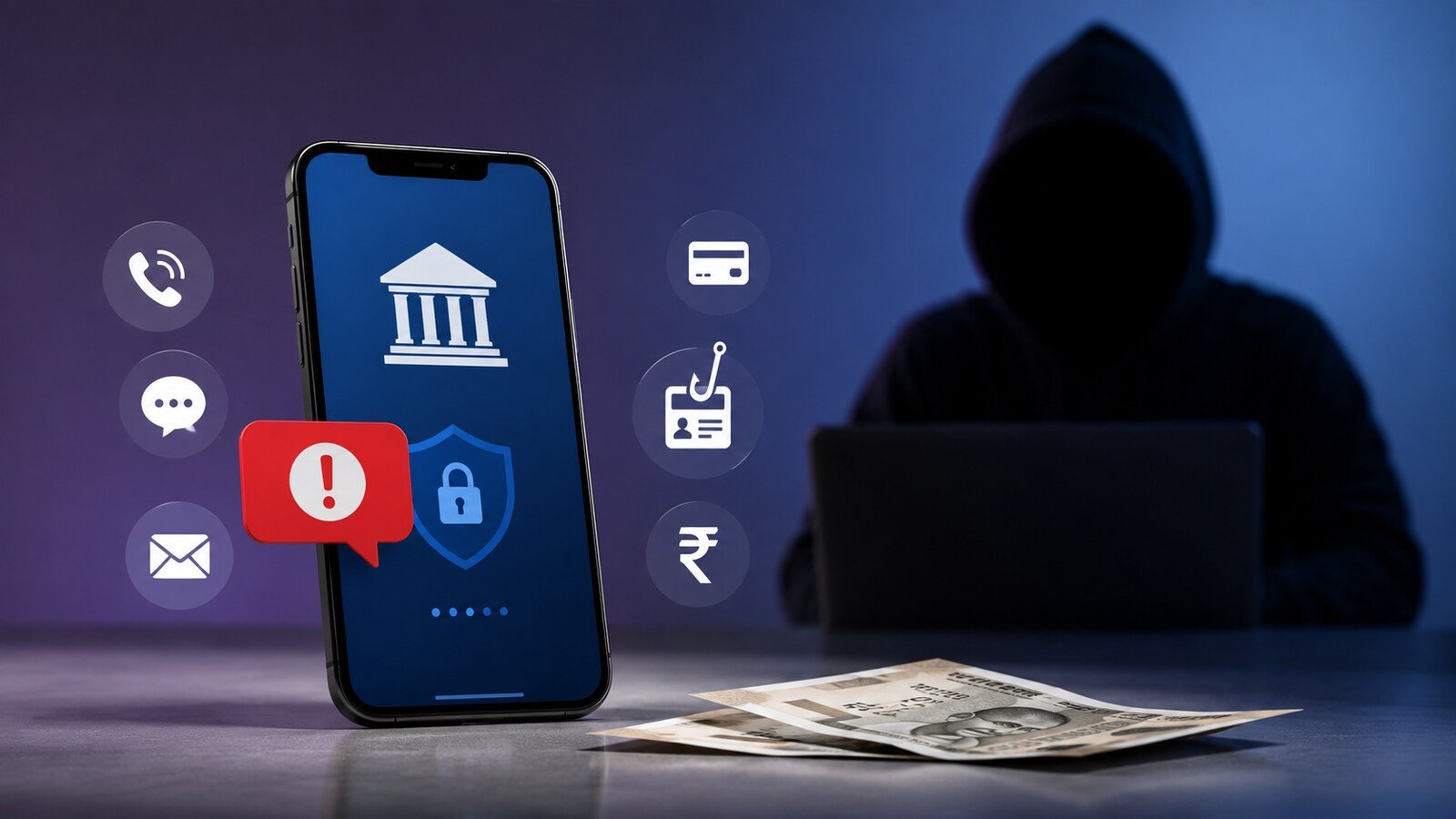

India’s fraudsters are trading their laptops for smartphones, and the shift is proving costly. A new report from behavioural biometrics firm BioCatch shows mobile banking fraud sessions rose 67 percent between mid-2025 and mid-2026, even as the country’s homegrown “mule-as-a-service” economy expands to absorb stolen money that once flowed overseas.
The 2026 Digital Banking Fraud Trends in India report paints a picture of an attack surface that has narrowed but sharpened. Fraud sessions overall fell 12 percent, yet the value of attempted fraudulent transactions climbed 35 percent, and the median duration of a fraud session shrank by 32 percent. Fewer attacks, in other words, are now doing considerably more damage, executed faster than before.
The Mobile Pivot
The device-level breakdown is telling. Fraud sessions on iOS jumped 86 percent, outpacing the 35 percent rise recorded on Android, even as smartphones become the default gateway for UPI, net banking and digital wallets across urban and semi-urban India. Cybercriminals are increasingly opening the interaction with a live phone call rather than a phishing email, posing as bank officials, KYC verification agents, utility representatives or government functionaries to manufacture urgency.
That urgency is the mechanism, not the malware. Victims are talked, in real time, into clicking a malicious link, installing a fraudulent application, or simply authorising a UPI transfer themselves. Because such transactions clear within seconds, the money is often several accounts removed from the victim before the fraud registers.
The Rise of the Domestic Mule
Perhaps the more structurally significant finding concerns where stolen money now goes. Following coordinated crackdowns on scam compounds in Myanmar, Cambodia and Laos, criminal syndicates are increasingly building cash-out infrastructure inside India itself rather than routing funds abroad. The Central Bureau of Investigation identified more than 8.5 lakh suspected money mule accounts spread across over 700 bank branches during 2025 alone, a scale that suggests mule recruitment has become a parallel gig economy of its own.
The recruitment pipeline runs through familiar channels: fake job advertisements, social media outreach and messaging apps, persuading individuals — often financially strained or simply naive about the consequences — to lend their bank accounts for a fee. Those accounts, carrying entirely genuine KYC credentials, are then used to disperse stolen funds through rapid, layered transactions that make tracing and recovery considerably harder for investigators. Subhashish Bose, Director of Global Advisory at BioCatch, noted that international syndicates are now leaning on Indian bank accounts, domestic payment rails and local SIM cards to convert stolen money into cryptocurrency, a laundering step that adds a further layer of difficulty for enforcement agencies.
Closing the Detection Gap
The report’s underlying argument is that India’s fraud-fighting apparatus is still calibrated to catch suspicious transactions rather than suspicious accounts. Bose argued banks need to identify mule activity much earlier in an account’s lifecycle, before it is ever used to move stolen funds, rather than relying solely on transaction-level red flags. Regulatory efforts such as the RBI-backed MuleHunter.ai initiative, which reportedly flags around 20,000 mule accounts a month using AI models, reflect an early move in that direction, though the CBI’s 2025 figures suggest the mule economy is still growing faster than detection capacity.
Prof. Triveni Singh, the cybercrime expert and former IPS officer, framed the trend as further evidence that India’s fraud problem is now overwhelmingly a psychological one rather than a technical one. He said banks should invest in behavioural fraud detection, AI-driven risk scoring and real-time monitoring, while urging the public to treat any unsolicited call demanding KYC updates, investment action or urgent payment as suspect until independently verified. With fraud sessions growing shorter and costlier, he added, the margin for victims to pause and verify before acting is narrowing just as quickly as the money itself moves.
