
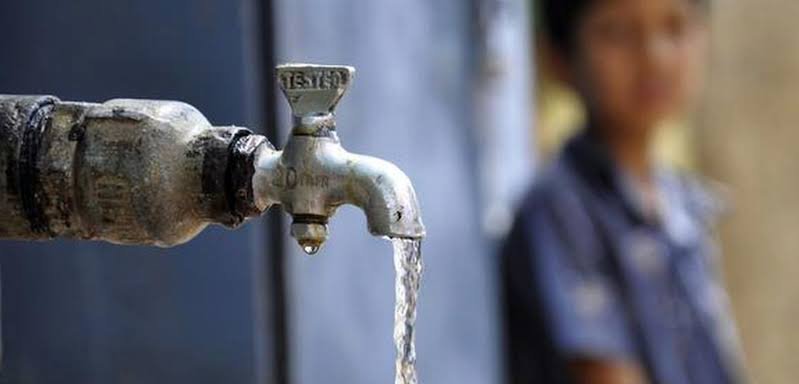
The investigation into the alleged ₹123 crore “Nal Se Jal” scam in Gujarat’s Mahisagar district has gathered further momentum with the arrest of three more accused, taking the total number of arrests in the case to around 40. The latest action is being viewed as a significant development in one of the largest alleged corruption cases linked to a government-funded rural drinking water scheme in the district.
Political Cooperative Dynamics and Multi-Village Forgery Sweeps
According to investigators, the newly arrested individuals include contractors and project-linked associates who were allegedly involved in the execution of water supply works under the scheme. Authorities claim that preliminary findings have revealed multiple irregularities in project implementation, including allegations of substandard construction, incomplete works, inflated claims and financial discrepancies.
The “Nal Se Jal” initiative was launched with the objective of providing safe drinking water to households in rural areas through pipeline-based supply systems. However, a detailed scrutiny of projects undertaken in Mahisagar district reportedly uncovered serious concerns regarding the execution of several contracts. Investigators allege that in a number of villages, projects were either left incomplete, executed below prescribed standards or supported by questionable billing records.
Registration Begins for FutureCrime Summit 2026, India’s Largest Cybercrime Conference
Localized Taluka Defaults and Direct Recovery Shortfalls
Officials stated that one of the recently arrested contractors, identified as Mukesh Patel—who also functions as a BJP director within the local Agricultural Produce Market Committee (APMC)—had carried out work in 14 villages across Lunawada and Santrampur talukas. During the investigation, authorities reportedly detected irregularities connected to projects executed under his supervision. Investigators are now attempting to recover public funds allegedly linked to those works, identifying a recovery backlog of ₹1.78 crore, and are examining whether contractual obligations were fulfilled in accordance with approved specifications.
Another accused, Hitendrasinh Solanki, is alleged to have been associated with water infrastructure projects in seven villages of the district. Authorities said certain financial recoveries totaling ₹60 lakh are pending in connection with the projects under scrutiny, while additional records are being verified to determine the full extent of the alleged losses. Investigators are reviewing project reports, payment approvals and technical documentation to establish whether funds were released against work that was either incomplete or improperly executed.
Firm Liability Audits and Institutional Blacklisting Interventions
The third arrested accused, Subhashchandra Revabhai Patel of SR Construction, is linked to a construction firm that handled multiple government-funded projects and faces an outstanding government recovery metric of ₹2.46 crore. Investigators believe further examination of contracts executed by the company could reveal additional financial irregularities. Authorities are currently analysing project files, contractor payments and engineering records to determine whether there were systematic violations in the implementation process.
The case emerged following a comprehensive review of the water supply scheme’s execution in Mahisagar district. Based on the findings of that review, a senior official associated with the Water and Sanitation Management Organisation (WASMO)—the implementation and monitoring framework of the programme—filed a complaint with CID Crime on June 22, 2025. The complaint named 12 government personnel as well as 111 private agencies for their alleged involvement in irregularities connected to the scheme.
Grant Misappropriation Traces and On-Site Forensic Appraisals
Investigators suspect that the alleged scam may have involved a combination of procedural violations, poor-quality execution and financial misrepresentation. Authorities are examining whether public funds were released against projects that failed to meet required standards or whether false claims were submitted to obtain payments from the government.
Financial and technical audits are being used to verify the actual status of projects on the ground. Officials have also begun cross-checking contractor submissions, inspection reports and expenditure records to identify potential discrepancies. Sources familiar with the probe said investigators are attempting to map the complete financial trail to determine where public funds were ultimately utilised.
Engineering Register Inspections and Corporate Accountability Stages
Experts note that infrastructure-related fraud investigations often require extensive verification of engineering records, payment approvals and contractor documentation. As a result, agencies are relying on technical assessments, financial audits and digital records to establish accountability and quantify any losses.
The investigation remains ongoing, and officials indicated that additional arrests could follow as fresh evidence emerges. Authorities are continuing to examine the role of contractors, intermediaries and other entities connected to the implementation of the scheme. With the probe expanding and financial scrutiny intensifying, investigators are expected to focus on recovering public funds and identifying all individuals allegedly responsible for the irregularities.
