

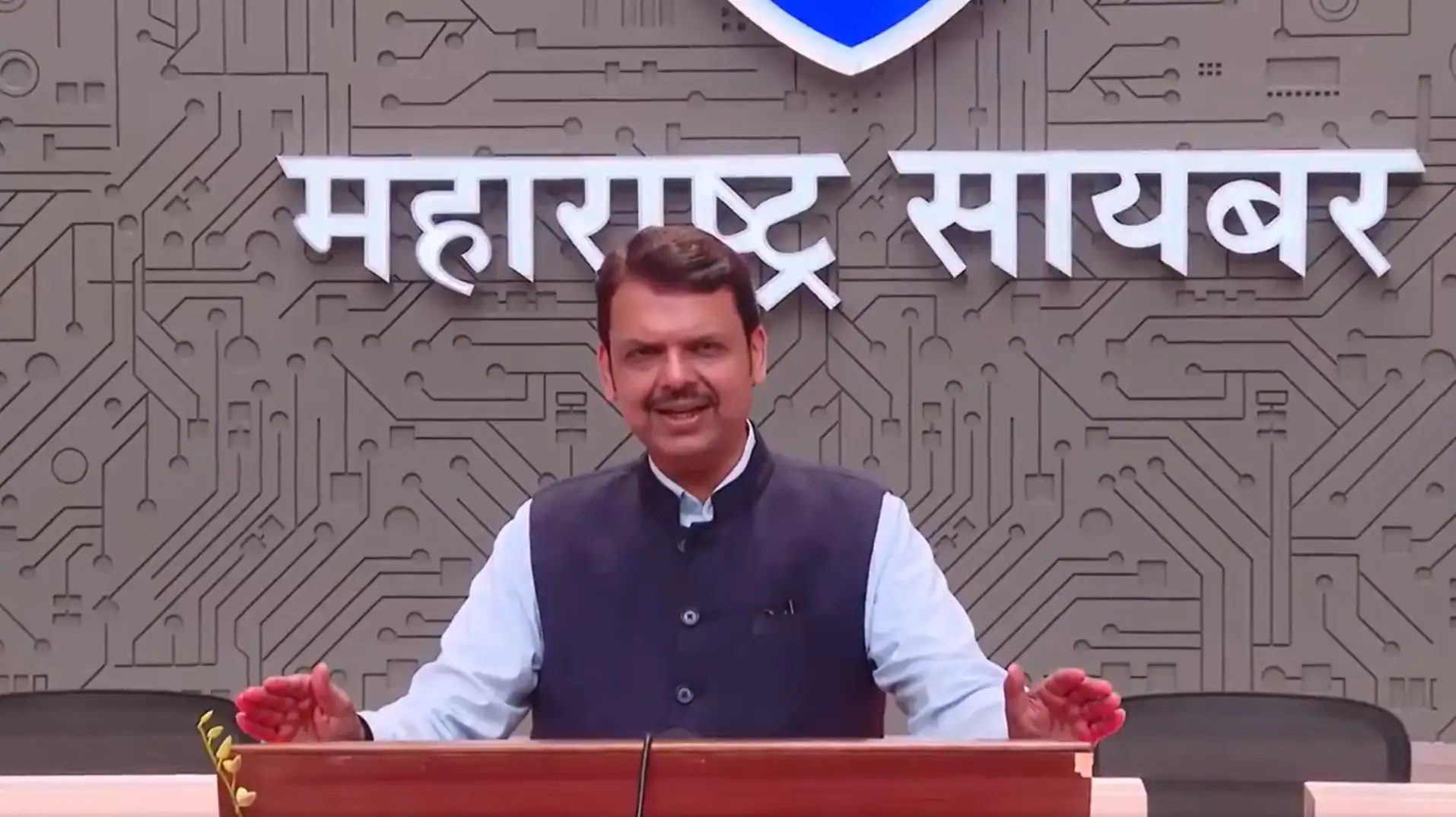

The Maharashtra government has restructured the administrative control of its State Cyber office, placing the Additional Director General of Police, Maharashtra State Cyber, Mumbai, directly under the Director General of Police, Maharashtra State, Mumbai.
The order, issued by the Home Department on May 21, 2026, marks a significant change in the command structure of the state’s cyber policing apparatus. It supersedes an earlier government decision dated April 28, 2023, under which the cyber unit had been brought under the authority of the Additional Chief Secretary, Home Department.
The move is framed as an effort to bring greater uniformity in the functioning of the cyber department alongside other senior police formations in the state. According to the government decision, the request for the change came from the office of the Director General of Police, which sought to bring the ADG, Maharashtra State Cyber, under the DGP’s administrative control.
FutureCrime Summit Shifts to Bharat Mandapam, Expanding India’s Largest Cybercrime Conference
A Cyber Unit Built for Statewide Coordination
Maharashtra’s State Cyber apparatus was created to improve coordination between the state government and police machinery in dealing with cybercrime. The government order recalls that a cyber cell was approved in Mumbai through a January 5, 2016 decision to ensure more effective coordination in cybercrime matters and to create a permanent mechanism for investigating such offences.
That original purpose remains important. Cybercrime investigations now routinely cut across police stations, districts, financial institutions, telecom networks, social media platforms and digital forensic systems. Unlike conventional local offences, online fraud and digital abuse often require rapid coordination across jurisdictions and agencies.
For Maharashtra, one of India’s most urbanised and digitally connected states, the structure of its cyber policing command is not merely an internal bureaucratic question. It affects how quickly cyber complaints move, how evidence is preserved, how technical support is deployed and how statewide cyber operations are supervised.
Nominations Open for FCRF Excellence Awards 2026, to Be Presented at FutureCrime Summit in New Delhi
Reversing the 2023 Arrangement
The latest order explicitly overrides the April 28, 2023 government decision. Under that earlier arrangement, the cyber cell functioning under the Special Inspector General of Police, Cyber, Maharashtra State, Mumbai, had been brought under the control of the Additional Chief Secretary, Home Department.
The 2026 decision reverses that approach. It states that the Additional Director General of Police, Maharashtra State Cyber, Mumbai, will now function directly under the Director General of Police, Maharashtra State, Mumbai. All proposals from the ADG, State Cyber, will be submitted to the government through the DGP. The order also makes clear that these proposals will not pass through officers subordinate to the DGP.
That clarification is notable. It preserves a direct channel between the State Cyber chief and the DGP while still routing formal proposals to the government through the police leadership. In practical terms, it may reduce intermediate layers in cyber-related decision-making and place the state’s cyber wing more firmly within the operational police hierarchy.
Performance Review and Administrative Control Recast
The order also revises the authorities responsible for the performance assessment of the ADG, Maharashtra State Cyber.
The Reporting Authority will now be the Director General of Police, Maharashtra State, Mumbai. The Reviewing Authority will be the Additional Chief Secretary, Home Department, and the Accepting Authority will be the Chief Secretary of Maharashtra.
This division keeps administrative oversight distributed across police leadership and the state government. The DGP will assess the officer’s performance at the reporting level, while senior civil administration retains review and acceptance roles.
The government has directed that the decision be implemented with immediate effect. The order has also been made available on the Maharashtra government website, with digital authentication.
Why the Chain of Command Matters in Cyber Policing
The restructuring comes at a time when cybercrime has become one of the fastest-moving areas of policing. Financial fraud, ransomware, social media crimes, cyberstalking, sextortion, fake investment platforms, identity theft and digital arrest scams often demand quick technical and administrative response.
In such cases, delays in command approval, evidence preservation or inter-agency coordination can affect recovery of money, tracing of suspects and admissibility of digital evidence. A direct reporting arrangement under the DGP may help align the State Cyber office more closely with district police units, commissioners, crime branches and specialised investigation teams.
But the change also places greater responsibility on the police hierarchy. If the purpose is uniformity and operational speed, the test will lie in whether cybercrime victims see faster response, whether district-level cyber cells receive clearer direction and whether statewide cyber intelligence and forensic support become more coherent.
The government order is administrative in form, but its implications are operational. Maharashtra is effectively saying that cyber policing is not a peripheral technical desk, but a core police function that must sit within the highest police command structure.
In a state where digital crime increasingly touches citizens, businesses, banks and public institutions, that shift may prove consequential. The real measure will be whether the new chain of command strengthens not just reporting lines, but the everyday capacity of Maharashtra Police to investigate and respond to cybercrime.
Follow for daily updates on cybercrime, corporate fraud, DFIR, hacking, investigations, and digital forensics
