


Maharashtra says it has attracted more than $300 billion in investment interest for data centres, placing the state at the centre of India’s rapidly expanding race to build infrastructure for cloud computing and artificial intelligence.
Kaustubh Dhavse, Chief Adviser for Investments and Strategy to Maharashtra Chief Minister Devendra Fadnavis, said on Thursday that the state currently accounts for around 66% of India’s data centre capacity. He said Maharashtra is targeting 5.7 gigawatts of capacity by 2032.
The scale of the claim is striking. But “investment interest” does not necessarily mean that $300 billion has already been committed, financed or deployed.
Such figures can include proposals, early discussions, memoranda of understanding and planned projects at different stages. The real test will be how much of that pipeline reaches construction and becomes operational.
Algoritha Security Launches ‘Make in India’ Cyber Lab for Educational Institutions
Why Maharashtra Has Become India’s Data Centre Magnet
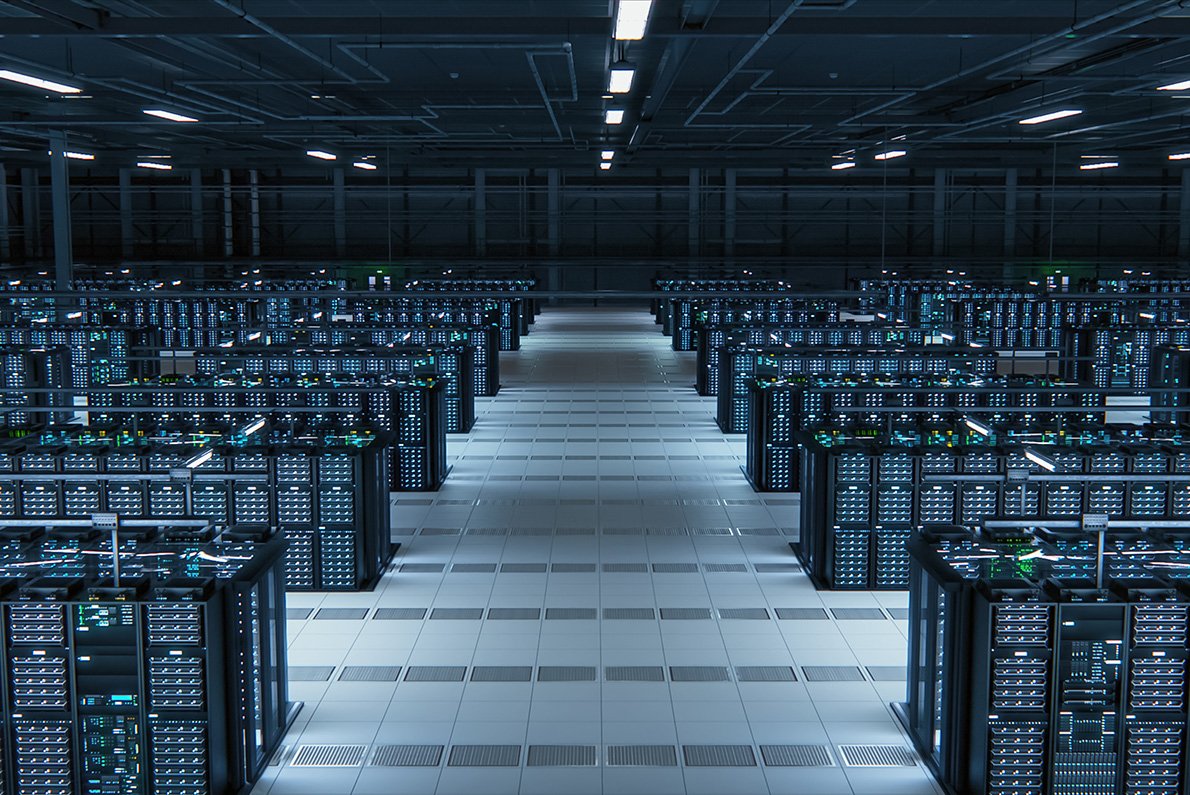
Data centres are giant buildings packed with servers.
Those servers store websites, bank records, cloud applications, artificial intelligence models and the enormous amounts of digital information generated by companies and consumers every day.
Unlike a normal office building, however, a data centre needs huge amounts of electricity, constant cooling, reliable internet connectivity and strong physical security.
Maharashtra has several advantages.
Mumbai is a major landing point for undersea internet cables connecting India with international networks. The Maharashtra Government’s IT policy has previously identified the Mumbai-Navi Mumbai region as a strategic data centre hub because of these submarine cable connections, power availability and technical workforce.
The state also offers incentives including stamp-duty exemptions, electricity-duty exemptions and industrial power tariffs for eligible data centre projects.
These benefits become increasingly important as artificial intelligence pushes computing requirements sharply higher.
AI systems need powerful processors running continuously. That means future data centres are not merely storing files. They are increasingly functioning as large-scale computing factories.
What MW and GW Actually Mean in a Data Centre
Data centre capacity is often described in megawatts, or MW, rather than by the size of the building.
That can confuse ordinary readers.
The number broadly represents how much electrical power the computing infrastructure can support. A larger MW figure usually means the facility can operate more servers and increasingly powerful AI hardware.
One gigawatt, or GW, equals 1,000 MW.
So Maharashtra’s stated target of 5.7 GW by 2032 means 5,700 MW of data centre capacity.
This is also why electricity is becoming one of the biggest constraints on the industry.
Dhavse acknowledged that data centres fundamentally require power and water. Both can become difficult infrastructure questions when projects are concentrated around large urban regions.
Cooling thousands of servers can require significant water or specialised cooling technologies, while AI-focused facilities can demand extraordinary amounts of electricity.
Big Projects Are Already Moving Beyond Announcements
Maharashtra’s push is backed by several major investments that have moved beyond preliminary discussion.
Amazon Web Services announced in January 2025 that it planned to invest $8.3 billion in cloud infrastructure in Maharashtra by 2030. The Maharashtra Government and AWS signed an agreement at the World Economic Forum in Davos, and the first phase later moved to a ground-breaking stage.
Another major player, ST Telemedia Global Data Centres India, signed an agreement with the state in October 2025 for up to ₹5,000 crore of additional investment across Mumbai and Pune.
Private developers are also preparing much larger campuses.
Lodha Developers announced plans in January 2026 to expand investment in a Maharashtra data centre park to around ₹1.3 lakh crore, with an eventual capacity of 2.5 GW.
Meanwhile, Equinix opened its fourth Mumbai facility in April 2026 with an initial investment exceeding $95 million. The company said the facility was designed for AI and high-density cloud workloads.
These projects show that the boom is already tangible, even if the much larger $300 billion figure remains a measure of interest rather than completed investment.
The Hard Part Begins With Power, Water and Execution
The scale Maharashtra is targeting will bring difficult policy choices.
A data centre creates digital infrastructure and construction demand, but it does not employ workers at the same intensity as traditional manufacturing once construction is complete.
At the same time, large campuses compete for land, electricity and water.
Maharashtra’s existing policy attempts to address part of the electricity problem by allowing renewable energy access and supporting captive power generation for data centres. The state has also promised continuous power supply to eligible facilities.
But the AI boom is changing the equation.
The same state infrastructure must increasingly support homes, factories, transport systems and enormous computing campuses operating around the clock.
Maharashtra’s opportunity is therefore significant. Mumbai already has the international connectivity, financial ecosystem and growing concentration of cloud operators needed to become one of Asia’s largest digital infrastructure hubs.
Whether the state can actually reach 5.7 GW by 2032 will depend less on headline investment figures and more on execution: land, transmission networks, renewable power, water management and how quickly projects move from agreements to operating server halls.
What this means for you:
More data centres can improve cloud speed, AI services and domestic data storage in India. But their rapid expansion also makes electricity, water use and environmental planning increasingly important public-policy issues.
https://www.linkedin.com/company/policetechnology/home/
Follow for daily updates on cybercrime, corporate fraud, DFIR, hacking, investigations, and digital forensics
