

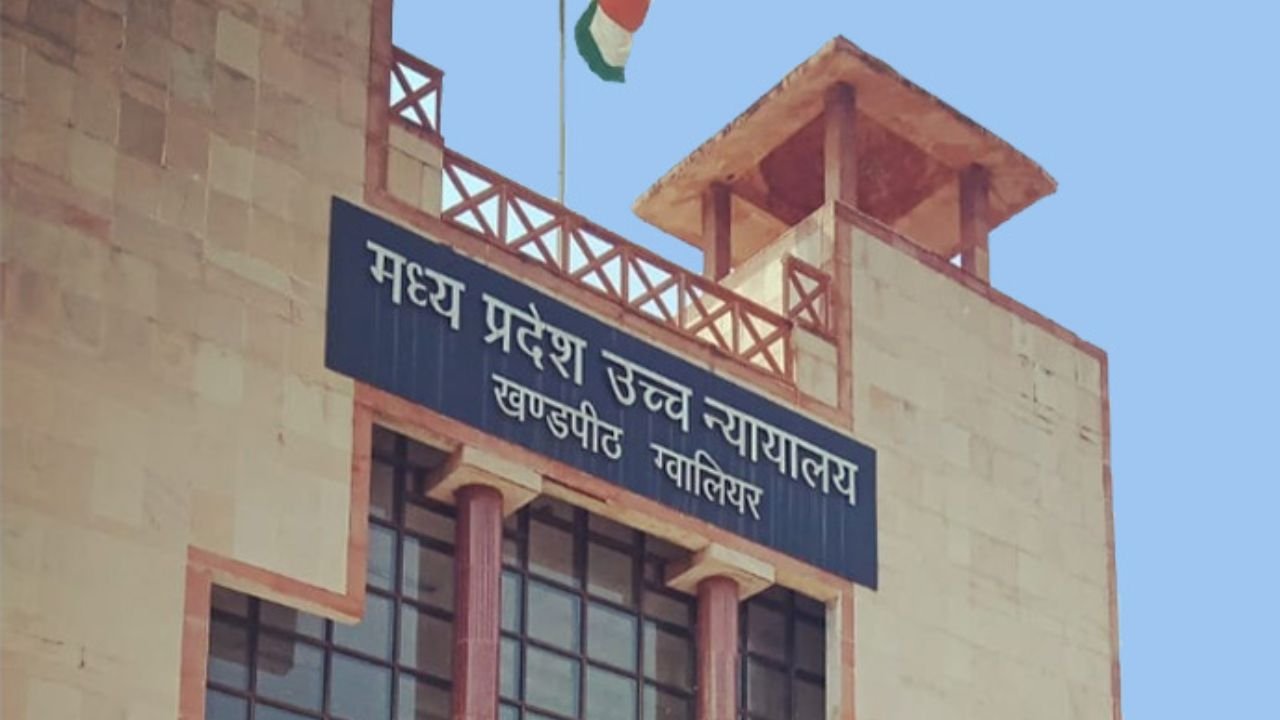

Jabalpur | In a significant ruling on the procedure for freezing bank accounts in cyber fraud investigations, the Madhya Pradesh High Court has held that a bank account cannot be kept frozen indefinitely without informing the concerned Judicial Magistrate as required by law. The Court directed that the petitioner’s bank account be unfrozen and that the disputed amount be placed in separate fixed deposits (FDs), to be released only after the final decision of the competent Judicial Magistrate.
The order was passed by a Single Bench of Justice Subodh Abhyankar while hearing a writ petition filed under Article 226 of the Constitution challenging the freezing of the petitioner’s bank account and the lien imposed on it on suspicion of cyber fraud.
Registration Begins for FutureCrime Summit 2026, India’s Largest Cybercrime Conference
The petitioner sought directions for the removal of the freeze and lien on the bank account, restoration of normal banking operations, and other appropriate reliefs. During the hearing, the petitioner relied on the High Court’s earlier decision in Malcolm Murayis v. State Bank of India, contending that the present case involved identical facts and should be decided on the same legal principles.
According to the record, the petitioner in the earlier case was engaged in cryptocurrency and virtual currency trading. The bank accounts had been frozen following communications from various cyber cells suspecting cyber fraud. However, the petitioner had not received any notice from the police, and the investigating agencies had failed to comply with the statutory requirement of informing the concerned Magistrate about the seizure of the bank accounts.
The High Court observed that the directions issued in the earlier judgment would apply equally to the present case. It directed the respondent bank to place the disputed amount in separate fixed deposits, which may be liquidated only after the competent Judicial Magistrate passes a final order in the cybercrime or cyber fraud proceedings.
The Court further clarified that the investigating agency must comply with the provisions of the Bharatiya Nagarik Suraksha Sanhita (BNSS), 2023, or any other applicable law, by informing the concerned Magistrate about the seizure. If the statutory procedure is not followed within three months, the petitioner may be permitted to withdraw the amount kept in the fixed deposits after informing the concerned police agency.
Accordingly, the High Court directed the immediate unfreezing of the petitioner’s bank account and disposed of the writ petition. The ruling is expected to serve as an important judicial precedent on the legal safeguards governing the freezing of bank accounts during cybercrime investigations and the protection of account holders’ rights.
About the author — Suvedita Nath is a science student with a growing interest in cybercrime and digital safety. She writes on online activity, cyber threats, and technology-driven risks. Her work focuses on clarity, accuracy, and public awareness.
