

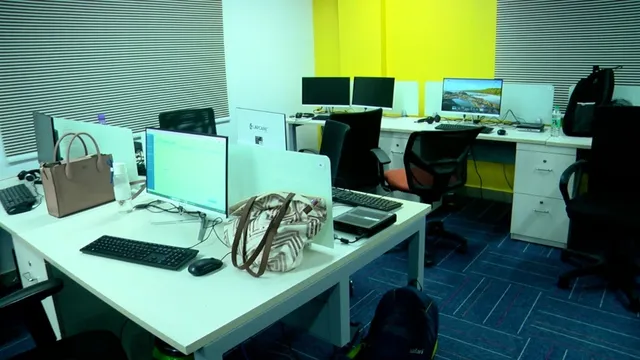

Forensic analysis of devices seized from two fake call centres busted in Lucknow this month has laid bare the technological backbone of an international cyber fraud operation that allegedly used internet-based calling systems, rather than conventional international telephony, to defraud American citizens at scale while evading traditional telecom tracing methods.
Two Raids, One Emerging Pattern
The findings stem from the ongoing investigation into two organised syndicates dismantled by the Lucknow Crime Branch on July 1 and July 18, 2026. The first raid, at an 11th-floor office in the city’s Summit Building, exposed a call centre operating under the name “Solaris Solutions” that led to 119 arrests, making it one of the largest such busts in recent memory. Police said the operation functioned primarily at night to match US business hours, was equipped with VoIP-based calling systems, and had allegedly impersonated employees of major American tech firms and federal agencies to defraud victims.
The seizure from that raid alone included 103 laptops, 177 mobile phones configured for international calling, 116 headsets, eight internet routers, a biometric attendance device, calling scripts, and databases containing personal details of foreign nationals, alongside forged government documents used to lend the scam legitimacy. A second raid on July 17, at a call centre operating from a housing society and dubbed by some reports as Lucknow’s “mini Jamtara,” led to seven further arrests and the recovery of records tied to at least one American victim, identified only as Doris, who was allegedly cheated of roughly $70,000.
Based on the seizures across both operations, cases have been registered at the Cyber Crime Police Station, Lucknow, under relevant provisions of the Bharatiya Nyaya Sanhita, the Information Technology Act, and the Telecommunications Act, 2023. The confiscated devices are now undergoing detailed scientific and digital forensic examination as investigators work to reconstruct exactly how the syndicate’s technical infrastructure functioned.
Why VoIP Made the Fraud Harder to Trace
Investigators found the syndicate deliberately avoided the traditional Public Switched Telephone Network in favour of VoIP technology, internet-based calling that let members contact victims abroad at minimal cost while making the calls significantly harder to trace through conventional telecom records. According to the preliminary probe, the calling infrastructure was built using software and digital tools that were either freely available online or obtainable at negligible cost, lowering the barrier to running a genuinely international fraud operation from a single Indian office.
Police believe this technological setup allowed the network to generate crores of rupees in illicit proceeds, with the July 17 case echoing a similarly structured operation exposed earlier this year in Pune, where a fake call centre was found extorting between $30,000 and $40,000 daily from American citizens through fabricated “digital arrest” threats, an indication that this technical playbook, night-shift operations, VoIP calling, English-fluent recruits and fabricated legal threats, is being replicated across multiple Indian cities rather than confined to any one network.
Tracing the Network Beyond India’s Borders
Forensic examination of the seized devices is continuing, with investigators working to map the syndicate’s full communication network, identify the internet infrastructure used, establish each accused’s specific role, and gather digital evidence pointing toward suspected foreign handlers believed to be coordinating parts of the operation from outside India. The probe is also examining how internet services were procured, how the calling systems were technically managed, and whether the network maintained operational links to other international cybercrime syndicates operating along similar lines elsewhere in the country.
Renowned cybercrime expert and former IPS officer Prof Triveni Singh said VoIP-based communication has become one of the most effective tools available to international cybercriminals precisely because it lets them conceal their identities while impersonating government officials, bank representatives or technical support executives to deceive victims abroad. He said digital forensics, international cooperation and sustained technical intelligence-gathering remain essential to dismantling such organised networks, particularly given how easily VoIP infrastructure can be rebuilt elsewhere once one operation is shut down.
The Lucknow Police Commissionerate said it is coordinating with telecom service providers and other relevant agencies to obtain additional technical data required for the investigation. Authorities said the probe remains active, and further arrests and legal action are expected as more digital evidence is analysed from the devices seized during both raids.
