

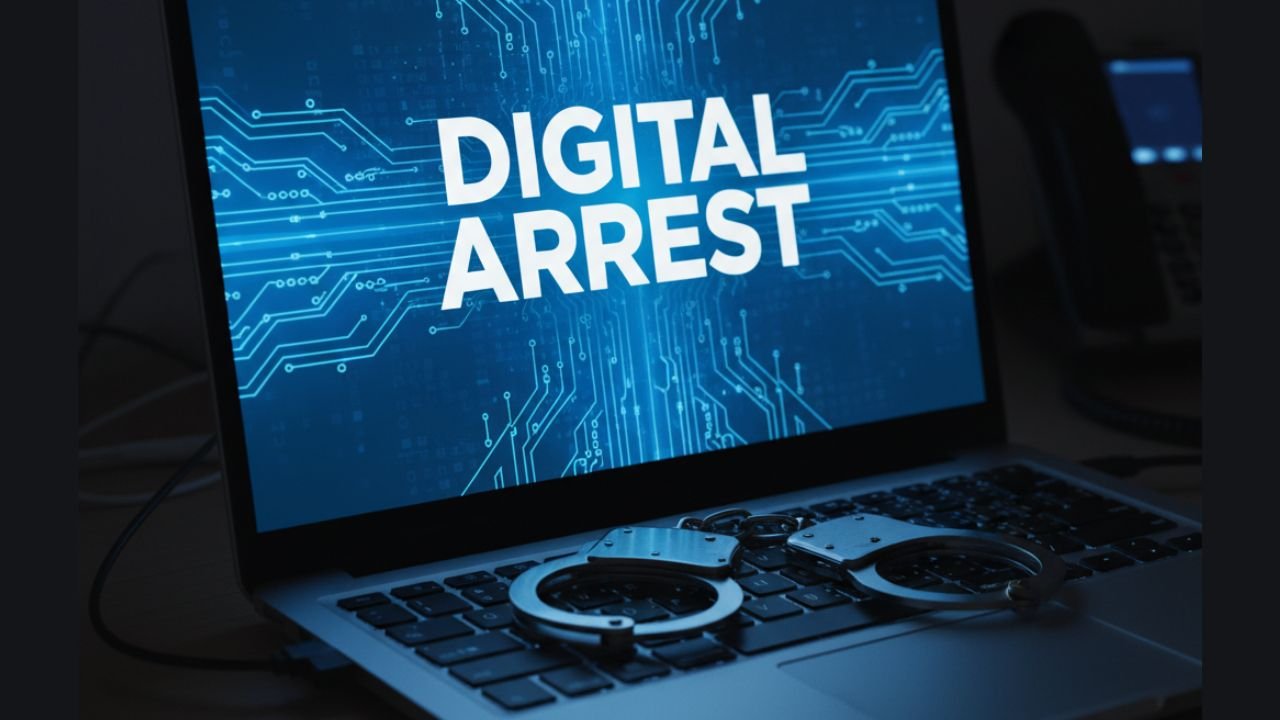

Lucknow. Cybercriminals allegedly posing as police and telecommunications officials digitally arrested a serviceman posted in Jammu and Kashmir for nine days and cheated him of ₹13.80 lakh. The fraudsters threatened to have him arrested and sent to jail, claiming that his mobile number had been used for illegal activities and that several complaints had been registered against him. After realising that he had been cheated, the victim lodged an FIR at the Talkatora police station in Lucknow. Police are investigating the case.
Narendra Mohan Tiwari, a resident of C Block in Rajajipuram, is currently posted in Jammu and Kashmir’s Samba district. According to his complaint, he received a call from an unknown number on the morning of September 28. The caller introduced himself as an official of the Telecom Regulatory Authority of India (TRAI) and claimed that a SIM card had been purchased in Mumbai in Tiwari’s name on April 2. The caller alleged that the SIM card had been used for illegal activities.
FCRF Launches CP-FRM to Build India’s Next Generation of Fraud Risk Professionals
Soon afterwards, Tiwari received another call from a different number. The caller identified himself as IPS officer Varun Kumar and claimed that several reports had been registered against the serviceman. He allegedly warned Tiwari that he could face legal action. To intensify the pressure, the fraudsters reportedly sent him a fake court warrant and threatened to send him to jail.
Threatened into Taking Leave and Returning to Lucknow
According to the victim, the fraudsters instructed him to take leave and return home, warning that he would regret it if he failed to comply. Fearing arrest and legal consequences, Tiwari took leave and reached his home in Lucknow on October 1. The accused allegedly continued to intimidate him by claiming that he was under constant surveillance.
The fraudsters instructed Tiwari not to discuss the matter with anyone or disclose any details to other people. Following their directions, he left his residence and checked into a hotel in Rajajipuram. By isolating him from his family and other people, the accused allegedly attempted to maintain control over him and prevent him from seeking help.
On October 3, the fraudsters arranged another conversation between Tiwari and a woman who allegedly identified herself as IPS officer Rashmi Shukla. During the conversation, the victim was told that his bank accounts would be investigated. Under the pretext of verifying his accounts and warning him of possible legal action, the accused allegedly persuaded him to transfer money to multiple bank accounts.
Victim Spent Three More Days at Another Hotel
Tiwari stated that he was so frightened by the threats that he stayed at Pahalwan Hotel in the Alamnagar area from October 4 to October 6. During this period, he continued following the fraudsters’ instructions. Under the guise of an investigation, the accused allegedly extracted a total of ₹13.80 lakh from him through transfers to different bank accounts.
After transferring the money, Tiwari attempted to contact the callers but received no response. None of the accused answered his calls, prompting him to realise that he had fallen victim to a cyber fraud.
He subsequently approached the police and lodged a complaint. An FIR has been registered at the Talkatora police station, and the case is under investigation.
Cybercriminals Use Fake Police Identities to Intimidate Victims
In digital arrest scams, cybercriminals impersonate police officers, investigative agencies or government officials to frighten victims with threats of arrest, criminal proceedings and bank account investigations. They may use forged documents and fake warrants to make their claims appear genuine and convince victims that they are implicated in serious offences.
The fraudsters then exploit the victims’ fear and pressure them into transferring money under the pretext of account verification or an ongoing investigation. Victims are often instructed not to speak to family members or disclose the matter to anyone, allowing the criminals to prolong the deception.
Police have advised people who fall victim to cyber fraud to immediately inform their banks and report the incident through the national cybercrime helpline at 1930. Complaints can also be filed through the National Cyber Crime Reporting Portal. Victims should preserve transaction screenshots, bank transfer details, call records and chat histories, as these may assist investigators in tracing the money and identifying those responsible.
Follow for daily updates on cybercrime, corporate fraud, DFIR, hacking, investigations, and digital forensics
