

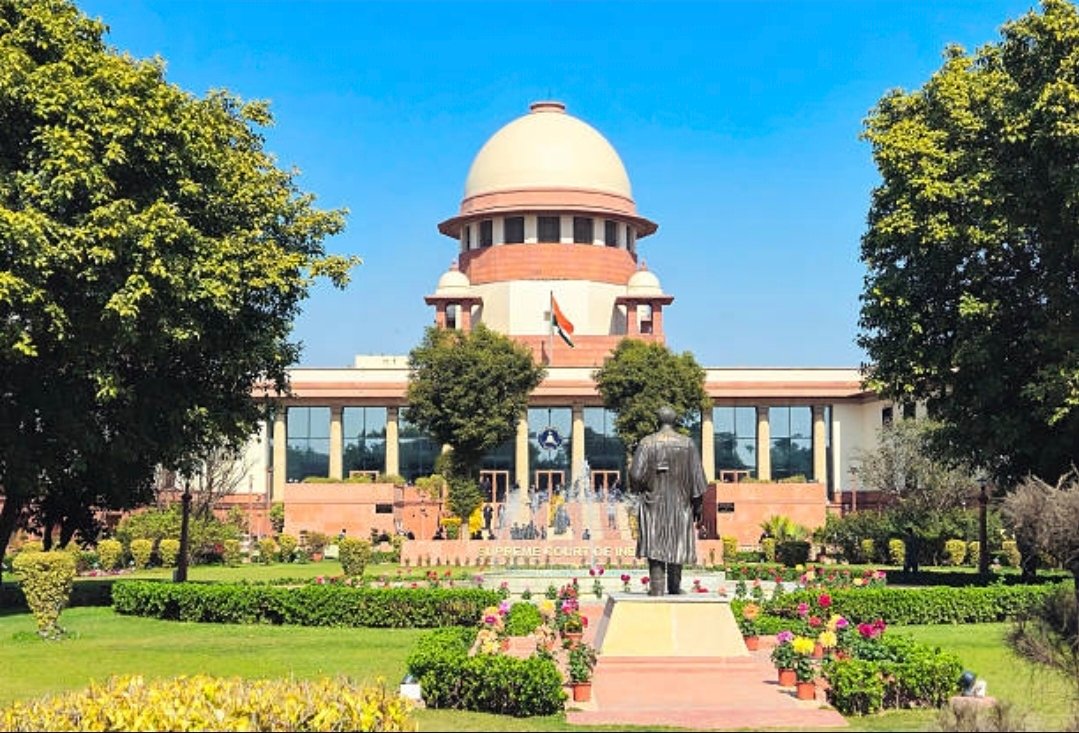
The Lawyers Association for Constitution has written to the Chief Justice of India over the listing of a Noida DM case.
Why has the lawyers’ body approached the CJI?
The Lawyers Association for Constitution (LAFC) has raised concerns over the manner in which Noida District Magistrate Medha Roopam’s petition in a National Security Act case involving student activist Akriti Chaudhary was listed before the Supreme Court.
In its open letter to the Chief Justice of India, the association alleged that Roopam’s petition was “specially assigned” to a particular bench despite the prevailing roster. It said the case concerned preventive detention and questioned why it did not come before the benches assigned such matters.
The Supreme Court’s official website confirms that a judges’ roster effective from July 13, 2026, is in place. The association also referred to Roopam being the daughter of Chief Election Commissioner Gyanesh Kumar, arguing that the circumstances surrounding the listing required scrutiny.
Proposal for Conducting Cyber Crisis Drill, Tabletop Exercise (TTEx) & CCMP Readiness Exercise
What does the Supreme Court roster provide?
According to the LAFC letter, the petitions were considered on September 23 by a bench comprising Justices Satish Chandra Sharma and N.K. Singh.
The association said that under the July 13 roster, habeas corpus and preventive detention matters were assigned to the first four benches led respectively by Chief Justice Surya Kant, Justice Vikram Nath, Justice B.V. Nagarathna and Justice M.M. Sundresh, in order of seniority.
The Supreme Court website lists the roster as effective from July 13, 2026, and its current court index separately identifies benches led by the Chief Justice and Justices Nath, Nagarathna and Sundresh. The LAFC further said that Noida workers’ protest matters, with which Roopam’s petition was connected, were being heard by a bench headed by Justice B.V. Nagarathna.
Why was access to the hearing questioned?
The lawyers’ body also questioned why audio from the proceedings was muted and media access to the video feed was blocked.
It argued that court hearings are public proceedings and said video-conferencing facilities make them accessible to lawyers, journalists and litigants. The letter said access was particularly significant because the matter concerned the detention of students under the NSA following their participation in a protest supporting workers.
The LAFC described the listing and the treatment given to the matter as issues of public concern. It said the circumstances had not enhanced confidence in the judicial process.
These statements represent allegations and concerns raised by the lawyers’ association. The material provided does not contain a response from the Supreme Court or Roopam to the association’s claims.
What happened in the underlying case?
On September 21, a Supreme Court bench comprising Justices Sharma and Singh stayed an Allahabad High Court order directing that ₹5 lakh compensation be paid to Chaudhary from Roopam’s salary over her detention under the NSA.
The detention followed a protest by Noida workers seeking a wage increase. The LAFC’s intervention concerns the subsequent Supreme Court proceedings and, specifically, how Roopam’s petition came to be placed before the bench.
The association’s objections therefore centre on two issues: whether the case was listed consistently with the court’s roster and whether public and media access to the proceedings was appropriately maintained.
The official Supreme Court material confirms the existence of the July 13 roster, while the allegation that this particular case received preferential or special treatment remains the LAFC’s contention.
Follow for daily updates on cybercrime, corporate fraud, DFIR, hacking, investigations, and digital forensics
