

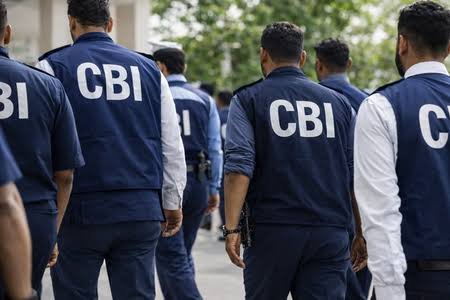

Kerala Police have recommended transferring the investigation into the alleged ₹1,000 crore VPVV investment scam to the Central Bureau of Investigation, citing the interstate nature of the suspected fraud.
The recommendation has been sent to the state Home Department after investigators found that the alleged scheme had spread across several states and used claims involving the Indian and US defence establishments to attract investors.
The Enforcement Directorate is already examining the case, while the Kerala High Court is separately considering a petition filed by an alleged victim seeking a CBI investigation.
FCRF Launches CP-FRM to Build India’s Next Generation of Fraud Risk Professionals
Police Say Cases Need a Coordinated Central Probe
Kilikkollur Police in Kollam, where one of the FIRs was registered, and the Kollam City Police Commissioner have told the Home Department that a central agency is required to investigate the cases in a coordinated manner.
The recommendation comes as new complaints continue to surface in Kerala and other states.
Police believe the alleged fraud cannot be examined effectively as a collection of isolated local cases because the same company, promoters and investment claims appear across multiple jurisdictions.
The CBI has not yet taken over the case.
At this stage, Kerala Police have only recommended such a transfer.
Scam Allegedly Built Around Fake US Defence Contract
The case centres on VPVV Techno Construction Pvt Ltd.
Investigators allege that the company convinced investors that it had secured an enormous project connected to the US Department of Defense and an alleged “Indo-US Pacific Peace Treaty”.
Reporting by The Indian Express found that the company allegedly used official-looking documents, national emblems and claims of US government recognition to create an impression that it was involved in a major strategic project.
The underlying contract and treaty claims were allegedly fabricated.
Investors were reportedly told that VPVV would manufacture defence equipment and carry out large infrastructure projects under the supposed agreement.
Hundreds of Investors Allegedly Drawn Into Network
The alleged scheme appears to have operated for several years and spread through a network of investors, coordinators and promoters.
Earlier investigations described more than 500 investors across India who had put money into the company after being shown purported defence contracts and other material intended to establish credibility.
Potential investors reportedly included business owners, retired military personnel, Gulf expatriates and middle-class families.
The company was also accused of offering commissions to people who brought new investors into the network.
Earlier reports had estimated the suspected fraud at around ₹700 crore, while more recent complaints and investigations have placed the potential scale at approximately ₹1,000 crore.
The ₹1,000 crore figure remains an allegation and investigative estimate rather than a finally established loss.
Fresh Complaints Add ₹90 Lakh to Kerala Cases
Two additional cases have now been registered against the company at Chalakudy and Chengamanad police stations.
Baiju Thomas, a resident of Potta, has alleged that he was cheated of ₹50 lakh.
Jovin Subhash of Puthenvelikkara has separately alleged a loss of ₹40 lakh.
According to Onmanorama, VPVV now faces 11 cases in Kerala alone.
Police have identified Venkita Venkit, Pradeep Kumar, Rajasekharan, Gopika Raj and G S Biju among the principal accused in the Kerala cases.
Their alleged roles remain subject to investigation and court proceedings.
Chairman and Directors Were Earlier Arrested in Delhi
Delhi Police had earlier arrested VPVV chairman Venkita Venkit along with company directors Hitesh Kumar and Rahul Rajeev Nair in connection with a complaint by Bengaluru-based businessman Madhu Nambiar.
Nambiar alleged that he had been cheated of ₹1.5 crore.
That particular case was later settled after ₹2 crore was paid as compensation, following which a Delhi court granted bail to the three accused.
Their release in that individual case did not end the wider investigation into the company.
Kerala coordinator P Pradeep Kumar was also arrested in September and remanded to judicial custody in connection with a separate cheating case.
Victim Has Also Moved Kerala High Court
A Thiruvananthapuram resident, A Harikrishnan, has approached the Kerala High Court seeking a CBI investigation into the alleged scam.
The High Court has sought a report from the state police chief and is scheduled to consider the petition.
Harikrishnan has alleged that he lost more than ₹1 crore in the scheme.
He later complained that he was threatened by a person allegedly associated with the company after pursuing the demand for a CBI investigation.
Those threat allegations are also being examined separately.
ED Already Examining Money Trail
The Enforcement Directorate has begun examining the suspected financial transactions connected to the alleged scheme.
That means the case is now developing on multiple fronts.
State police are investigating cheating complaints, the ED is examining possible money-laundering aspects, and the High Court is considering whether the wider investigation should be transferred to the CBI.
If the Home Department accepts the police recommendation and the necessary approvals follow, the CBI could potentially consolidate evidence spread across different states.
What this means for you
Investment schemes claiming secret government, military or international contracts should be independently verified before any money is transferred. Official-looking documents, defence terminology, high-profile events or claims of confidentiality are not proof that a project or government contract is genuine.
Follow for daily updates on cybercrime, corporate fraud, DFIR, hacking, investigations, and digital forensics
