
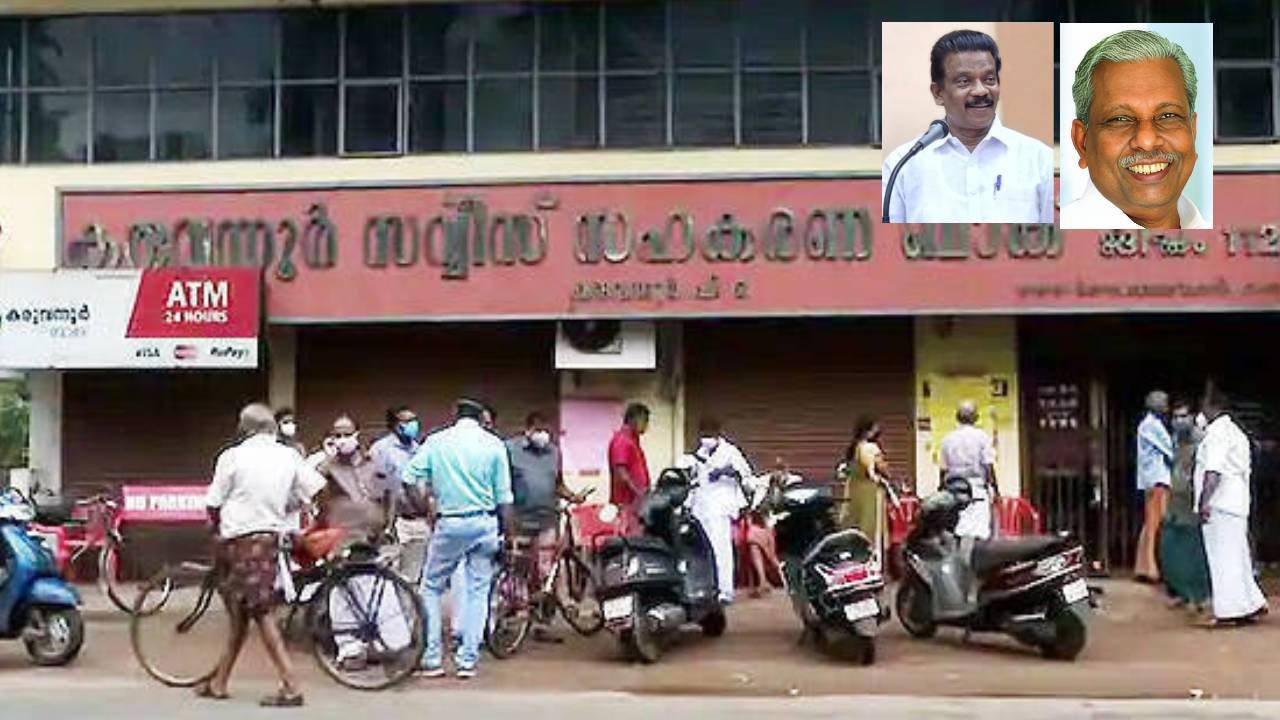
One of Kerala’s most controversial financial scandals has entered a significant new phase after the Special Prevention of Money Laundering Act (PMLA) Court in Kochi found prima facie evidence against the CPI(M), a sitting Member of Parliament, a Member of the Legislative Assembly, and several individuals linked to the Karuvannur Service Cooperative Bank fraud case.
Special Judge P. Sabarinathan accepted the supplementary prosecution complaint, validating the anti-money laundering investigations and marking a major legal milestone that shifts the long-standing corporate bank probe directly into the trial phase.
Registration Begins for FutureCrime Summit 2026, India’s Largest Cybercrime Conference
Supplementary Filings Target High-Profile Leaders
The Enforcement Directorate (ED) submitted the supplementary prosecution complaint naming 29 newly arraigned accused entities, which dynamically expands the total number of individuals and corporate accused bookended under the trial to 83. The specialized judicial bench reviewed the filings under provisions of the Bharatiya Nagarik Suraksha Sanhita (BNSS), concluding that sufficient material exists to issue formal summonses to all newly added parties.
The high-profile list of accused directed to appear before the court includes prominent CPI(M) figures: Alathur MLA and former minister A.C. Moideen, newly elected Lok Sabha MP K. Radhakrishnan, and former Thrissur district secretary M.M. Varghese, alongside multiple local and area committee secretaries.
The Anatomy of the ₹232-Crore Benami Loan Network
The underlying financial crime investigation centers on a highly organized siphoning racket executed within the CPI(M)-managed cooperative bank in Thrissur. The ED’s dossier establishes that a complex syndicate comprising branch managers, board members, and private financiers systematically manufacturing bogus credit profiles. The network routinely sanctioned high-value commercial loans to non-bank members by utilizing heavily inflated property valuations and entirely forged documentation.
To expand the extraction limits, the operators executed circular transaction patterns, repeatedly mortgaging identical plots of real estate multiple times without the knowledge or authorization of the genuine property owners. The agency estimates that nearly ₹232 crore was routed through these unauthorized benami channels, generating a localized illicit cash pool of approximately ₹180 crore.
Diverting Public Savings into Decentralized Party Funds
A major structural focus of the federal chargesheet details the institutional complicity of the political party itself, making the CPI(M) the first ruling state party in the country to be arraigned as a corporate accused in an ED money laundering trial. Investigators assert that a party-appointed sub-committee exercised absolute administrative control over the bank’s daily credit choices, deliberately forcing the clearance of high-risk illegal loans to protect party interests.
The prosecution alleges that significant commissions siphoned from these fraudulent accounts were systematically funneled into undisclosed, decentralized banking nodes maintained by the party, with substantial funds directly financing land acquisitions and the physical construction of local party office infrastructure.
Ordinary Depositors Marooned Amid Legal Battles
While the political and legal tracking loops tighten around the leadership, the localized financial collapse continues to inflict severe hardships on ordinary consumers. Government accounting data indicates that more than ₹263 crore in public capital remains completely frozen, leaving over 30,078 local depositors—many of whom invested their lifetime retirement savings—unable to execute standard withdrawals.
The CPI(M) leadership has strongly rejected the court’s observations, labeling the timing of the supplementary summonses as a politically motivated campaign orchestrated by central agencies. However, with the PMLA bench officially mandating all 28 summoned entities to physically appear before the trial desk on July 4, 2026, the case is positioned to execute deep-dive forensic cross-examinations regarding the integrity of the state’s cooperative banking sector.
