

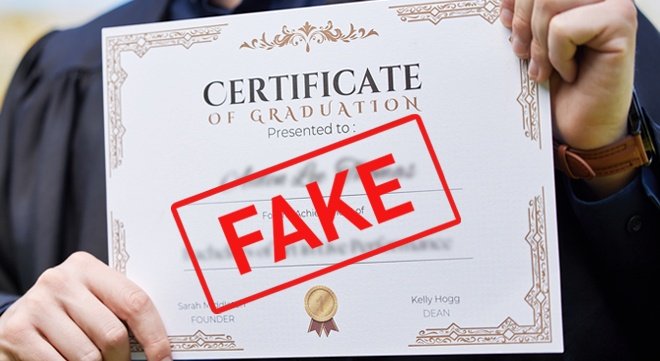
Bengaluru: In a major administrative and legal action, the Karnataka Collegiate Education Department has ordered the registration of criminal cases against 249 guest lecturers who allegedly secured appointments in government first-grade colleges during the 2025–26 academic year by submitting fake or invalid PhD certificates. Besides initiating criminal proceedings, the department has permanently blacklisted all the candidates, making them ineligible for future appointments as guest lecturers in government first-grade colleges.
According to an order issued by the Commissioner of Collegiate Education, the candidates allegedly submitted false information and forged or invalid PhD certificates to obtain government teaching positions. The department considers the matter not only a violation of recruitment rules but also a case of fraud involving the submission of false documents to a government authority. Accordingly, officials have been directed to initiate criminal proceedings against all those found responsible.
The department clarified that the recruitment process for guest lecturers in government first-grade colleges for the 2026–27 academic year is currently underway. In light of the findings, all 249 candidates identified during the verification process have been excluded from the ongoing recruitment exercise. They have also been permanently disqualified from participating in any future recruitment process for guest lecturer positions under the department.
Officials said that extensive verification of academic credentials revealed serious irregularities in several PhD degrees and certificates submitted by applicants. Preliminary scrutiny found that some certificates did not match the records of the respective universities, while others were found to be invalid or of questionable authenticity. A detailed verification exercise was subsequently conducted to identify every candidate whose educational credentials were found to be fraudulent or unverifiable.
The Collegiate Education Department emphasized that appointments in government educational institutions must be based solely on merit, transparency, and genuine academic qualifications. It stated that attempts to secure public employment through forged documents not only deprive deserving candidates of fair opportunities but also undermine the credibility and integrity of the entire recruitment system. For this reason, the department has decided to adopt a zero-tolerance approach toward such violations.
Education experts believe the case underscores the growing need for stronger verification mechanisms in higher education recruitment. Comprehensive digital authentication of academic records, direct verification with universities, and institutional cross-checking of credentials are increasingly viewed as essential safeguards against the use of forged educational certificates and recruitment fraud.
The department has instructed the concerned authorities to complete all legal formalities and register criminal complaints in each of the 249 cases. Investigators will also examine whether any universities, private agencies, intermediaries, or other individuals played a role in creating, facilitating, or supplying the allegedly fake certificates. If evidence of wider involvement emerges, further legal action may be initiated against those responsible.
The action is being viewed as a significant step toward strengthening transparency and accountability in government recruitment. The department has reiterated that rigorous verification of academic credentials will continue in future recruitment drives and that any applicant found submitting false information, forged certificates, or misleading documents will face strict administrative as well as legal consequences. Officials believe the decision will reinforce confidence in the recruitment process, protect the interests of genuinely qualified candidates, and uphold the integrity of public educational institutions.
